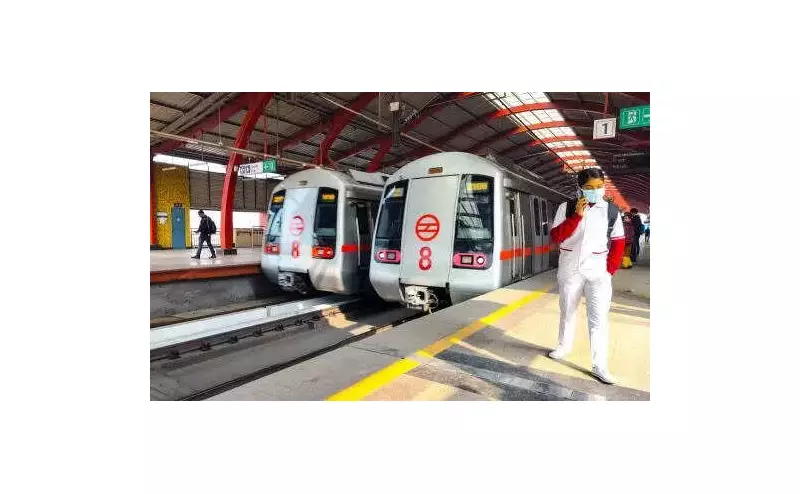
A brazen attempt to steal crucial signalling cables severely disrupted services on a key section of Delhi's Airport Express Line on Sunday. The incident, involving damage to approximately 800 metres of cable, forced trains to operate at a drastically reduced speed, causing significant inconvenience to commuters.
What Happened on the Airport Express Line?
The disruption occurred between the Dhaula Kuan and Shivaji Stadium stations on the line connecting Yashobhoomi Dwarka Sector-25 and New Delhi. During a routine inspection, officials from the Delhi Metro Rail Corporation (DMRC) discovered that the signalling cables had been deliberately cut in an apparent theft attempt. The severed pieces were found near metro pillar number 09.
Anuj Dayal, Principal Executive Director of Corporate Communications for DMRC, expressed regret over the incident. "DMRC deeply regrets the inconvenience caused to passengers due to such incidents of cable theft," Dayal stated. He confirmed that the corporation is actively engaging with law enforcement agencies to tackle these recurring issues.

Immediate Impact and Commuter Advisory
The damage to the cables directly impaired the signalling system on the affected "up line" towards New Delhi. As a safety measure, train speeds were restricted to just 25 kilometres per hour on the compromised stretch between Dhaula Kuan and Shivaji Stadium. However, normal operations continued on the rest of the Airport Express Line network.
To keep passengers informed, the DMRC made regular announcements at stations and inside trains. Commuters were advised to factor in the delays and plan their journeys accordingly. The Airport Express Line typically operates with a frequency of one train every 10 minutes.
Restoration Plan and Police Action
DMRC officials explained that replacing the extensive length of damaged signalling cables during operational hours would cause major service interruptions. Therefore, a strategic decision was made to conduct the full restoration work at night, after the end of revenue operations. Preparatory work was scheduled to take place during the daytime.
On the legal front, a senior police officer indicated that formal legal action would be initiated once a written complaint is officially received from the DMRC authorities. This step is crucial to address the persistent problem of cable theft targeting metro infrastructure.
This incident highlights the vulnerability of critical public transport infrastructure to vandalism and theft, underscoring the need for enhanced security measures and swift judicial action to deter such crimes.