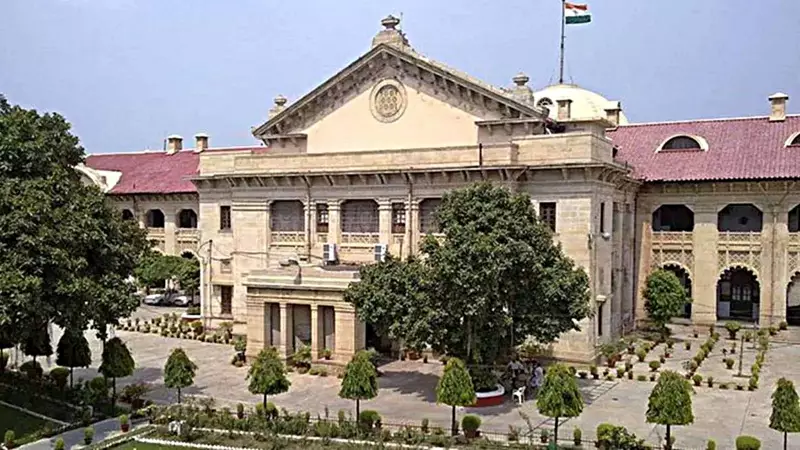
Allahabad High Court Emphasizes Advocate's Role Beyond Being a Client Mouthpiece
The Lucknow bench of the Allahabad High Court has issued a stern advisory to legal practitioners, underscoring that an advocate is not merely a mouthpiece of their client. In a recent ruling, the court pulled up an advocate for filing a petition lacking merits and dismissed it at the admission stage, highlighting the need to refrain from frivolous filings that waste precious judicial time.
Court's Observations on Advocate Responsibilities
Justice Subhash Vidyarthi, presiding over the bench, emphasized that advocates serve as responsible officers of the court. The court advised that if a client insists on filing a frivolous petition or advancing baseless submissions, the advocate should counsel against it and decline such briefs. This guidance aims to ensure that court resources are utilized efficiently for deciding other pressing matters.
The bench elaborated on the advocate's dual role, stating, "Besides being a representative of his client, an Advocate is a responsible officer of the Court and he should assist the Court with his precise and concise submissions, wherever possible, with the assistance of relevant laws, including the Statutes, Rules and judicial precedents." This reinforces the ethical duty of lawyers to contribute to the smooth functioning of the judiciary.

Details of the Dismissed Petition
The court was hearing a petition challenging a notice issued by the Registrar of the Debts Recovery Tribunal (DRT) in Lucknow. The petitioner had argued that the Registrar lacked authority to order appearances for showing cause on a Securitisation Application (SA). However, the court noted that the grievance had already been addressed earlier, and the petition was presented after the matter was listed before the DRT's Presiding Officer.
Referring to the Debt Recovery Tribunal (Procedure) Rules, 1993, the High Court clarified that the Registrar does have the power to issue such notices. The bench stated, "When power to issue notice to a defendant has specifically been conferred upon the Registrar of DRT, it cannot be said that the Registrar has no power to issue notice to a defendant to show-cause as to why the SA should not be allowed." Consequently, the petition was dismissed for lacking substance.
Impact on Court Efficiency and Leniency Shown
In its order, the bench highlighted the burden on the court, with 207 fresh petitions, 128 additional matters, and 51 daily IA lists. The court expressed frustration over the unnecessary wastage of time, noting that it had repeatedly urged the petitioner's counsel to raise pleas before the DRT instead. Despite this, the insistence led to a detailed judgment, diverting resources from other cases.
While the court considered imposing costs, it took a lenient view due to the counsel's inexperience, having been enrolled only in 2024. The bench cautioned, "But the learned Counsel should understand that although he represents his client before the Court, he is not a mere mouthpiece of his client." This serves as a reminder to young advocates about their professional obligations.
Broader Legal Principles Invoked
The bench quoted from a Supreme Court order to outline the High Court's limited prerogative in interfering with subordinate courts. It stressed that intervention is restricted to cases of serious dereliction of duty or flagrant violations of law, not for correcting every hardship or error. This reinforces the principle that High Courts should not act as appellate bodies unless justice is gravely compromised.
Justice Vidyarthi concluded by affirming the Registrar's jurisdiction under Rule 12 of the Procedure Rules, which mandates defendants to file replies with the DRT Registry. The order stated, "Therefore, I find no force in the submission of the learned Counsel for the petitioner that the Registrar of DRT has no jurisdiction to issue notice to the opposite parties." This decision underscores the importance of adhering to procedural norms and avoiding unnecessary litigation.
This ruling serves as a critical reminder for the legal community to prioritize merit and efficiency, ensuring that the wheels of justice move forward smoothly without unnecessary hindrances.