

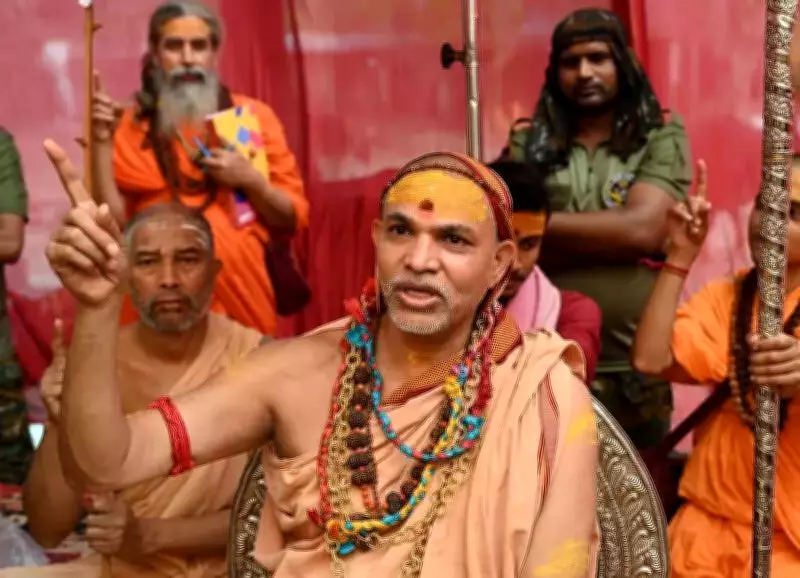
Allahabad High Court Grants Anticipatory Bail to Seer and Disciple in Sexual Harassment Case
The Allahabad High Court in Prayagraj on Wednesday granted anticipatory bail to Swami Avimukteshwaranand Saraswati and his disciple Mukundanand Brahmachari in a sexual harassment case. However, the court imposed strict restrictions, barring the accused and the complainant, Ashutosh Maharaj, from speaking to the media about the ongoing proceedings.
Court Order and Legal Proceedings
Justice Jitendra Kumar Sinha passed the order on the anticipatory bail applications filed by the seer and his disciple. Earlier, on February 27, the court had stayed the arrest of Avimukteshwaranand pending the final decision. The court had reserved its order after hearing arguments and directed the applicants to cooperate fully with the investigation process.
The case stems from an FIR lodged at the Jhunsi police station in Prayagraj, following directions from a Pocso court. The FIR alleges sexual exploitation of several 'batuks' or young disciples by the accused individuals.

Inconsistencies and Delays Highlighted by the Court
In a detailed 22-page order, Justice Sinha pointed out significant inconsistencies in the case. The court noted that the victims did not report the incidents to their natural guardians but instead confided in Ashutosh Maharaj, a stranger, which the judge deemed inconsistent with normal human behavior. The court also questioned the delay in registering the case, raising concerns about the timing and credibility of the allegations.
The bench rejected the state government's argument challenging the maintainability of the anticipatory bail plea. The state had contended that the accused should have first approached the sessions court. Justice Sinha ruled that special circumstances existed, as the FIR was lodged on the directions of a special judge under Section 173(4) of the BNSS, allowing direct access to the high court.
Further Discrepancies in the Case
The court highlighted additional inconsistencies, including the timeline of events. The victims allegedly informed Ashutosh Maharaj on January 18, 2026, but police were notified six days later. When questioned about this delay, Maharaj told the court he was occupied with puja rituals. However, the court noted that prior to this, on January 21, he had filed a separate application related to an alleged offence under Section 109 and other sections of the BNS.
Material improvements in the victims' statements were also flagged by the court. While the FIR stated the incidents occurred between January 2025 and February 2026 at the Maha Kumbh and Magh Mela in Prayagraj, one victim later claimed the assault took place in June 2024 at an ashram in Madhya Pradesh.
Evidence and Legal Arguments
The court further noted that educational certificates revealed the victims were institutional students in Hardoi, not residents of the ashram. Additionally, medical examinations found no external injuries on the victims, with the doctor providing only an inconclusive opinion that sexual assault could not be ruled out.
During the proceedings, Ashutosh Maharaj's counsel argued that Avimukteshwaranand's claim to be the Shankaracharya of Jyotishpeeth is disputed. However, the bench clarified that it was not within its purview to adjudicate on this issue, focusing solely on the anticipatory bail application.
The court's decision to grant anticipatory bail underscores the importance of procedural consistency and timely reporting in legal cases, while ensuring the accused's rights are protected during the investigation phase.






