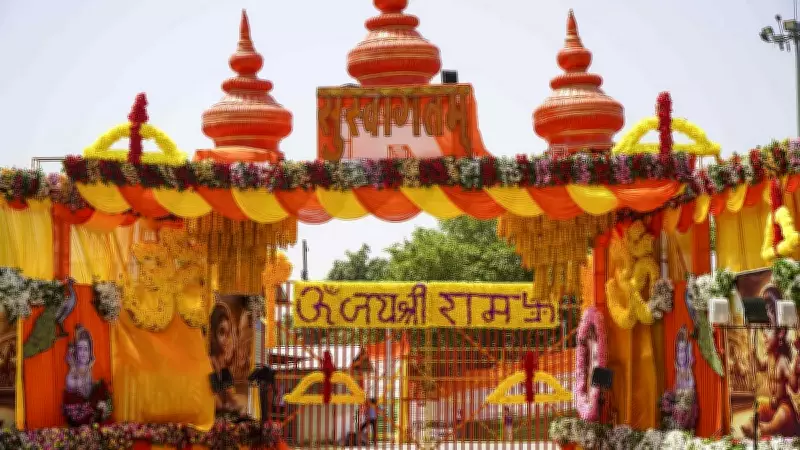
The Allahabad High Court on Monday declined to entertain a Public Interest Litigation (PIL) seeking a Central Bureau of Investigation (CBI) probe into the alleged embezzlement of donations and offerings made by devotees at the Ram temple in Ayodhya.
Court's Decision
A division bench of the High Court, comprising Justice S.K. Gupta and Justice V.K. Srivastava, refused to hear the petition, stating that the matter pertains to the administration of the temple trust and does not warrant judicial intervention at this stage. The court observed that the petitioner had not provided sufficient evidence to justify a CBI inquiry.
Petitioner's Allegations
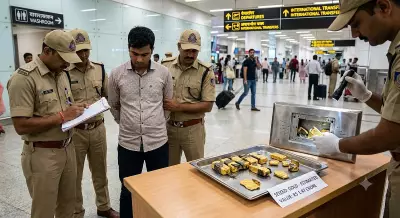
The PIL, filed by local activist Ramesh Chandra Dubey, alleged that a significant portion of the donations collected from devotees, including cash offerings and gold ornaments, had been misappropriated by temple officials. Dubey claimed that the total amount involved could run into crores of rupees, citing discrepancies in the temple's financial records.

According to Dubey, the temple trust had failed to maintain proper accounts, and the mismanagement had been ongoing for several months. He urged the court to direct the state government to hand over the investigation to the CBI to ensure an impartial probe.
Government's Response
The Uttar Pradesh government, represented by Additional Advocate General A.K. Singh, opposed the PIL, arguing that the temple trust was fully capable of managing its finances and that any irregularities could be addressed by the trust itself. Singh stated that the state government had already taken note of the allegations and was monitoring the situation.
Impact and Next Steps
With the High Court's refusal, the petitioner may approach the Supreme Court for relief. The temple trust, meanwhile, has denied any wrongdoing, asserting that all donations are properly accounted for and audited annually. The trust also emphasized that the temple's construction and operations are transparent.
The case highlights ongoing concerns about financial management at religious institutions in India, where large sums of money are often donated without stringent oversight. Legal experts suggest that the court's decision underscores the need for more robust internal controls rather than external investigations in such matters.