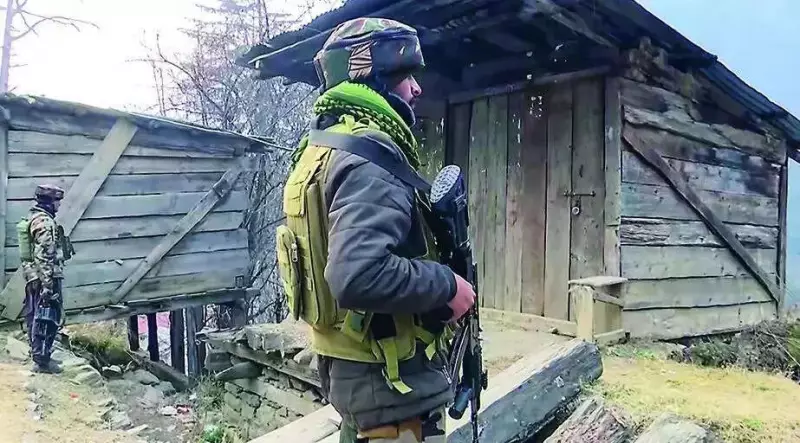
Army Havildar Gajendra Singh Martyred in Kishtwar Gunfight
Havildar Gajendra Singh of the Army's Special Forces made the ultimate sacrifice on Monday. He died from grenade splinter and bullet wounds sustained during an intense overnight gun battle with terrorists in the mountainous Kishtwar district of Jammu and Kashmir. This tragic incident marks the first security force death in a counterterrorism operation within the Union territory for the year 2026.
Uttarakhand Native Among Eight Wounded Soldiers
Singh, a native of Uttarakhand, was one of eight soldiers wounded late Sunday evening. Terrorists ambushed a joint Army-police search team in the dense forests near Sonnar village. This area forms part of the Chatroo belt in Kishtwar, within the Jammu division. The location is notably close to the Line of Control.
Officials confirmed that Singh and two other critically injured soldiers were airlifted to a military hospital for urgent treatment. Despite the best medical efforts, Havildar Gajendra Singh could not be saved. The Army's White Knight Corps officially announced his death in a post on the social media platform X.

Operation Trashi-I and the Initial Ambush
The deadly clash erupted after security forces advanced toward suspected terrorist hideouts. According to official accounts, the troops came under sudden grenade attacks. This was immediately followed by bursts of AK-47 rifle fire in the darkness of the forest night.
This operation, codenamed Trashi-I, was launched based on specific intelligence inputs. The intelligence indicated a terrorist presence in the rugged, heavily wooded hills of the Kishtwar region.
Forces Tighten Cordon and Expand Search
On Monday, security forces significantly tightened the cordon around the operation area. They expanded their search patterns and reinforced units within the forested zone. Investigators currently believe that two or three terrorists are directly involved in this specific ambush.
In a broader assessment, officials estimate that approximately thirty terrorists remain active across the wider Jammu region. This number underscores the persistent security challenge in the area.
Hideout Discovery Points to Sustained Presence
During the ongoing search and sweep operations, troops made a significant discovery. They uncovered a well-stocked terrorist hideout. The hideout contained essential supplies like rations and utensils. This find strongly signals a sustained terrorist presence in the remote forest area.
"The operation is ongoing," a senior security official stated, emphasizing the continued efforts to neutralize the threat.
Context of Rising Engagements in Jammu Division
This gunfight represents the third major terrorist encounter in the Jammu division this year alone. It follows clashes earlier this month in the Kahog and Najote forests of Billawar, located in Kathua district south of the Pir Panjal range.
Security measures across Jammu have been visibly stepped up in recent weeks. This heightened alert comes ahead of the upcoming Republic Day celebrations, a period often associated with increased security threats.
Kishtwar: A Persistent Infiltration Corridor
Kishtwar is a remote district situated east of the Chenab River and south of the Kashmir Valley. The district witnessed intensified counterterrorism efforts throughout 2025. Security forces have been actively tracking Pakistan-based terrorists moving through its steep terrain and thick forests.
Official records show at least six major gun battles were reported in Kishtwar over a seven-month period last year. On May 22, an Army trooper was killed and two others wounded in an encounter in the Chatroo area. Just weeks before that incident, security forces eliminated three Jaish-e-Mohammed terrorists in the same vicinity.
Security officials explain that Kishtwar sits astride a traditional and active infiltration corridor. Terrorists typically cross over from Pakistan via the Kathua sector. They then move through the districts of Udhampur and Doda, using dense forest cover to evade detection, before heading towards the Kashmir Valley. The terrain provides natural concealment, making counter-infiltration operations particularly challenging.