

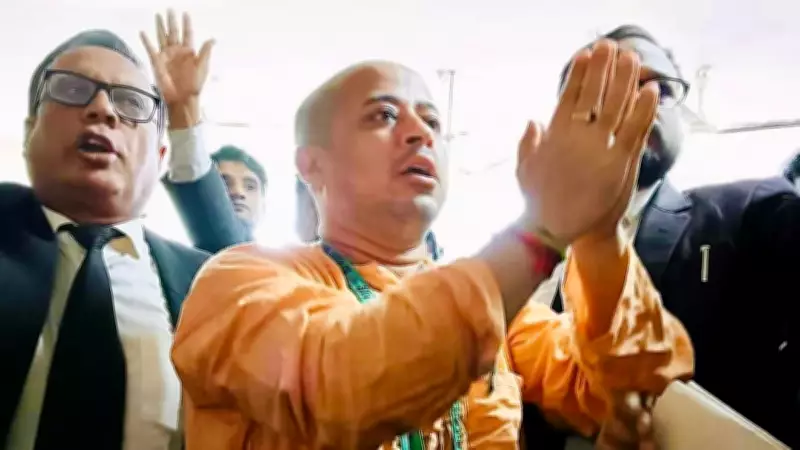
Bangladesh's High Court has dismissed the bail petition of a Hindu monk who has been in detention, a decision that has sparked debates about religious freedom and judicial impartiality in the predominantly Muslim nation. The monk, whose identity has not been fully disclosed, was arrested under unclear circumstances, with his supporters claiming the charges are fabricated.
Background of the Case
The monk was taken into custody several weeks ago, and his legal team filed a bail petition arguing that the detention was illegal and motivated by religious bias. They contended that the monk was a victim of a targeted campaign against minority communities. However, the prosecution maintained that the monk was involved in activities that threatened public order, though specific details were not provided in court.
Court's Decision
On Tuesday, the High Court bench, comprising Justice Md. Nazrul Islam Talukder and Justice Khizir Hayat, rejected the bail application after hearing arguments from both sides. The court stated that the case required further investigation and that releasing the monk on bail could hamper the legal process. The monk's lawyers expressed disappointment and announced plans to appeal to the Supreme Court.

Reactions and Implications
The verdict has drawn sharp criticism from human rights organizations and minority groups in Bangladesh. They argue that the judiciary is not immune to political and religious pressures, especially in cases involving religious minorities. The Hindu community, which constitutes about 8% of Bangladesh's population, has frequently reported discrimination and targeted attacks. This case is seen as a litmus test for the protection of minority rights under the current government.
Supporters of the monk have called for peaceful protests, while the government has urged calm, stating that the legal process will take its course. International observers are closely watching the developments, as Bangladesh's record on religious freedom has been under scrutiny by global bodies.
Broader Context
This incident is part of a larger pattern of alleged persecution of Hindus in Bangladesh, where temples have been vandalized and community members attacked. The government has often denied systematic discrimination, but critics point to a rise in communal tensions. The rejection of the bail petition may further strain interfaith relations and could impact Bangladesh's image abroad.
Legal experts note that the High Court's decision sets a precedent for how cases involving religious minorities are handled. The Supreme Court's response to the appeal will be crucial in determining the trajectory of this case and similar ones in the future.






