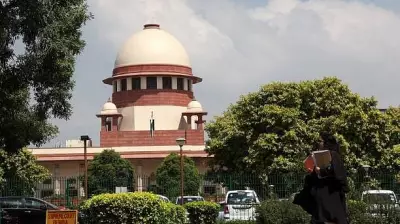
Bengaluru Court Grants Relief to Property Owner After Two-Year Access Dispute
In a significant ruling that brings closure to a prolonged neighborhood conflict, a civil court in Bengaluru has intervened to protect property rights and ensure lawful access. The case, which had dragged on for nearly two years, involved a 62-year-old resident of Koramangala's 8th Block, Sridharan S, who had been struggling with blocked access to his land due to construction debris dumped by his neighbor.
Background of the Property Ownership
Sridharan and his brother, S Bhaskar, originally acquired the property located in Varthur village through a registered sale deed back in 1987. In August 2022, Bhaskar executed a formal deed of release, transferring complete ownership rights to Sridharan. Since that transfer, Sridharan has been consistently paying property taxes under his own name, establishing his legal standing as the rightful owner.
The Allegations and the Dispute
According to the lawsuit filed on October 11, 2023, the trouble began when Sridharan's neighbor, 61-year-old Ramesh Reddy of Varthur, started dumping substantial amounts of construction debris near the property. Sridharan alleged that this debris not only blocked the primary access route to his land but also directly interfered with his peaceful possession of the property.
The plaintiff presented several specific complaints:
- Reddy, who owns the adjacent plot acquired through a partition deed dated December 6, 2022, raised the elevation of his land by approximately 10 feet through the dumping of construction waste.
- This elevation change caused rainwater to flow onto Sridharan's property, obstructing natural drainage and resulting in frequent flooding of his land.
- The debris blocked a private mud road that served as the only means of ingress and egress to Sridharan's property, effectively cutting off access.
- Some of the construction material even encroached directly onto Sridharan's land, constituting a clear interference with his lawful possession.
The Defense and Court Proceedings
While Sridharan argued that the obstruction and flooding were deliberate acts, Reddy's legal counsel presented a different perspective. The defense maintained that Reddy had acted within his rights as the owner of the adjoining plot, claiming that raising the land elevation was part of routine development and landscaping activities. They argued that any water flowing onto Sridharan's property resulted from natural seepage and the area's topography rather than intentional obstruction.
However, critical gaps emerged in the defense's position during court proceedings:
- Despite appearing in court through legal representation, Reddy failed to file any written statement or evidence supporting his claims.
- He did not cross-examine Sridharan during the proceedings.
- No documentary proof was presented to substantiate the argument that the development activities were lawful and properly conducted.
The Court's Observations and Ruling
Civil Judge and Judicial Magistrate First Class Vishwanath Savadi, presiding in KR Pura, carefully examined the evidence presented. The court noted that the complete absence of evidence from the defendant left Sridharan's version of events unchallenged and credible. Sridharan had provided comprehensive documentation including sale deeds, the deed of release, partition documents, RTCs (Record of Rights, Tenancy and Crops), and photographic evidence supporting his claims.
Judge Savadi observed that Sridharan had successfully established both lawful ownership and peaceful possession of the property. The court found that Reddy's actions in dumping construction debris had indeed interfered with Sridharan's access to his land, creating obstruction, nuisance, and flooding issues. The judge emphasized that property owners with genuine apprehensions of interference are entitled to legal protection under the law.
The Final Judgment and Injunctions
The court delivered a decisive ruling in favor of Sridharan, granting two specific injunctions:
Permanent Injunction: This order permanently restrains Reddy, his agents, and anyone claiming under him from interfering with Sridharan's possession of the property in any manner.
Mandatory Injunction: This directive requires Reddy to remove all construction debris from both his own property and the access road used by Sridharan. The removal must ensure clear and unhindered access to the plaintiff's land, addressing both the obstruction and drainage issues.
In his judgment, Judge Savadi stated: "The acts of the defendant not only interfere with the plaintiff's possession but also obstruct the access road leading to the suit property. In the absence of any rebuttal or contradictory material, this court finds no reason to disbelieve the plaintiff's version that he lawfully purchased the property and was in peaceful possession and enjoyment of the same as on the date of filing of the suit."
This ruling serves as an important precedent for property disputes in urban areas, emphasizing the legal system's role in protecting property rights and ensuring that development activities by one property owner do not infringe upon the rights of neighboring landowners. The case highlights the importance of proper documentation and evidence in property disputes, as well as the consequences of failing to substantiate claims in legal proceedings.