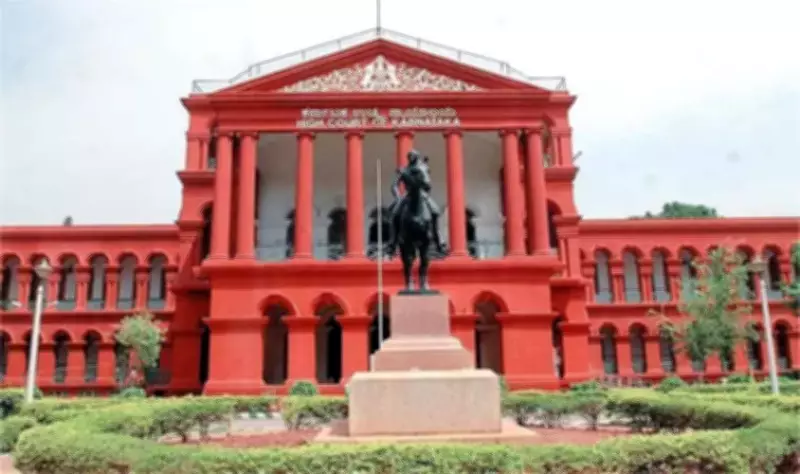
The Bengaluru High Court has delivered a significant ruling in a contentious employment dispute, imposing costs of Rs 50,000 on Wipro Enterprises Private Limited. The court strongly criticized the company's stance in an ex gratia payment case, terming it an abuse of the legal process.
Background of the Employment Dispute
The case centered around Ratnesh Pandey, a resident of Faridabad in Haryana, who had dedicated nearly 12 years of service to Wipro Enterprises. Pandey held various positions during his tenure, starting as a territory manager and progressing through the company ranks.
Resignation and Promised Ex Gratia Payment
Pandey submitted his resignation on August 6, 2017, which the company formally accepted on September 18, 2017. In recognition of his substantial contributions over nearly a decade of service, Wipro offered Pandey an ex gratia lump sum payment of Rs 6,32,000.
This payment was scheduled to be disbursed 18 months after his employment cessation date, which was August 19, 2017. However, the company attached a specific condition to this financial gesture: Pandey was prohibited from joining competing firms, specifically Philips India Limited or Bajaj Electricals Ltd, during this 18-month period.
Legal Battle Commences
When the ex gratia amount remained unpaid even after the 18-month waiting period had elapsed, despite repeated correspondence from Pandey, the former employee had no choice but to seek legal recourse. He approached the civil court seeking not only the promised payment but also 18% interest on the delayed amount.
Wipro's Contentions and Initial Court Ruling
Wipro contested the claim vigorously, arguing that Pandey had never formally accepted the terms and conditions outlined in the cessation letter. According to the company's position, this lack of acceptance rendered Pandey ineligible for the ex gratia payment.
On July 23, 2024, the 20th Additional City Civil Judge in Bengaluru delivered a verdict in Pandey's favor. Undeterred, Wipro filed an appeal, presenting technical legal arguments to support their position.
Technical Legal Arguments and Court's Rejection
In their appeal, Wipro contended that the cessation letter dated September 18, 2017, had been effectively revoked under Section 6(2) of the Indian Contract Act of 1872 due to Pandey's alleged failure to accept its terms. The company argued that any belated acceptance after 18 months was legally unacceptable.
Pandey countered this argument by pointing out that Wipro had never previously alleged any breach of contract conditions during the initial civil court proceedings.
High Court's Scathing Observations
Justice Sachin Shankar Magadum, in his recent ruling, made several crucial observations that formed the basis of his decision. The judge noted that August 19, 2017, marked Pandey's last working day with the company.
The court firmly rejected Wipro's claim that signing and returning the cessation letter constituted a mandatory condition for receiving the ex gratia payment. Justice Magadum specifically held that the phrase "return to us for records" could not be interpreted as a condition precedent to payment entitlement.
Court's Final Ruling and Legal Principles
The High Court determined that Wipro had already acted upon the cessation letter in practice. Furthermore, the company failed to demonstrate any actual breach by Pandey of the conditions outlined in the agreement.
In a strongly worded conclusion, the court held that denying payment on what it termed "hyper-technical grounds" violated Sections 7 and 8 of the Indian Contract Act. The judge characterized Wipro's defense as "vexatious resistance to an admitted liability," amounting to an abuse of the legal process.
Costs Awarded to Employee
As a consequence of finding Wipro's legal stance improper, the court imposed costs of Rs 50,000 on the company. This amount is payable directly to Ratnesh Pandey, who was the original plaintiff in the civil court case.
The ruling serves as a significant precedent in employment disputes, emphasizing that companies cannot evade legitimate financial obligations to former employees through technical legal arguments when they have substantially benefited from an employee's service and have failed to prove any material breach of agreement terms.