

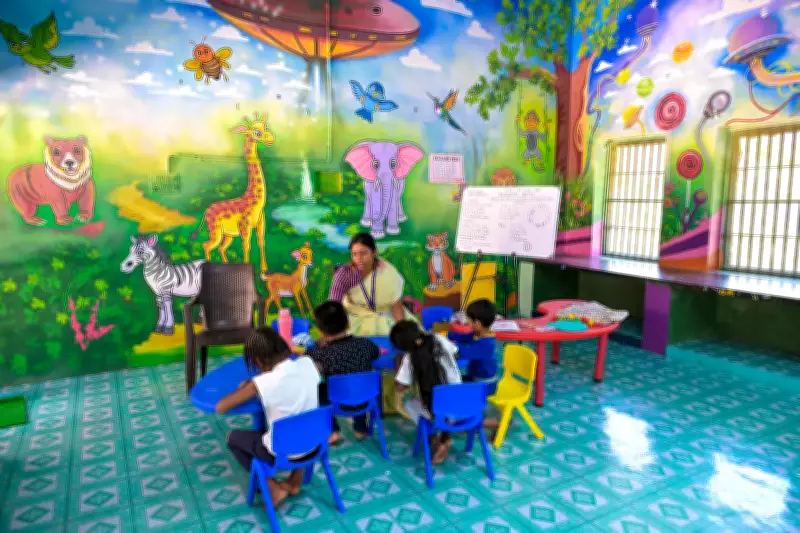
Bengaluru Prison's Specialized Childcare Center Offers Hope and Color
Entering the Bengaluru Central Prison feels almost cinematic, with multiple layers of security including frisking, formalities, and a stamped hand marking entry. Beyond a modest doorway lies a world of thousands of inmates, both undertrials and convicts. Yet, within these institutional walls, a remarkable space stands out—a specialized childcare center for women inmates and their children that feels entirely different from the rest of the prison.
A Vibrant Anganwadi-Like Environment
This center resembles an anganwadi, alive with color and care. Bright, engaging murals line the corridors, and a dedicated classroom for inmates' children creates a comforting and stimulating environment. The artwork, painted by artist Baadal Nanjundaswamy, transforms the prison into something unexpectedly joyful. This initiative, led by the Karnataka Prison Department in collaboration with the Department of Women and Child Development, provides a rare glimpse of warmth and humanity within the correctional facility.
Official Vision for Children and Women Inmates
Explaining the thought behind the initiative, Alok Kumar, Director General of Police, Prisons and Correctional Services, Karnataka, emphasizes the importance of this environment. "We wanted to ensure that children inside the prison are not completely defined by the gloomy environment they are forced into," he says. Children are allowed to stay with their mothers until the age of six, and during this time, the department aims to provide them with the environment they are entitled to. This initiative is for the children as well as the women inmates, offering a sense of freedom and an opportunity to hold on to hope and aspiration. The response has been overwhelmingly positive, with both children and women feeling the difference.

Artist's Emotional Journey and Symbolic Art
For Baadal Nanjundaswamy, the project was as emotional as it was artistic. "Like anyone stepping inside a prison for the first time, I was overwhelmed," he recalls. Over 10 days, working nearly eight hours daily, he immersed himself in the space, blending his ideas with departmental inputs. He created a series of colorful paintings featuring alphabets, numbers, animals, nature, mother and child, and planets—elements that children can relate to and engage with. One piece remains closest to his heart: a mural of a woman reaching for the stars, meant to remind inmates to keep pursuing their dreams. The mural includes 212 stars, each representing a woman inmate housed in the prison at the time, forming a constellation of hope on a wall that once held none.
Impact and Future Implications
This childcare center not only enhances the daily lives of women inmates and their children but also sets a precedent for prison reform. Key aspects include:
- Providing a nurturing space for children up to age six to stay with their mothers.
- Using art to foster hope and aspiration among inmates.
- Collaborating across departments to improve prison conditions.
- Creating an environment that supports rehabilitation and emotional well-being.
The initiative demonstrates how institutional settings can incorporate compassion and creativity, potentially inspiring similar efforts in other prisons across India and beyond.






