From Andhra Flat to Caribbean Cloud: How Betting Apps Target India
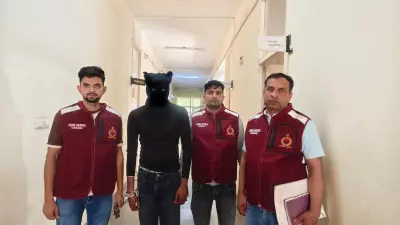
In the temple town of Mangalagiri in Andhra Pradesh, gambling cases typically follow a predictable script. Police conduct a raid, make a few arrests, file an FIR, and then the case fades from memory. On November 17, 2025, Mangalagiri rural police entered a rented flat in Chinakakani expecting another routine operation.
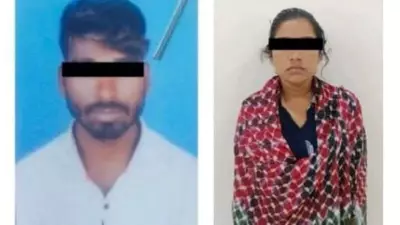
They discovered the flat had been transformed into a physical cricket betting hub. Officers arrested five men from Hyderabad, Bhongir in Telangana, and Machilipatnam in Andhra Pradesh. The police seized ₹6.3 lakh in cash along with laptops, mobile phones, and bank documents. They registered a case under cheating provisions of the Bharatiya Nyaya Sanhita and Sections 3 and 4 of the Gaming Act.
What the FIR failed to capture was the extensive network this local raid would eventually expose. A TOI investigation began with a single URL – hublibook.com – found on a laptop belonging to the accused. This probe mapped a wider offshore network connecting this betting site and several other apps named in FIRs across Andhra Pradesh and Telangana to the Dutch Caribbean island of Curaçao.

The Offshore Licensing Hub
Curaçao has quietly become a licensing base for betting platforms targeting Indian users. TOI accessed and analyzed FIR copies, Enforcement Directorate prosecution complaints, UK company filings, Curaçao corporate records, gaming certificates, and IP lookups. These documents reveal a recurring pattern.
The same handful of offshore hubs, identical licensing jurisdictions, and similar money-movement architectures sit behind multiple apps illegal in India. Essentially, these betting apps are not separate, isolated instances of fraudsters trying to dupe Indians. They are all interconnected and appear to be run by a small group of individuals and entities.
Victims and Tragic Consequences
Behind the flowcharts are gullible users who treat betting apps as a form of gaming and end up in debt. Victim statements in FIRs describe gaming as an addiction. Users get drawn in by promises of easy money and cashback schemes. Then they watch their deposits vanish when a site stops responding or reappears under another name.
Police officers explain that the algorithms of these apps are designed to lure users with some initial gains. This strategy ensures they can be duped of larger amounts later. Telangana and Andhra Pradesh have witnessed a string of suicides by youngsters burdened with heavy debts.
In August last year, a 38-year-old postal department employee left a suicide note asking the Prime Minister to ban the apps. The same month, Parliament passed the Promotion and Regulation of Online Gaming Act. This legislation banned all betting apps, whether they involve games of chance or skill.
The Mangalagiri Investigation Expands
After initial investigation, police in Mangalagiri said Ch Manu alias Manohar of Machilipatnam told them he received a link on Telegram from an unknown number. The caller claimed to be from Karimnagar and promised him a salary of ₹40,000 per month plus 5% commission for helping run an online betting operation.
SI Chirumamilla Venkateswarlu, the investigating officer of Mangalagiri rural police, explained the operation. His team had raided the flat in Chinakakani on November 17. Manohar collected Aadhaar cards from individuals by paying them small amounts. He procured SIM cards in their names and opened about 30 bank accounts.
"The gang used www.hublibook.com, uploaded QR codes of the bank accounts and encouraged customers to deposit money on the promise of high returns from cricket betting," Venkateswarlu stated.
On paper, this appeared to be a local case: one flat, one set of bank accounts, one URL. TOI's investigation into that betting app revealed it was anything but local.
Digital Trails and Offshore Connections
The digital trail showed the support number displayed on hublibook.com was an Indian mobile number. TOI's checks found this number originally traced back to West Bengal. It later reflected registration linked to a person in Ellurupadu in Andhra Pradesh. This illustrates how an offshore platform anchors itself in India through local SIM registrations.

Posing as a member, TOI gained access to Hublibook and obtained several other contact details. Examination using basic IP and telecom tools revealed operatives registered across Andhra Pradesh, West Bengal, Uttar Pradesh, and Karnataka. This underlined that the operation was pan-India. These numbers served as touchpoints for onboarding punters, resolving wallet issues, and pushing new links when a site went down.
The payments layer had an even clearer Indian imprint. Hublibook accepted UPI payments in India, routing deposits through QR codes tied to the mule accounts obtained by Manohar and his associates. The IP address hosting the domain, however, pointed outside India. This showed while customer acquisition and deposits were local, hosting and control sat offshore.
Terms and Conditions Reveal Crucial Clues
The crucial clue lay not on the home page but deep inside the terms and conditions and rules pages of hublibook.com. Review of these sections found that Hublibook states it is "registered in Curaçao" and run by a firm in the UK. This company is described as a gaming-certified entity in that jurisdiction.
UK company filings and other digital records accessed by TOI show the same network also runs other platforms. These include VIBook, VVBook, Telugu365, and similar sites offering online cricket betting, teen patti, and casino-style games that remain illegal in India. All these sites are currently accessible in India despite the ban.
Hublibook's own marketing line pitches it as a betting exchange aimed at Indian punters. It claims round-the-clock service and instant deposits and withdrawals.
Other Cases Point to Similar Patterns
Other cases in India name Curaçao in FIRs. In Mangaluru, a city crime branch case from April 10, 2019, names BetPro. Three alleged sub-bookies were arrested in this case. During interrogation, the accused told police they reported to operators based in Dubai.
One of the domains associated with this network, betpro-pk.com, remains accessible in India. It markets itself to Pakistani users.
Telangana CID's Parallel Investigation
The pattern seen in Mangalagiri is not an outlier. Telangana's CID special investigation team has already mapped a similar model while probing another cluster of betting apps. According to investigators, the racket spanned at least six apps.
- Taj0077
- Fairplay.live
- Andhra365
- Vlbook
- Telugu365
- Yes365
These apps pushed online casinos and sports betting. Huge caches of data were seized, several bank accounts were frozen. Telangana police recorded this as their first raid outside the state in a betting case. This sign indicated local cases were widening into interstate operations. Telangana CID officers found huge amounts of betting money transferred to bank accounts in Dubai.
ED Cases Show Scale of Operations
While state police have chased bookies and local operators, ED records accessed by TOI show how the same Curaçao-linked architecture scales up in national-level betting brands. In its prosecution complaint and provisional attachment order in the 1xBet case involving cricketer Suresh Raina and others, the ED explicitly flags Curaçao.
The agency notes the 1xBet platform is owned by 1X Corp N.V., a Cyprus-based company registered in Curaçao. A similar picture emerges in the Parimatch case. An ED press release of August 14, 2025, describes it as a Cyprus-based betting app operating in India using a licence issued by the Curaçao Gaming Control Board.
The agency alleged parimatch.co generated about ₹3,000 crore. It routed Indian users' funds through mule accounts using different strategies.
Multiple Brands, Same Offshore Structure
Several other betting apps show the same offshore pattern. In the Fairplay case, ED documents and media reports name Play Ventures N.V. and Dutch Antilles Management N.V., both Curaçao entities, as companies behind it. Those records also mention Fair Play Sport LLC and Fairplay Management DMCC in Dubai and Play Ventures Holding Ltd in Malta as part of the structure.
This structure ran Fairplay's illegal betting and unauthorised broadcasting operations. ED has attached assets worth over ₹651 crore of Fairplay operators and filed PMLA charges. The app's CEO and promoters were arrested.
Yolo247.com, named in FIRs in Hyderabad and promoted by Tollywood actor Manchu Lakshmi, publicly states it is licensed by Curaçao. Documents accessed by TOI revealed Bright Win Limited BV, a company registered under Curaçao law, set up Yolo247 and holds a Curaçao Gaming Control certificate. The website does not list India as a restricted country even though online betting is banned in Telangana.
The list of Curaçao-linked operators continues:
- Lotus365 and Laser247 cite Curaçao licences to claim they are "legal" gambling sites.
- JeetWin uses actor Sunny Leone as brand ambassador and is linked to Sky Infotechn Limited in UK-based documentation.
- Another platform, 1Win, runs in India through the domain sportspod.in. The operation is described as being run by 1win N.V., registered at Dr H Fergusonweg 1, Curaçao, with a gaming licence from that jurisdiction.
A Cyprus-registered company, MFI Investment Ltd, is shown as providing services to the platform. When checked by TOI, sportspod.in remained accessible in India and displayed an Indian contact number.
Alternative Offshore Jurisdictions
Even when platforms are not directly anchored in Curaçao, they follow the same offshore logic. 10CRIC is operated by Chancier B.V., a gaming company registered in Curaçao. It says it is licensed and regulated by the Government of the Autonomous Island of Anjouan, Union of Comoros.
Other gambling hubs used by India-facing apps include:
- Malta
- Isle of Man
- Gibraltar
- Apart from Curaçao and Anjouan
As per ED complaints, FIRs and corporate records reviewed by TOI, at least four big brands are directly tied to Curaçao-incorporated companies or licences. These include 1xBet, Parimatch, Lotus365 (with Laser247), and Fairplay. Several others use similar structures.
The Underground Funding Pipeline
Behind the glossy front-end of these apps lies a funding mechanism investigators describe as an underground pipeline. The user is never asked to send money to a clearly identifiable "1xBet account" or "Hublibook account." Instead, TOI found platforms instruct them to deposit money into a constant stream of changing bank accounts and UPI IDs.
These are the mule accounts and dynamic handles that gangs like the Mangalagiri group created using purchased Aadhaar cards and SIMs. This system ensures money flows through multiple channels, making tracking difficult for authorities.