Bhojshala-Kamal Maula Mosque Dispute: Society Files Application for Complete ASI Survey Evidence
The Maulana Kamaluddin Welfare Society, a key respondent in the long-standing Bhojshala-Kamal Maula Mosque case, has formally approached the Indore bench of the Madhya Pradesh High Court with a significant request. On Monday, the society sought explicit directives for the production of the complete video recording and all colored photographs from the Archaeological Survey of India (ASI) survey conducted at the disputed site in Dhar. This move comes amid ongoing legal proceedings that have drawn national attention to the archaeological and religious significance of the location.
Court Proceedings and Hearing Schedule
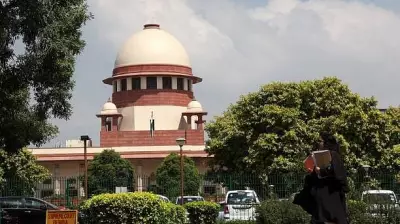
A bench comprising Justice Vijay Kumar Shukla and Justice Alok Awasthi, while hearing a collection of petitions including a Public Interest Litigation (PIL) filed by the Hindu Front for Justice, has officially listed the society's interlocutory application for hearing on April 2. The Hindu Front for Justice has staked claims on the disputed monument, adding another layer to this complex legal battle. The court's decision to schedule this hearing underscores the importance of the evidence being requested.
Society's Twofold Prayer Before the Court
The society's legal prayer before the court is clear and twofold. Firstly, they are seeking the production of the entire videography of the survey proceedings, ensuring that every moment of the archaeological investigation is documented and available for scrutiny. Secondly, they demand all colored photographs, including both those incorporated into the official ASI report and those taken by the ASI during the survey process but not included in the final documentation.
The applicant has submitted that these materials are absolutely essential to ensure complete transparency and to enable meaningful, informed comments on the survey report. Without access to this full visual evidence, the society argues that any evaluation of the ASI's findings would be incomplete and potentially biased.
Allegations of Procedural Flaws and Mala Fide Intent
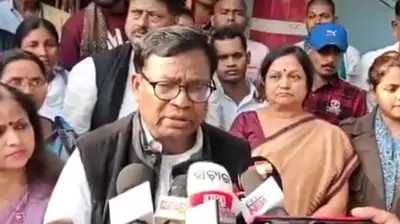
Society president Abdul Samad Khan contended in the detailed interlocutory application that the ASI conducted the survey in a procedurally flawed manner. He alleged that the survey team ignored every objection raised by the society during the process and, critically, made no mention of any of these objections in its final survey report. This omission, Khan argued, demonstrates "the mala fide intent" of the ASI, suggesting a prejudiced approach that undermines the credibility of the entire survey.
Background of the Court's Directives and Survey Timeline
In the last hearing on February 23, the court granted time to all parties involved to submit their objections or suggestions on the ASI survey report of the disputed complex. This report was formally handed over to the litigants following Supreme Court directives, highlighting the case's significance at the highest judicial level.
Earlier, on March 11, 2024, the court, acting on a PIL by the Hindu Front for Justice, directed the ASI to conduct a thorough scientific survey of the site. This directive included specific requirements:
- Ground Penetrating Radar-Global Positioning System (GPR-GPS) survey
- Carbon dating of all structures
- Unlocking of sealed rooms
- Preparation of a comprehensive report by a five-member Expert Committee
The court further directed the ASI to specifically photograph and video-graph the survey in the presence of two nominated representatives from both the petitioners and respondents, including the Maulana Kamaluddin Welfare Society, to ensure transparency and authenticity.
Specific Allegations Regarding Survey Conduct
President Abdul Samad Khan presented a series of specific allegations regarding how the survey was conducted, challenging the transparency mandated by the court:
- Unauthorized Start: The survey allegedly began on March 21, 2024, at around 5 PM without any official information provided to Khan. He learned of it only through social media, despite the court's direction that the survey should commence on March 22, 2024.
- Simultaneous Multi-Spot Survey: On March 24, 2024, the survey was conducted simultaneously at multiple spots, making it impossible for his representative to remain present at each location at the same time, thereby violating the court's directive for representative presence.
- Unauthorized Entry: On March 26, 2024, persons from one particular community allegedly entered the survey site during the ongoing process, raising concerns about interference and protocol breaches.
- Prohibited Excavation: On April 4, 2024, excavation was carried out despite being explicitly prohibited, according to the society's claims.
- Objection to Incorporated Items: On April 16, 2024, an objection was raised against incorporating idols and pillars allegedly planted at the site in 2003 into the survey findings, questioning the integrity of the archaeological evidence.
A detailed consolidated objection followed on July 21, 2024, as claimed in the interlocutory application. The application further referred to several news reports published during the survey period to substantiate its claim that it was a "compromised survey process," suggesting media documentation supports their allegations.
Historical and Religious Context of the Dispute
The Bhojshala-Kamal Maulana Mosque has been a contested site for decades, with deep historical and religious significance for both communities. Hindus contest the site as "Saraswati Sadan" and have sought, among other reliefs, a declaration that only members of the Hindu community hold the fundamental right under Article 25 of the Constitution to perform pooja and rituals at the premises. They argue that the Muslim community has no right to use any portion of the property for religious purposes.
Conversely, Muslims claim that the structure is the Kamal Maula Mosque, a fact they assert was verified by the ASI as far back as 1903. This historical claim adds a layer of archival evidence to the dispute, making the current ASI survey's methodology and findings particularly critical for both sides.
The upcoming hearing on April 2 will be crucial in determining whether the court will order the production of the complete visual evidence, potentially setting a precedent for transparency in archaeological surveys within legally disputed sites across India. The society's application represents a significant challenge to the ASI's procedures and could influence future surveys in similar sensitive cases.