Intense 12-Hour Inferno Engulfs Bhubaneswar Market, Causing Structural Damage
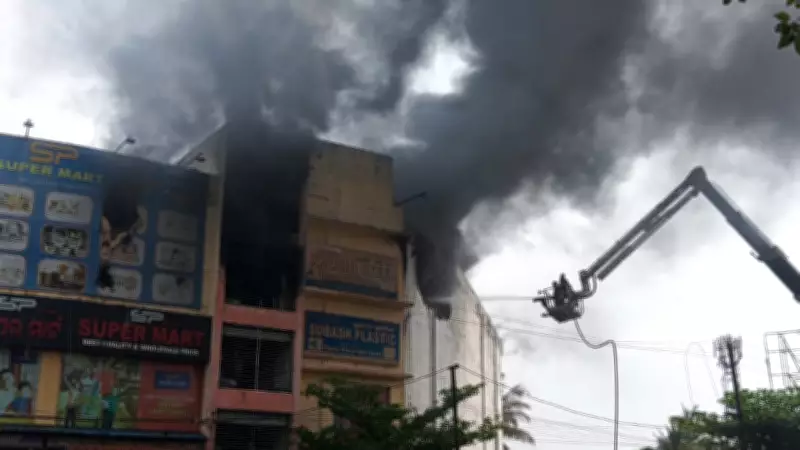
A devastating fire erupted at a four-storey market complex in Bhubaneswar's bustling Lingipur locality on Monday night, raging uncontrollably for more than twelve hours. The ferocious blaze generated such intense heat that it reportedly caused visible cracks to form in the building's structure, compelling firefighting teams to undertake drastic measures.
Firefighters Forced to Breach Building to Combat Smoke and Flames
To manage the overwhelming smoke and heat, emergency crews were forced to drill large holes and break significant portions of the market's exterior. The incident began around 10:30 PM, and despite the scale of the disaster, authorities confirmed that no casualties or injuries were reported. However, the fire spread with alarming speed from the third floor, fueled by highly combustible materials stored within.
The primary accelerants were identified as massive stockpiles of plastic and rubber goods, which turned the market into a tinderbox. Approximately forty fire tenders, alongside an advanced robotic firefighting machine, were deployed in a massive operation to subdue the flames, which destroyed property estimated to be worth several lakhs of rupees.

Challenging Firefighting Operation Amidst Poor Ventilation
Officials described the firefighting operation as exceptionally difficult due to multiple compounding factors. Thick, choking smoke, repeated flare-ups, and the market's enclosed architectural design—characterized by few windows and critically poor ventilation—severely hampered rescue and containment efforts.
"Conventional water jets proved ineffective against the highly flammable plastic and rubber stored on the upper floors," explained Sudhanshu Sarangi, Director General of Odisha Fire and Emergency Services. "Consequently, we had to rely extensively on specialized foam compounds to douse the flames."
Robotic Equipment and Combustible Materials Prolong the Blaze
The advanced robotic monitor was strategically sent inside the building to suppress the fire from within. However, it struggled against the extreme thermal conditions and dense smoke. Fire department sources highlighted that the excessive inventory of plastic items, including large quantities of plastic, steel utensils, and various household goods, were completely reduced to ashes, significantly prolonging the burning duration.
Sarangi further elaborated on the operational hurdles, stating, "The fourth floor contained substantial amounts of rubber and plastic, making the application of foam compounds absolutely essential to gain control. Additionally, we encountered major accessibility challenges, as the building lacked adequate windows and proper exit points, complicating our entry and strategy."
The incident underscores critical concerns regarding fire safety protocols in commercial establishments, especially those storing hazardous materials. The extensive damage and prolonged firefighting effort highlight the need for stringent regulations on material storage and building design to prevent such catastrophic events in the future.