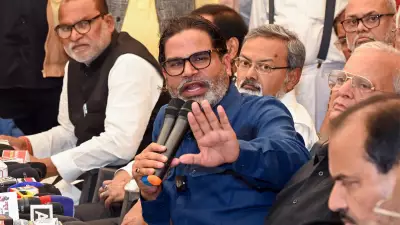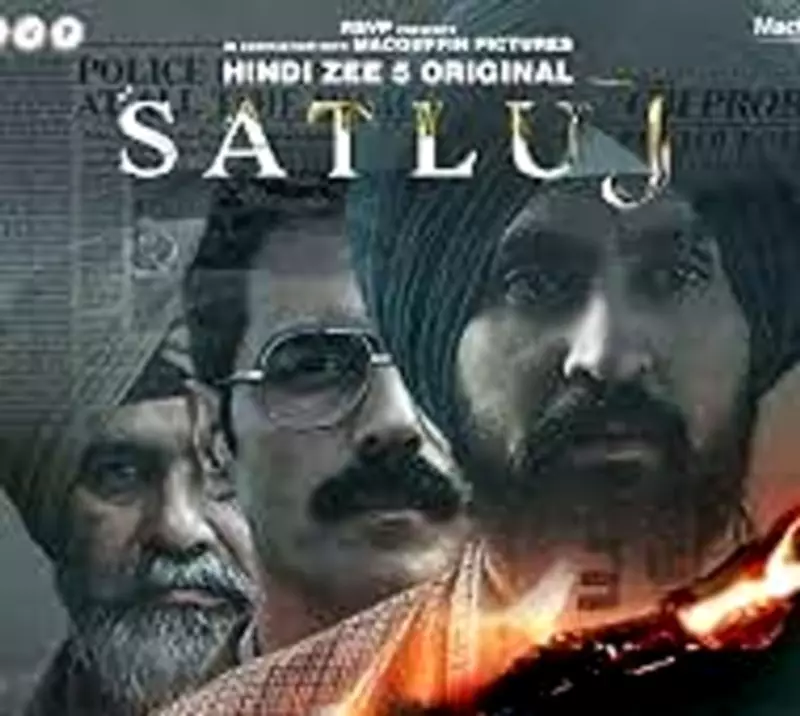
The Union Minister of State for Railways and Food Processing Industries, Ravneet Singh Bittu, has categorically denied allegations that the Bharatiya Janata Party or the central government was responsible for the removal of the film 'Satluj' from the OTT platform ZEE5 in India. The film, starring Diljit Dosanjh and directed by Honey Trehan, was released on July 3 after a three-year delay due to censorship issues, but was taken down on July 5 following a directive from the Union Ministry of Information and Broadcasting citing 'security concerns'.
Background of the Controversy
The film 'Satluj', originally titled 'Punjab '95', is based on the life of human rights activist Jaswant Singh Khalra, who investigated the alleged illegal cremation of thousands of unidentified bodies during the militancy era in Punjab in the 1990s. Before its release, the Central Board of Film Certification had demanded over 120 cuts, including changes to the title, removal of references to Punjab, and alterations to details identifying the real-life subject. Despite these hurdles, the film was released uncut on ZEE5 on July 3, but was removed two days later after the I&B Ministry intervened.
Allegations and Denials
Three days after the removal, the Aam Aadmi Party, which governs Punjab, accused Bittu of orchestrating the takedown. AAP general secretary Deepak Bali, who also serves as an adviser to Punjab's Tourism and Cultural Affairs Department, claimed he had watched the film and found nothing objectionable to the BJP, arguing that it actually portrays the Congress party in a negative light. Bittu initially did not respond, but in an exclusive interview with The Tribune on Wednesday, he defended his grandfather Beant Singh's legacy without directly addressing AAP's charge. He described the film as a 'one-sided narrative' of Punjab's militancy years, stating that any reckoning with the period must account for violence by militant groups, not only actions of the state. Speaking separately to reporters in Jalandhar, Bittu dismissed the allegation as 'baseless', noting that the events depicted in the film occurred when both Punjab and the central government were led by the Congress party. He emphasized that attributing the film's removal to the BJP is politically motivated and factually untenable, and clarified that OTT platforms are not subject to prior government censorship like theatrical releases, which fall under separate statutory frameworks for satellite television and cable broadcasts. Bittu also accused Diljit Dosanjh of exploiting Punjab's emotional and historical issues for commercial gain, alleging that the controversy was part of a calculated publicity campaign rather than a genuine effort to highlight history.

Support for the Film
Several public figures have rallied behind the film. Diljit Dosanjh, cricketer Harbhajan Singh, actress Gul Panag, filmmaker Ram Gopal Varma, and writer Niren Bhatt have publicly supported the film, arguing that difficult chapters of history should be debated rather than suppressed. Bhatt stated that the makers were never given a clear explanation of which parts of the film were considered objectionable, and questioned why other politically sensitive films are not treated similarly. Diljit had told fans during an Instagram Live before the takedown that he expected the film would be removed.
Impact and Public Response
Despite the takedown, the film has been widely downloaded and shared on platforms like WhatsApp and Facebook. Punjab's opposition Shiromani Akali Dal president Sukhbir Singh Badal has announced plans to screen the movie in every village and town across the state to remind the masses of human rights violations during the black days of terrorism in Punjab. Jaswant Singh Khalra remains a significant figure in Punjab's public memory of the militancy period; earlier reporting by The Tribune documented the case leading to the conviction of 135 policemen years after his crusade.

What Happens Next
The film's status in India now rests with the Inter-Departmental Committee at the I&B Ministry, which is examining the complaint that led to its removal. ZEE5 has stated that it is exploring legal options to restore the film for Indian audiences, but no timeline has been provided by either the ministry or the platform. AAP has not specified what evidence supports its allegation against Bittu, and Bittu has not filed any legal response so far. The matter is likely to unfold on three tracks simultaneously: the regulatory review at the I&B Ministry, any legal move by ZEE5 or the filmmakers, and the political exchange between Bittu and AAP, which is expected to intensify ahead of any electoral cycle in Punjab, given the film's subject matter touches both the Congress-era militancy period and current-day Sikh political sentiment.