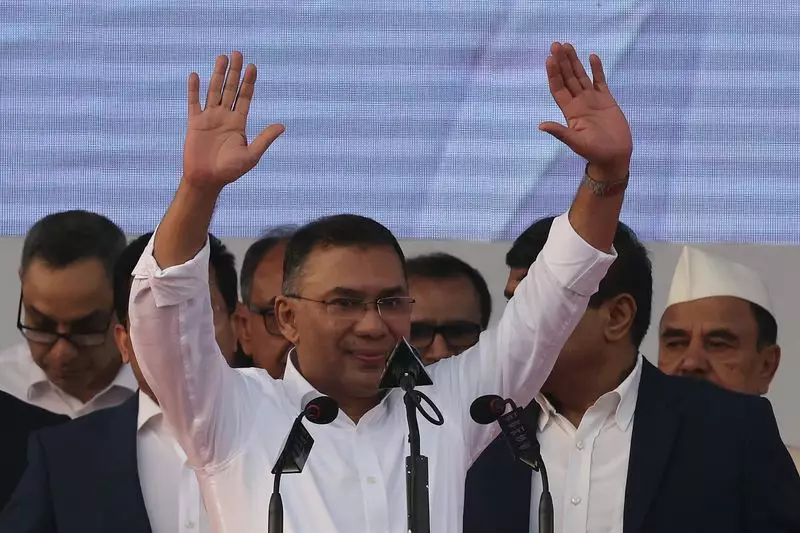
In a significant political statement, Bangladesh Nationalist Party (BNP) Chairman Tarique Rahman has declared that the nation must not revert to the political conditions that existed before August 5, 2018. Rahman, who lives in exile in London, made these remarks during a virtual discussion organized by the UK chapter of the Jatiyatabadi Swechchhasebak Dal.
A Call for Forward Momentum, Not Regression
The BNP leader's comments directly reference the period preceding a crucial legal verdict. On August 5, 2018, the Appellate Division of the Bangladesh Supreme Court delivered a judgment that affected the political landscape. Rahman asserts that the country has suffered immensely under the current Awami League government led by Prime Minister Sheikh Hasina. He argues that returning to the pre-verdict status quo is not an option for progress.
Rahman emphasized the need for a complete political overhaul. His core demand is the resignation of Prime Minister Sheikh Hasina and her government. He insists that only a neutral, caretaker administration can ensure free and fair elections, which he sees as the sole path to restoring democracy and stability in Bangladesh.

Demands for Democratic Restoration
The acting chairman of the BNP outlined a clear set of prerequisites for credible elections. He stated that elections must be held under a non-partisan, neutral government. Furthermore, Rahman demanded the unconditional release of all political prisoners, including BNP's imprisoned leader, Khaleda Zia. He also called for the withdrawal of all what he termed "fictitious" cases filed against opposition leaders and activists across the country.
Rahman accused the current administration of systemic oppression. He claimed that the government has effectively destroyed all democratic institutions, leaving the people with no recourse for justice or political expression. The virtual meeting saw participation from other senior BNP leaders, including Shahid Uddin Chowdhury Annie and Fazlur Rahman Khokon, who echoed the chairman's sentiments.
The Political Stalemate and Future Trajectory
This statement reinforces the ongoing political deadlock in Bangladesh. The main opposition party continues to boycott elections organized under the ruling party, citing a lack of impartiality. Rahman's speech is a strategic move to galvanize the party's grassroots and international attention ahead of any potential future polls.
The BNP chairman's exile status adds a complex layer to the political dynamics. Convicted in several cases, which he and his party label as politically motivated, Rahman leads the party remotely. His call to avoid the pre-August 5 period is a direct challenge to the Awami League's narrative of development and stability. It sets the stage for continued confrontation, with the opposition demanding a fundamental reset of the political system before engaging in any electoral process.
The international community, including key partners like India and the United States, closely watches these developments. The stability of South Asia is often linked to the political climate in Bangladesh. Rahman's forceful declaration indicates that the opposition is not willing to compromise on its core demands, suggesting that political tensions in the country are likely to persist in the near future.