

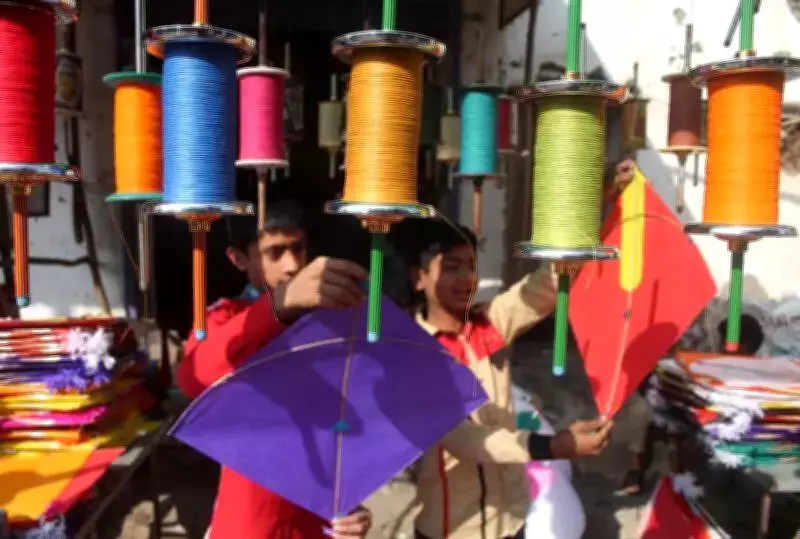
Bombay High Court Imposes May 5 Deadline for Nylon Manja Victim Compensation
The Aurangabad bench of the Bombay High Court has issued a stern directive to the Maharashtra state government, mandating the payment of compensation to 11 victims of nylon manja incidents before May 5. This compensation, which ranges from Rs 50,000 to Rs 1.5 lakh per victim, was originally ordered by the court in a previous ruling dated January 16. The court's latest intervention comes amid growing frustration over delays in implementing its directives.
Personal Liability for Collectors and Government Accountability
During a recent hearing on April 15, as part of a suo motu public interest litigation, the court emphasized that the collectors of Chhatrapati Sambhajinagar, Jalgaon, and Ahilyanagar districts would be held personally responsible for any further delays. Specifically, the bench warned that these officials could be directed to pay a penalty from their own pockets, amounting to Rs 1,000 per person per day, until the compensation is fully disbursed. This move underscores the court's determination to ensure compliance with its orders.
In the hearing, the government pleader presented a communication from the additional collector of Chhatrapati Sambhajinagar to the Maharashtra government secretary, dated April 13, which formally requested the release of funds for the victims in accordance with the court's order. However, the court expressed disappointment at what it described as a "sorry state of affairs," criticizing authorities for merely making demands and buying time instead of taking prompt action.

Court's Firm Stance on Public Interest Litigation
The two-member bench, comprising Justice Vibha Kankanwadi and Justice Neeraj Dhote, stated, "When orders are passed in public interest litigation, the government should be serious. Now, as a last chance, we give time to the state government to make the said payment." This remark highlights the court's insistence on governmental accountability in matters of public welfare.
Notably, during an earlier hearing on January 9, the court had explicitly warned that compensation amounts could be enhanced, with strictures imposed against authorities if they failed to act. The suo motu PIL was initiated in 2020 based on reports from TOI that highlighted the harmful effects of nylon manja and the lack of official action to address the issue.
Special Task Force Efforts and Court Scrutiny
During the April 15 hearing, the deputy inspector general of police from Maharashtra Cyber, who serves as a member of the state-level Special Task Force (STF) appointed by the court, provided updates on efforts to combat nylon manja. The STF reported that it had identified 23 manufacturers in Maharashtra engaged in producing synthetic fibre used in nylon manja. Instructions have been issued through the Maharashtra Pollution Control Board to these manufacturers, with seven of them providing undertakings that their products will not be used or sold for illegal kite-flying activities.
The STF also outlined plans to coordinate with various authorities, including road transport bodies, local self-government entities, highway police, transport associations, and courier service providers, to monitor and restrict the transportation of nylon manja. However, the court noted that the STF's affidavit lacked detailed strategies on how this coordination and regular monitoring would be implemented effectively.
Enforcement and Prosecution Challenges
Regarding enforcement actions, the STF informed the court that police drives across the state have intensified, leading to multiple FIRs and seizures related to nylon manja. In response, the court cautioned, "Mere lodging of FIRs and initiating prosecutions will not suffice until guilt is proven. There must be seriousness on the part of the police, as low conviction rates in such cases undermine policy implementation. The quality of prosecution should be prioritized over quantity."
The court further urged the STF to issue guidelines to police statewide on evidence collection and ensuring prosecutions reach their logical conclusion. It also suggested that the STF consider establishing district-wise or city-wise task forces, tailored to population sizes, to better implement forthcoming policies.

Monitoring and Policy Development
The STF highlighted that the cyber department has set up a special mechanism to monitor e-commerce platforms for nylon manja sales and is conducting continuous surveillance drives. The court advised that such actions should not be limited to the current year but should become a continuous process to ensure long-term effectiveness.
Additionally, while the environment and climate change department plans to develop a comprehensive policy on nylon manja, and the STF intends to record this policy, the court stressed the importance of avoiding overlapping or contradictory provisions in these policies. The next hearing for this suo motu PIL is scheduled for July 6, where further progress will be reviewed.





