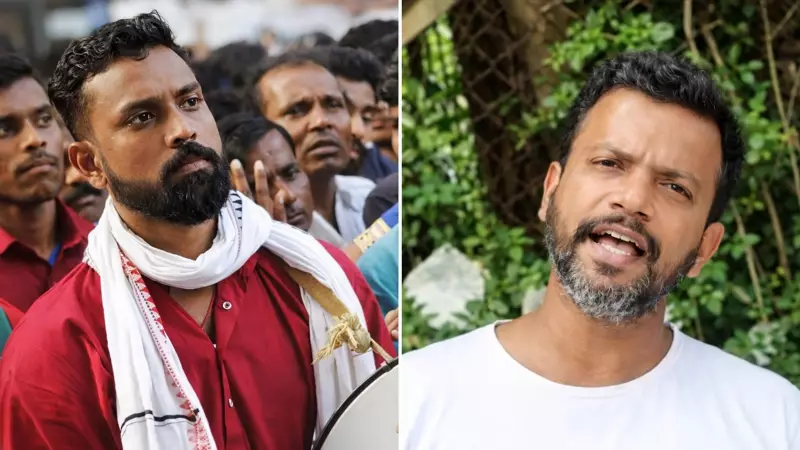
Bombay High Court Grants Bail to Kabir Kala Manch Artists in Elgaar Parishad Case
In a significant development, the Bombay High Court has granted bail to Sagar Gorkhe (37) and Ramesh Gaichor (41), members of the Pune-based cultural group Kabir Kala Manch (KKM). This decision comes more than five years after their arrest in the Elgaar Parishad case, where they faced allegations of Maoist links. The case, initially investigated by Pune city police, was transferred to the National Investigation Agency (NIA) in January 2020.
Background of the Elgaar Parishad Case
The Elgaar Parishad conclave was organized at Shaniwar Wada in Pune on December 31, 2017, to commemorate the 200th anniversary of the Battle of Koregaon Bhima. The following day, widespread violence erupted in the Koregaon Bhima area, resulting in one death and multiple injuries. An offence was lodged against some organizers at Vishrambag police station in Pune in January 2018.
Investigators alleged that the Elgaar Parishad received funds from the banned CPI-Maoist and that speeches at the event contributed to the violence. A total of 16 persons were arrested under IPC and UAPA sections, including Gorkhe, Gaichor, and Jyoti Jagtap, who were taken into custody in September 2020.

NIA Allegations and Press Releases
The NIA issued press releases stating that the accused were propagating Naxal activities and Maoist ideology, acting as co-conspirators with other arrested individuals. It was claimed they had contact with absconding accused Milind Teltumbde, a CPI-Maoist central committee member killed in 2021, regarding an urban network. Additionally, the NIA alleged that during visits to jungle areas, they underwent weapon and explosive training as part of Maoist movement awareness programs.
After a supplementary chargesheet was filed, the NIA further asserted that Gorkhe, Gaichor, and Jagtap attended meetings to organize the Elgaar Parishad as part of a well-chalked-out conspiracy, propagating the CPI-Maoist agenda across Maharashtra.
KKM's Response and Historical Context
Kabir Kala Manch condemned the arrests, labeling them a false case and an attempt to protect Hindutva leaders Sambhaji Bhide and Milind Ekbote, whom they accuse of being behind the Koregaon Bhima violence. Bhide and Ekbote were booked in a separate case by Pune rural police.
Investigators note that KKM was formed after the 2002 Gujarat riots to promote unity through cultural programs but was later allegedly hijacked by Maoist operatives. In February 2014, the then UPA government listed KKM as an active front organization of the CPI-Maoist in the Lok Sabha.
Previous Legal Entanglements and Recent Arrests
Gorkhe and Gaichor have a history of legal issues, including a 2011 UAPA case lodged by the Maharashtra Anti-Terrorism Squad (ATS) against 14 persons, including Milind Teltumbde and his wife Anjelo Sontakke, for spreading CPI-Maoist activities in urban areas of Maharashtra and Gujarat. The ATS probe alleged that Gaichor and Gorkhe attended a 15-day Naxal training camp in Pune organized by Teltumbde in 2010.
In 2013, after surrendering in Mumbai through a satyagraha and singing revolutionary songs, they were arrested along with other accused. The ATS chargesheet claimed they participated in arms training with about 150 Naxals in jungle areas between November 2011 and April 2012. All accused denied these allegations and were later released on bail, with the 2011 case still pending in a Mumbai court.
In May last year, the ATS arrested KKM member Prashant Kamble, alias Laptop, who had been missing since 2010. Investigators recovered fake identity documents in the name of Sunil Jagtap. Another KKM member, Santosh Shelar alias Painter, was arrested in January 2024 for allegedly joining the armed Maoist movement with Kamble.
Conclusion and Ongoing Legal Proceedings
The granting of bail by the Bombay High Court marks a pivotal moment in this long-standing case, which intertwines cultural activism with serious allegations of extremism. As the legal battles continue, the outcomes will likely have broader implications for issues of free speech, national security, and the interpretation of anti-terror laws in India. The case remains under scrutiny, with multiple layers of investigation and historical context shaping its narrative.