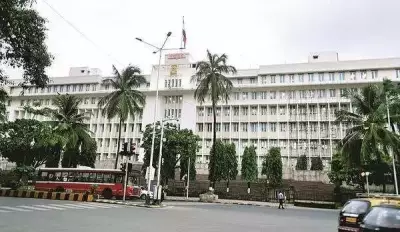
The Bombay High Court delivered a sharp rebuke to the Commissioner of the Brihanmumbai Municipal Corporation (BMC) for attempting to requisition court staff for election-related duties. The court directed the civic chief to immediately find alternative arrangements and refrain from involving the judiciary's administrative workforce.
Court Bench Issues Stern Directive
A division bench comprising Chief Justice Shree Chandrashekhar and Justice Gautam Ankhad heard the matter. The judges expressed strong disapproval of the move that sought to divert court employees for non-judicial work. The bench explicitly told the BMC Commissioner to "save" himself from this course of action and make all necessary arrangements from other sources at his disposal.
The hearing took place on 05 January 2026, highlighting an ongoing tension between civic authorities and the judiciary over the deployment of personnel during election periods. The court's intervention underscores the importance of maintaining the independence and separate functioning of the judiciary's administrative machinery.
Implications for Civic and Judicial Administration
This incident brings to light the practical challenges faced during large-scale electoral exercises. While the Election Commission of India requires significant manpower to conduct free and fair polls, the High Court's stance clarifies that pulling staff from critical judicial functions is not an acceptable solution.
The court's order effectively shields court staff from being drafted into election duty, ensuring that the daily workings of the justice system are not hampered. It places the responsibility squarely on the shoulders of the BMC Commissioner and the civic body to explore other pools of manpower or contractual services to meet election obligations.
Looking Ahead: A Precedent for Future Elections
The Bombay High Court's firm stance is likely to set a precedent for similar requests in Maharashtra and potentially other states. It reinforces the principle that while cooperation for elections is essential, it must not come at the cost of paralyzing another vital pillar of democracy—the judiciary.
The BMC will now have to rework its logistics and staffing plans for upcoming electoral duties without relying on court employees. This decision emphasizes the need for civic authorities to develop robust, independent systems for election management well in advance.