

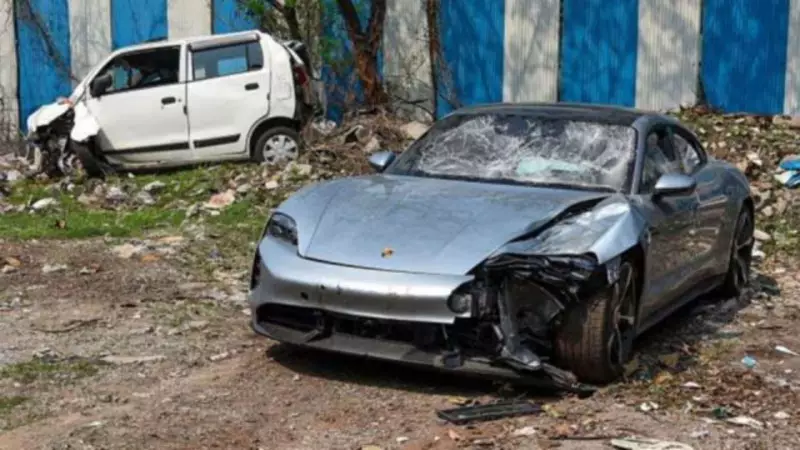
In a significant development, the Bombay High Court has refused to grant bail to eight individuals, including the father of the minor accused, in the high-profile Pune Porsche crash case that claimed two young lives. The court emphasized the gravity of the offence and the potential for tampering with evidence.
Court Cites Seriousness of Offence and Tampering Fears
A single-judge bench of Justice Shyam C Chandak delivered the order on Tuesday, December 16, 2025. The bench firmly stated that the charges against the accused were of a serious nature. It highlighted a tangible possibility that the accused, if released, could tamper with evidence or attempt to influence witnesses connected to the case.
The group whose bail pleas were rejected comprises family members of the minor driver, doctors from Pune's Sassoon Hospital, and other individuals involved. They face charges under various sections of the Indian Penal Code (IPC) and the Prevention of Corruption Act.

The Tragic Incident and Alleged Cover-Up
The case stems from a horrific accident in the early hours of May 19, 2024, in Pune's Kalyani Nagar. A Porsche, allegedly driven at high speed by the intoxicated minor, crashed into a motorcycle. The collision resulted in the tragic deaths of two software engineers, Aneesh Awadhiya and Ashwini Koshta.
During the bail hearing, Special Public Prosecutor Shishir Hiray and advocate Shubham Joshi, representing the Pune Police, vehemently opposed the bail applications. They argued that the accused played a pivotal role in a conspiracy to swap the minor's blood samples at Sassoon Hospital after the accident. The prosecution contended that this act constituted a fraud on the judicial system. Suresh Kumar Koshta, father of victim Ashwini, also opposed the bail pleas.
Legal Proceedings and Past Bail Decisions
The bail denial order adds another chapter to the complex legal journey of this case. In a contrasting move earlier this year, the Supreme Court had granted interim bail to the mother of the minor accused in June, noting she had been in jail for over ten months. This interim bail was confirmed last month.
In October 2024, another bench of the Bombay High Court had denied anticipatory bail to the father of the minor driver's friend. That court observed a "strong prima facie" case against him for his alleged involvement in the blood sample swapping.
Furthermore, in June 2024, the Bombay High Court had ordered the release of the minor accused himself. The court had found the custody and remand orders passed against him to be "absolutely illegal and mechanical." The minor was placed under the supervision of his paternal aunt, who was tasked with ensuring compliance with rehabilitation directives from the Juvenile Justice Board (JJB).
The latest bail rejection underscores the judiciary's stern view of the alleged attempts to obstruct justice in a case that has captured national attention and sparked debates on accountability and privilege.






