The Bombay High Court firmly rejected petitions on Wednesday that demanded investigations into widespread candidate withdrawals during recent municipal corporation elections in Maharashtra. The court also dismissed a separate plea calling for elections to proceed with votes counted for the remaining candidate and the NOTA option.
Court Labels Petitions as Frivolous
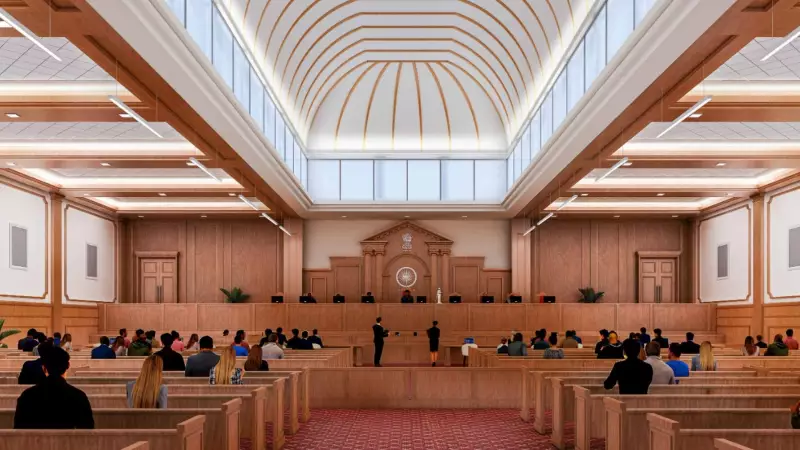
A division bench comprising Chief Justice Shree Chandrashekhar and Justice Gautam A Ankhad heard the arguments. The bench declared the public interest litigations (PILs) as completely frivolous. They emphasized that the petitions represented an abuse of the legal process.
The judges pointed out a fundamental error in one petition. It sought directions for the Election Commission of India (ECI) to declare results after vote counting. However, the ECI does not conduct municipal elections in Maharashtra. This responsibility falls under the State Election Commission (SEC).

Allegations of Coercion and Withdrawals
The petitions were filed by Maharashtra Navnirman Sena (MNS) leader Avinash Jadhav and Pune resident Sameer Shirish Gandhi. Their lawyer, advocate Aseem Sarode, argued the case. Jadhav claimed that rival candidates did not withdraw voluntarily.
He alleged systemic coercion, threats, and illegal inducements forced these withdrawals. This situation, he argued, violated the constitutional mandate for free and fair elections under Article 243-ZA.
Jadhav stated that the SEC had already ordered inquiries into approximately 69 candidates. These candidates were declared elected unopposed across 29 municipal corporations. The inquiries aimed to determine if coercion caused the large-scale withdrawal of nomination papers before the January 2 deadline.
Ruling Coalition Claims and SEC Actions
The ruling Mahayuti coalition had claimed numerous unopposed victories ahead of the polls scheduled for January 15. In response, the State Election Commission sought reports from local officials. These reports were to ascertain whether force or intimidation prevented other candidates from contesting.
The plea noted that a candidate is only considered truly victorious after the Commission receives and considers a report, then makes a final decision. Jadhav also sought directions for the state government to amend the Maharashtra Municipal Corporations Act, 1949. He wanted specific provisions for a minimum vote share for candidates elected unopposed.
Court's Firm Reasoning for Rejection
The bench delivered a clear and reasoned order for rejecting the pleas. "Without adverting to the facts stated in these writ petitions, we hold that the prayers made in these petitions cannot be granted," the bench stated.
They explained that no inquiry could be conducted at the instance of a person who does not claim they were prevented from filing a nomination or contesting the election. Even if such a situation existed, the appropriate authority, not the writ court, should look into it. The person could seek remedies elsewhere.
The court also highlighted that the petitioner did not claim to be espousing the cause of municipal workers. This further weakened the basis of the PIL.
Separate Plea on NOTA and Vote Counting
Through another petition, Ajay Jeya Murugan Nadar from a Thane labour union sought different directions. He wanted election authorities to proceed with the election program in Thane Municipal Corporation (TMC). He requested that results for certain wards be declared after recording and considering the total votes cast for the remaining candidate and the NOTA option.
The court observed that a statutory regime already exists for conducting municipal elections. This regime includes guidelines from the State Election Commission. The bench reiterated that labeling this writ petition as a PIL constituted an abuse of the legal process.
The Bombay High Court's dismissal underscores the judiciary's stance on maintaining procedural correctness. It reinforces that petitions must have a solid legal foundation and cannot be based on erroneous assumptions about which bodies conduct elections.