The Bombay High Court delivered a strong message to the Maharashtra government on Thursday. The court stated that providing timely compensation to the families of manual scavengers who die on duty is critically important. This statement came after the court learned about twelve pending compensation cases in the state.
Court's Firm Stance on Compensation
A bench comprising Justices Bharati H Dangre and Manjusha A Deshpande made the observation. They clarified that the state government must bear the compensation costs initially. The government can later recover these funds from contractors found at fault. However, the justices stressed that the speed of payment to the legal heirs is the most crucial factor.
"What is most important is the award of timely compensation to the legal heirs," the bench remarked. These families have lost their loved ones and need financial support without unnecessary delays.
Focus on a Specific Case in Kalyan
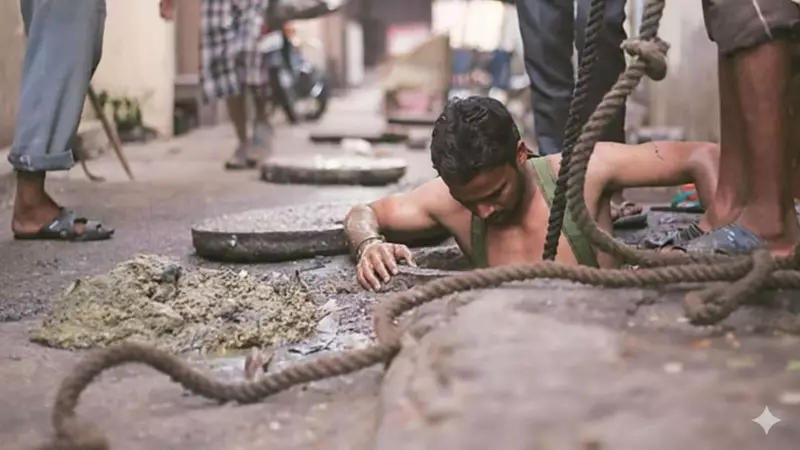
The court also directed its attention to a particular incident. It asked the state government to confirm whether compensation reached the family of a man who died in June 2023. This worker was electrocuted while cleaning a drain in Kalyan, located in Thane district.
The case involves Ritik Kurkute, who died while performing manual scavenging work. He was employed by a contractor named M/s Pawani Enterprises, which worked for the Kalyan-Dombivli Municipal Corporation (KDMC).
Petitioner's Arguments and Demands
The hearing was based on a plea filed by the Shramik Janata Sangh trade union. Senior advocate Gayatri Singh represented the petitioner union in court. She argued that these deaths point to serious safety failures for manual scavengers.
Singh highlighted poor implementation of the 2013 law that prohibits manual scavenging and mandates rehabilitation. She made specific demands for the Kurkute family:
- Payment of Rs 30 lakh in compensation, following past Supreme Court directives.
- A proper inquiry into the circumstances of Ritik Kurkute's death.
- Rehabilitation support for the affected family.
The union raised additional concerns about worker safety. They noted a frequent lack of proper safety equipment. Contractors often fail to conduct necessary safety tests before sending workers into dangerous nullahs and drains.
Government's Submission and National Data
Additional Government Pleader O A Chandurkar responded for the state. He submitted a report dated November 18, 2025. This report was originally sent to the Union Ministry of Social Justice and Empowerment.
The document included a state-wise breakdown of deaths and compensation payments from 1993 to October 31, 2025. The data revealed a grim national picture. A total of 1,327 manual scavenging workers died across India during that period.
Regarding Maharashtra, the High Court noted a troubling detail. Out of the twelve pending compensation cases in the state, payment had not been made in eleven instances. Chandurkar requested time to get instructions on the Kurkute family compensation, which the court allowed.
Court's Directives and Future Steps
The bench issued several instructions during the hearing. It asked the workers' union to provide practical suggestions. These suggestions should focus on two key areas:
- Effective implementation of guidelines to prevent manual scavenging.
- Measures for the rehabilitation of workers who suffer injuries.
The court directed the state government to consider feasible suggestions from the petitioner union. The goal is to better safeguard the interests of manual scavengers. The petitioner union also sought the registration of an FIR and an inquiry into alleged violations by civic officials and the contractor involved in the Kalyan case.
The Bombay High Court has scheduled the next hearing for February 5. The matter will continue as the court monitors the state's actions on compensation and safety reforms.