

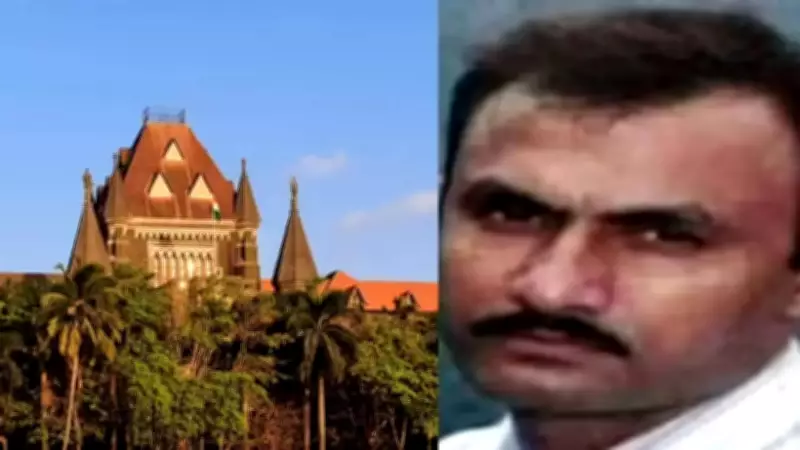
MUMBAI: The Bombay High Court on Thursday upheld the 2018 acquittal of 21 police officers from Gujarat, Rajasthan, and Andhra Pradesh, along with a civilian, in the 2005 Sohrabuddin Shaikh 'fake encounter' case. The appeals had been filed in April 2019 by Shaikh's brothers, Rubabbudin Shaikh and Nayabuddin Shaikh, challenging the trial court's verdict of acquittal.
Court's Decision
"Appeals dismissed," pronounced Chief Justice Shree Chandrashekhar and Justice Gautam Ankhad while delivering the order. The brothers, through their counsel Gautam Tiwari, argued that the trial was "flawed" and the acquittals "meritless." However, Additional Solicitor General Anil Singh, CBI counsel Kuldeep Patil, and senior counsel Amit Desai, representing former Gujarat ATS inspector Narainsinh Dabhi, contended that the trial court's ruling was reasoned and justified.
Background of the Case
The Sohrabuddin Shaikh case involved an alleged staged encounter of the gangster in the early hours of November 26, 2005, between Narol Circle and Vishala Circle in Ahmedabad. Additionally, Tulsiram Parajapati was killed in a separate encounter at Ambaji, Gujarat, on December 28, 2006. The policemen also faced trial for the disappearance and murder of Sohrabuddin's wife, Kauser Bi, who was allegedly burned on November 27, 2005, and her body disposed of on November 28 in the village of Illol, Gujarat, situated on the banks of the Narmada River.

The investigation initially handled by Gujarat's ATS and CID (crime) was transferred to the CBI by the Supreme Court in 2010, and the trial was shifted to a special trial court in Mumbai. Between 2014 and 2017, the special court discharged 16 accused, including then Gujarat Minister Amit Shah, senior IPS officers Dinesh M N, Rajkumar Pandiyan, and D G Vanzara, and former Rajasthan Home Minister Gulab Chand Kataria.
Key Contentions
The civilian among those acquitted, Rajendra Jeerawala, owned a guesthouse in Gujarat. According to the CBI, he had knowledge that his guesthouse was used by policemen to detain Sohrabuddin and Kausar Bi, thus facilitating their illegal detention. Sohrabuddin's brothers, both residents of Madhya Pradesh, argued that the loss of their brother and sister-in-law was irreparable and that the state, represented through the CBI, had not filed any appeal challenging the acquittal judgment. The ASG noted that the CBI, having "accepted" the trial court's verdict, did not appeal. Desai also argued that the acquittal was well-reasoned, with no evidence to establish any criminal conspiracy, and that its reversal was not even a "bleak possibility."
Trial Court Observations
In his ruling, Special Judge S J Sharma found no evidence to show conspiracy and stated that the CBI had probed the case with a "premeditated theory and script intended to somehow implicate political leaders." Nearly 100 witnesses turned hostile during the trial. The special court found their recantation truthful and said the CBI had incorrectly recorded their statements.
The appeals by the brothers argued that the "observations and conclusion" of the special trial court judge were "wholly and completely contradictory to the evidence at hand," "devoid of any reasonableness," and based on "unwarranted assumptions and manifestly erroneous appreciation of evidence." They claimed this led to a miscarriage of justice and required the High Court's interference to secure justice. However, the senior counsel for some of the accused argued that the trial court verdict merited no interference, and the High Court agreed.






