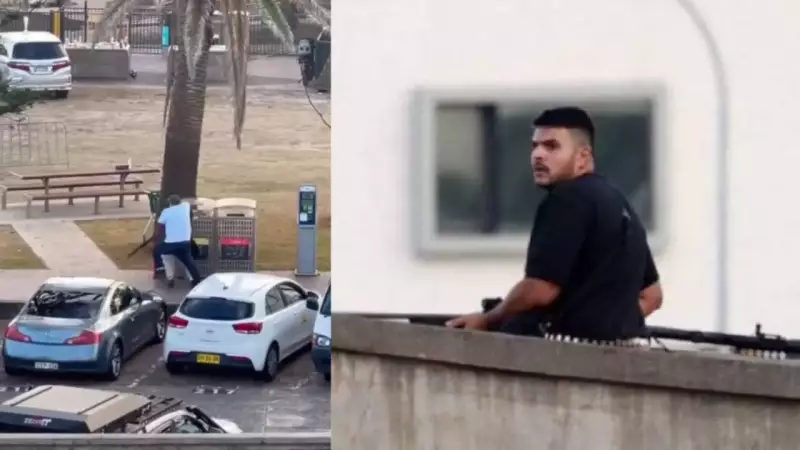
Australian investigators are meticulously reconstructing the path to radicalisation of a father and son from Hyderabad, who allegedly carried out a devastating attack at Sydney's Bondi Beach. The assault on Sunday resulted in 15 fatalities and left dozens injured, shocking the nation.
Attack Details and Suspects' Background
The older suspect, 50-year-old Sajid Akram, was shot dead by police at the scene. His son, 24-year-old Naveed Akram, was wounded and remains hospitalised under police guard. At a Tuesday news conference, Australian Prime Minister Anthony Albanese confirmed the attack was ideologically motivated, citing evidence including Islamic State flags found in a seized vehicle.
Sajid Akram was born and raised in Hyderabad's Toli Chowki area. He graduated in commerce from Anwar-ul-Uloom College before migrating to Australia in November 1998. Telangana police confirmed he had limited contact with his family in India after moving. He visited India only six times in 27 years, primarily to handle property matters, including selling ancestral land in Hyderabad's Sha Ali Banda area.

He married an Australian woman of Italian descent, Venera Grosso, and the couple had two children. Family members in India told police they were unaware of any extremist views held by Sajid or his son.
Radicalisation Occurred in Australia, Not India
Indian authorities have clarified there is no indication the suspects were radicalised in India. Telangana's Director General of Police, Shivadhar Reddy, stated that Australian agencies informed their Indian counterparts that the radicalisation appears to have taken place after Sajid Akram settled in Australia.
"The factors that led to their radicalisation appear to have no connection with India or any local influence," Reddy said. "Telangana Police has no adverse record against Sajid during his stay in India prior to his departure in 1998." An intelligence official added that both men "prima facie appear to have been radicalised in Sydney."
Authorities confirmed that Naveed Akram attended an Arabic and religious learning course at an institution in Sydney between 2019 and 2022. Investigators are examining if this period coincided with their exposure to extremist material.
Philippines Trip and Evidence Recovered
Australian police are also probing a three-week trip to the Philippines taken by the pair last month. They travelled from Sydney to Manila on November 1, flew to Davao City, and returned on November 28. Sajid Akram travelled on an Indian passport, while his son used an Australian passport.
New South Wales Police Commissioner Mal Lanyon said investigators are trying to establish the trip's purpose, with Australian media reporting they may have sought military-style training. Philippine authorities noted that while groups like Abu Sayyaf have expressed support for ISIS, such networks are now significantly weakened.
After the attack, police seized a vehicle registered to Naveed Akram. Inside, they found improvised explosive devices (IEDs) and two homemade ISIS flags. Deputy Commissioner Michael Barrett stated the attackers appeared coordinated and aimed solely at maximising casualties, showing no regard for their victims' age or ability.
Twenty-five people remain hospitalised, with 10 in critical condition, including three children. Australian counter-terrorism agencies continue to work with international partners, including India and the Philippines, to map the suspects' movements and ideology. The investigation is ongoing, with further arrests not ruled out.