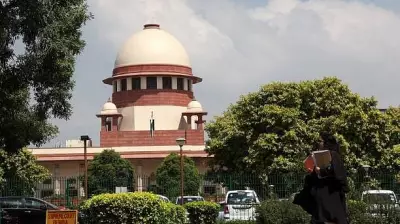
Calcutta High Court Orders Release of Bangladeshi National After 21 Years in Prison
The Calcutta High Court has made a landmark decision by ordering the immediate release of a Bangladeshi national who has been incarcerated for a staggering 21 years for a murder conviction. The court's ruling came after it was conclusively established through medical evidence that the individual was a minor at the time the crime was committed. In a parallel development, the High Court also directed the release of another murder convict from Birbhum district who had served 14 years in prison under similar circumstances.
Legal Grounds: Juvenile Justice Act Provisions Invoked
The division bench comprising Justice Rajasekhar Mantha and Justice Rai Chattopadhyay presided over both cases on Thursday. The bench firmly held that under the Juvenile Justice (Care and Protection of Children) Act, a minor cannot be sentenced to more than seven years of imprisonment. This legal principle formed the cornerstone of the court's decision to grant freedom to both convicts after their juvenility was confirmed through ossification tests.
Detailed Case Background of the Bangladeshi National
The case of the Bangladeshi national involves a complex legal journey spanning nearly two decades. According to state counsel Bitashok Banerjee, the convict, along with two accomplices, was involved in hacking a man to death in Basirhat near the India-Bangladesh border on February 8, 2005. While his co-accused died during the pendency of the case, the Bangladeshi individual was convicted and sentenced to life imprisonment in 2005.
His legal representatives argued that he was born on January 1, 1990, making him a 'child in conflict with law' at the time of the offense. In 2016, he filed an appeal in the High Court challenging his conviction. The case eventually came before a division bench of Justice Joymalya Bagchi and Justice Bivas Pattanayak on April 11, 2022, which ruled that the Juvenile Justice Act permits a convict to raise the plea of juvenility even at the appellate stage.
The High Court subsequently ordered an ossification test to determine his exact age at the time of the crime. The additional district and sessions judge of Basirhat submitted a report stating that the convict was approximately 36 years old at the time of the recent ossification test. Based on this medical evidence, the district judge calculated that the Bangladeshi national was around 16 years old when he committed the murder.
The Second Case: Birbhum Convict's Release
In the second case, the convict from Birbhum district was found to have been aged 15 years and 9 days when he strangled his alleged wife on February 27, 2011. His counsel, Achin Jana, presented arguments that despite being a minor at the time of the incident, he was not tried under the provisions of the Juvenile Justice Act. Similar to the first case, the additional district and sessions judge of the fast track court at Rampurhat, Birbhum, conducted an ossification test which confirmed his status as a minor during the commission of the crime.
Court Directives and Repatriation Order
The Calcutta High Court has issued specific directives following its ruling. The bench has ordered the state authorities to facilitate the repatriation of the Bangladeshi national to his home country. This aspect of the judgment highlights the humanitarian considerations alongside the legal technicalities involved in such cross-border cases.
The court's decision underscores the importance of proper age verification in criminal proceedings involving minors. The ossification test, which examines bone development to estimate age, played a crucial role in both cases. This medical examination has become increasingly significant in legal contexts where documentary proof of age is unavailable or disputed.
These cases demonstrate how appellate courts can rectify judicial errors years after initial convictions. The High Court's interpretation that juvenility pleas can be raised at appellate stages ensures that individuals who were minors during their offenses receive appropriate legal consideration, regardless of when this fact comes to light.
The releases mark significant victories for juvenile justice advocates and highlight the ongoing need for careful age determination in criminal cases involving young offenders. The Calcutta High Court's rulings reinforce the protective intent of juvenile justice legislation while addressing complex legal and humanitarian dimensions in serious criminal cases.