

The Central Bureau of Investigation (CBI) has registered a series of corruption cases, unravelling what officials term as one of the largest departmental exam scams within the Western Railway zone. The scandal, centered on the manipulation of computer-based tests (CBTs) for promotions, came to light after a routine scrutiny of exam results raised red flags.
The Unravelling of a Systematic Fraud
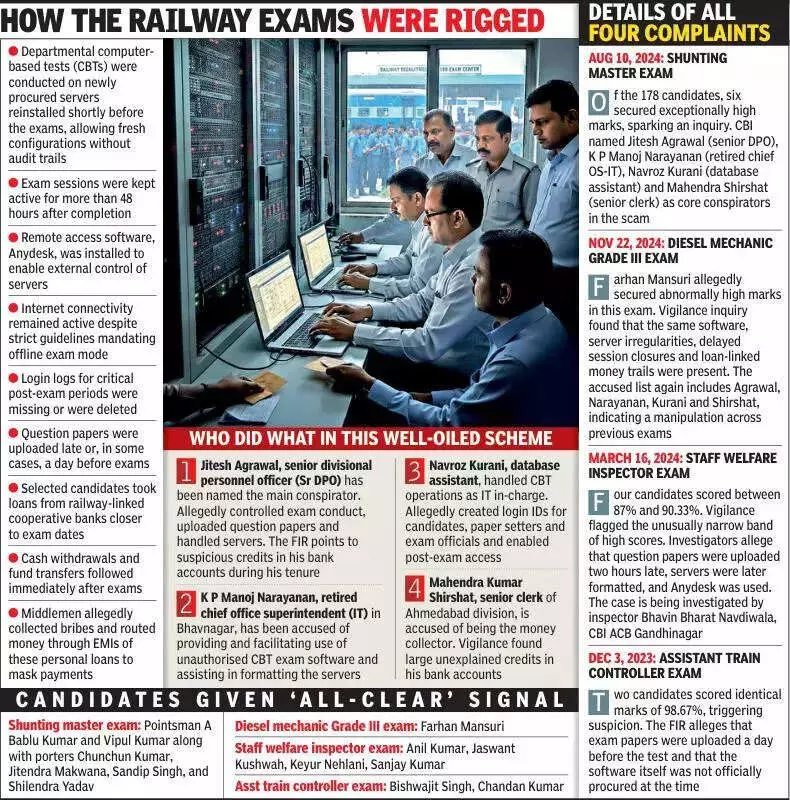
The investigation began with vigilance scrutiny of a specific exam for the post of shunting master, conducted on August 10, 2024. Officials found that six railway employees had secured abnormally high marks, triggering suspicion. The candidates were identified as Bablu Kumar, Chunchun Kumar, Jitendra Makwana, Sandip Singh, Shilendra Yadav, and Vipul Kumar.
A crucial lead emerged when it was discovered that all six had taken loans from the Jackson Credit Cooperative Society, a facility meant exclusively for railway staff, just days before the exam. This discovery prompted a deeper probe into other CBTs conducted in 2023 and 2024, revealing similar discrepancies.

Following completed vigilance inquiries and approval from the railway ministry, four formal complaints were filed on December 30 by Rashmi Lokegaonkar, deputy chief vigilance officer of Western Railway in Mumbai. This led the CBI to register FIRs, naming 10 railway officials as accused and also referring to unidentified public servants and private individuals.
Modus Operandi: Remote Access and Missing Digital Trails
At the heart of the alleged conspiracy is Jitesh Agrawal, the then senior divisional personnel officer (senior DPO), accused of being the key decision-maker overseeing the tainted CBTs. Forensic analysis exposed severe procedural violations.
One FIR notes that the exam session was not formally closed for over two days after completion, violating protocols. During this window, third-party remote access software 'Anydesk' was installed on the exam servers, allowing unauthorized remote control even after the exam had ended. Investigators also found the servers remained connected to the internet, contrary to rules requiring complete isolation during CBTs.
A critical finding was the absence of login logs for the period immediately following the exams, making it impossible to trace who accessed the system. The FIRs allege the exam software itself was developed by K P Manoj Narayanan, a retired chief office superintendent (IT) who had worked under Agrawal in the Bhavnagar division, where similar software was allegedly used earlier.
Key Accused and Financial Links
The network involved several officials with specific roles. Navroz Kurani, a database assistant, allegedly handled the creation of login IDs for candidates and officials, giving him access to critical credentials. Mahendra Kumar Shirshat, a senior clerk, is accused of collecting money from candidates to influence results.
The financial trail strengthened the case. Investigators reported "huge suspicious credits" in the bank accounts of both Agrawal and Shirshat. It is alleged that Shirshat acted as a conduit, collecting bribes from beneficiaries and routing them to senior officials. The loans taken by the six beneficiaries are believed to have been structured bribes, with their EMIs serving as payments to the scam orchestrators.
Aftermath and Ongoing Probe
The CBI has filed four FIRs based on the evidence of remote tampering, missing digital trails, and suspicious financial transactions. The case highlights a sophisticated scam exploiting technology and procedural laxity within the railway's promotion system.
The investigation is ongoing as the agency looks into the full extent of the network and the exams impacted. This case serves as a stark reminder of the vulnerabilities in digital examination systems and the need for stringent cybersecurity protocols in government departments.






