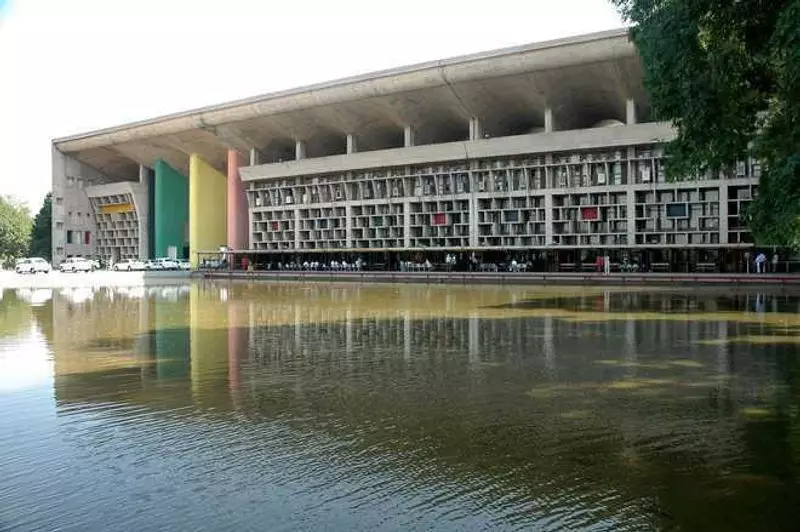
The Punjab and Haryana High Court has delivered a firm verdict reinforcing the primary purpose of public footpaths, dismissing a petition filed by street vendors challenging their removal from these walkways in Chandigarh. The court emphasized that the fundamental right of pedestrians to safe and unobstructed movement cannot be compromised by unauthorized encroachments.
Court's Rationale: Pedestrian Safety Paramount
Justice Vinod S. Bhardwaj, presiding over the case, underscored a clear legal and civic principle. The bench stated that footpaths are exclusively designed and meant for the use of pedestrians. Allowing any form of permanent or semi-permanent occupation by vendors, the court argued, directly infringes upon the rights of citizens to walk freely and safely. The judgment pointed out that such encroachments force pedestrians onto the main carriageway, exposing them to significant risk from vehicular traffic and defeating the very purpose of having dedicated pedestrian pathways.
The petition was filed by a group of street vendors who were affected by a removal drive conducted by the Chandigarh Municipal Corporation. They had sought legal relief against the eviction, possibly arguing for their right to livelihood. However, the court balanced these competing interests, giving precedence to public safety and the designated use of public infrastructure. The ruling clarifies that while livelihood concerns are important, they cannot override the statutory purpose of footpaths and the broader public interest in safe urban mobility.

Details of the Petition and the Eviction Drive
The legal challenge was mounted against the ongoing anti-encroachment efforts by the Chandigarh Municipal Corporation. These drives are part of a broader initiative to reclaim public spaces, ensure orderly urban management, and adhere to the city's master plan. The vendors, through their counsel, presented their case before Justice Bhardwaj's court. After hearing arguments from both sides, the bench found no merit in the petitioners' claims and consequently dismissed the plea.
The court's decision provides strong legal backing to the local administration's actions. It establishes a precedent that municipal authorities are within their rights to clear footpaths of obstructions to restore their intended function. This judgment is particularly significant for planned cities like Chandigarh, where urban design and zoning regulations are strictly enforced to maintain quality of life and civic order.
Implications for Urban Governance and Street Vending
This ruling has immediate and future implications for Chandigarh and potentially other cities. Firstly, it empowers the Municipal Corporation to continue its enforcement actions without legal ambiguity regarding footpaths. Secondly, it sends a clear message about the hierarchy of public space usage, placing pedestrian safety at the top.
However, the judgment also indirectly highlights the ongoing challenge of integrating the informal vending economy into urban planning. The court's dismissal does not permanently resolve the issue of street vendors' livelihoods but reinforces that a solution must be found without compromising pedestrian infrastructure. It may push the administration to work on designated vending zones as per relevant laws, ensuring both pedestrian rights and vendor welfare are addressed through proper policy and planning, not through unauthorized encroachment.
In conclusion, the Punjab and Haryana High Court's verdict is a decisive step towards safeguarding pedestrian rights in Chandigarh. By dismissing the vendors' petition, Justice Vinod S. Bhardwaj has reaffirmed that the rule of law and planned urban development must prevail to ensure safety and order for all citizens.