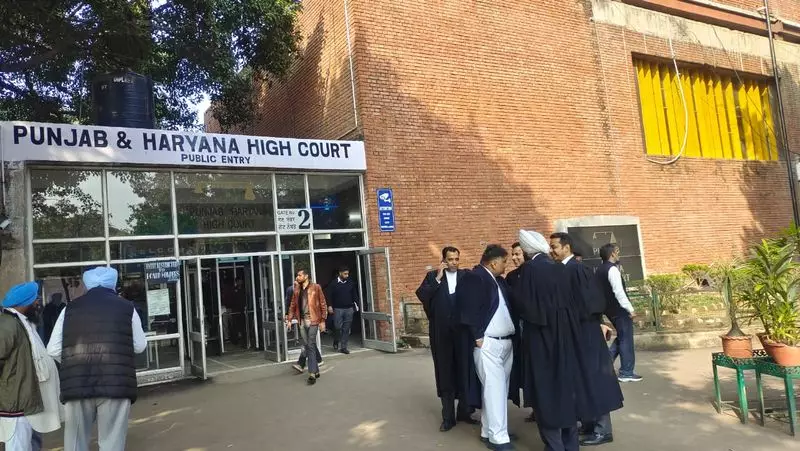
The Punjab and Haryana High Court has delivered a significant ruling, refusing to dismiss a First Information Report (FIR) filed against a lawyer accused of impersonating a magistrate. The incident, which caused a stir in Chandigarh's legal and law enforcement circles, occurred at a traffic checkpoint where the advocate allegedly misrepresented his identity to authorities.
The Court's Firm Stand on Legal Procedure
Justice Vikas Bahl presided over the case and issued a clear, unequivocal order. The bench dismissed the petition filed by advocate Rahul Rathore, who sought to have the FIR against him quashed. In his ruling, Justice Bahl emphasized that it would be premature to interfere with the ongoing investigation at this initial stage.
The court underscored the necessity of allowing the police to complete a thorough and impartial probe into the serious allegations. The judge stated that the appropriate course of action was for the investigating agency to follow the procedure, collect evidence, and proceed in accordance with the law. The ruling reinforces the principle that the judiciary should not short-circuit a legal investigation before it has run its full course.

Details of the Alleged Impersonation Incident
The FIR, which remains intact following the High Court's decision, stems from an event that took place on February 24, 2023. According to the police complaint, Rahul Rathore was stopped at a traffic checking point in Chandigarh. Upon being questioned by the police personnel on duty, the lawyer allegedly identified himself as a magistrate.
This act of posing as a judicial officer is a serious offence, potentially aimed at evading scrutiny or gaining undue privilege. The personnel, suspecting the misrepresentation, took action and registered a formal case against Rathore. The specific sections of the law invoked in the FIR relate to cheating and impersonation, highlighting the gravity with which the authorities viewed the attempt to deceive law enforcement.
Implications and Next Steps in the Case
The High Court's refusal to quash the FIR has several important implications. Firstly, it sends a strong message that attempts to obstruct or deceive police work, especially by officers of the court, will not be tolerated. Lawyers, as key stakeholders in the justice system, are held to a high standard of conduct.
Secondly, the order mandates the Chandigarh Police to continue its investigation without any judicial interference at this juncture. The police are now expected to:
- Interview all witnesses present at the traffic checkpoint.
- Gather any available technical or corroborative evidence.
- Complete the investigation and submit a report to the court.
The case will proceed based on the findings of this investigation. The petitioner, Advocate Rathore, will have to defend himself through the regular legal process. This outcome highlights the court's commitment to due process, ensuring that allegations are properly investigated before any judicial relief is considered.
Legal experts note that such cases test the integrity of public institutions. By allowing the FIR to stand, the Punjab and Haryana High Court has upheld the principle that no one is above the law and that every claim must be scrutinized through proper channels to uphold justice and maintain public trust in the system.