

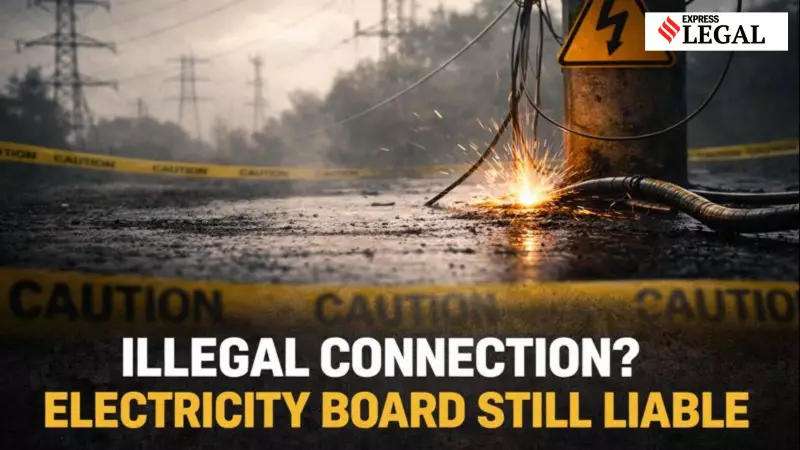
Chhattisgarh High Court Holds Electricity Board Responsible for Electrocution Death
The Chhattisgarh High Court delivered a significant ruling recently. It clarified that electricity departments bear liability for compensation when electrocution causes injury or death. This holds true even if a private individual installed an illegal electricity connection.
Court Upholds Compensation Order
Justice Rakesh Mohan Pandey heard an appeal from the state electricity board. The board challenged a trial court's directive to pay Rs 1.5 lakh as compensation. The payment was for the father of a 16-year-old boy who died from electrocution in 1996.
The court dismissed the board's appeal. It upheld the trial court's 2004 order. Justice Pandey emphasized the electricity board's statutory duty to supply energy safely in the locality.

Key Findings and Legal Doctrine
The court made several critical observations. It stated that the responsibility to compensate rests with the supplier of electric energy if transmitted energy causes harm. The board cannot defend itself by arguing that someone siphoned energy illegally.
The managers of the supply system must prevent such pilferage. They should install necessary devices for this purpose. The court noted that the father proved the existence of an illegal connection. His son contacted a live wire and died as a result.
Justice Pandey referred to Supreme Court precedents. He applied the doctrine of strict liability. This legal principle holds that a person who keeps something dangerous on their land is responsible if it escapes and causes damage.
The electricity department failed to show they did not provide the connection. They also did not demonstrate taking required measures to maintain the system or minimize theft.
Background of the Case
The tragic incident occurred in 1996. A 16-year-old boy died after electrocution from a live wire. The wire was allegedly laid without proper precautions and hung at a lower height.
His father filed for compensation. He argued the electricity connection violated department directions. The electricity department denied the allegations. A private individual also rejected claims of energy pilferage. This individual stated the department itself provided a temporary connection.
Arguments Presented in Court
Advocate K R Nair represented the electricity department. He argued the trial court made a legal error. Nair contended the private individual obtained the illegal connection without the department's knowledge. Therefore, only that individual should bear the damage burden. He requested the court to set aside the trial court's judgment.
Advocate Diksha Jaiswal appeared for the father. She supported the trial court's order. The High Court ultimately found her arguments more persuasive based on the evidence and legal principles.
The court's decision reinforces accountability for public utilities. It underscores their duty to ensure safe electricity distribution, regardless of unauthorized connections.






