

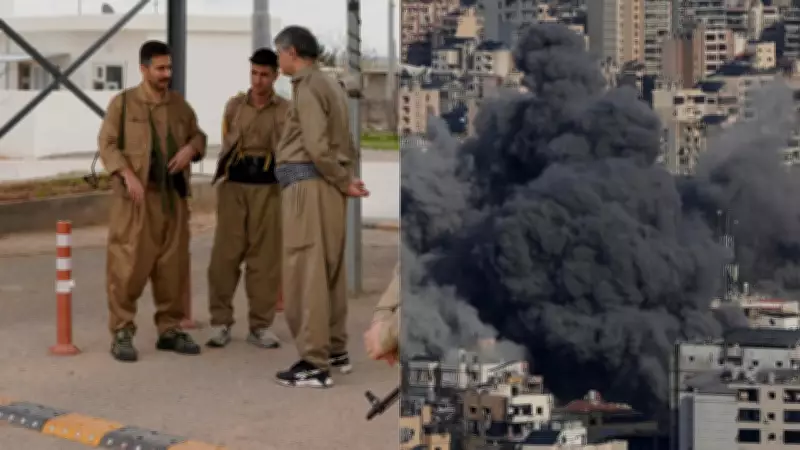
CIA Reportedly Plans to Arm Kurdish Forces to Spark Uprising in Iran
The Central Intelligence Agency (CIA) is reportedly working on a detailed plan to arm Kurdish forces as part of a strategic initiative to ignite a popular uprising within Iran, according to multiple sources familiar with the ongoing discussions who spoke to CNN. This development comes amid escalating regional tensions and ongoing conflicts involving Iran, the United States, and Israel.
Active Discussions and Military Support Proposals
Sources indicate that the Trump administration has been engaged in active talks with Iranian opposition groups and Kurdish leaders based in Iraq regarding the possibility of providing substantial military support. This effort is seen as a coordinated move to destabilize the Iranian regime from within by leveraging Kurdish factions.
Since the outbreak of recent hostilities, several Kurdish groups have issued public statements calling for action and urging Iranian military personnel to defect. In response, Iran's Islamic Revolutionary Guard Corps (IRGC) has intensified its operations against these Kurdish factions, announcing on Tuesday that it had targeted their positions with dozens of drones.

Kurdish Ground Operations and International Support
A senior Iranian Kurdish official informed CNN that Kurdish opposition forces are expected to participate in a ground operation in western Iran in the coming days, as tensions continue to rise in the region. "We believe we have a big chance now," the official stated, adding that they anticipate support from both the United States and Israel.
Any initiative to arm Iranian Kurdish groups would necessitate the cooperation of Iraqi Kurdish authorities to facilitate the transfer of weapons and allow the use of Iraq's Kurdistan region as a staging ground for operations. One person familiar with the discussions explained that the proposal envisions Kurdish armed groups engaging Iranian security forces to divert them from major urban centers, potentially enabling civilian protesters to mobilize with a reduced risk of violent crackdowns.
Strategic Objectives and Regional Implications
A U.S. official noted that Kurdish forces could also help strain Tehran's military resources by opening an additional front. Other proposals under consideration include whether Kurdish groups could seize and hold territory in northern Iran, potentially creating a buffer zone that would essentially benefit Israel by providing a strategic advantage.
The Trump administration has held active discussions with Iranian opposition groups and Kurdish leaders in Iraq over the possibility of extending military support to them, as per the sources. President Donald Trump reportedly spoke with Iraqi Kurdish leaders on Sunday to discuss the ongoing U.S. military operation in Iran and potential coordination as the mission advances, according to two officials who spoke to Axios.
Challenges and Kurdish Divisions
Kurdish opposition groups remain divided, marked by longstanding tensions, ideological differences, and competing agendas. Some officials within the Trump administration involved in discussions about potential support have expressed concerns over the groups' motivations in assisting the United States, highlighting the complexities of such alliances.
Background on the Kurdish People
The Kurds are one of the largest ethnic groups in the world without an independent state. An estimated 25 to 30 million Kurds live across a region spanning parts of Turkey, Iraq, Iran, Syria, and Armenia. While the majority are Sunni Muslims, Kurdish communities are diverse in their cultural, social, religious, and political traditions, and speak a range of distinct dialects.
Iranian Kurdish armed groups are believed to have thousands of fighters positioned along the Iraq-Iran border, with most operating from bases in Iraq's Kurdistan region. This geographical positioning makes them a potentially significant force in any uprising against the Iranian government.






