

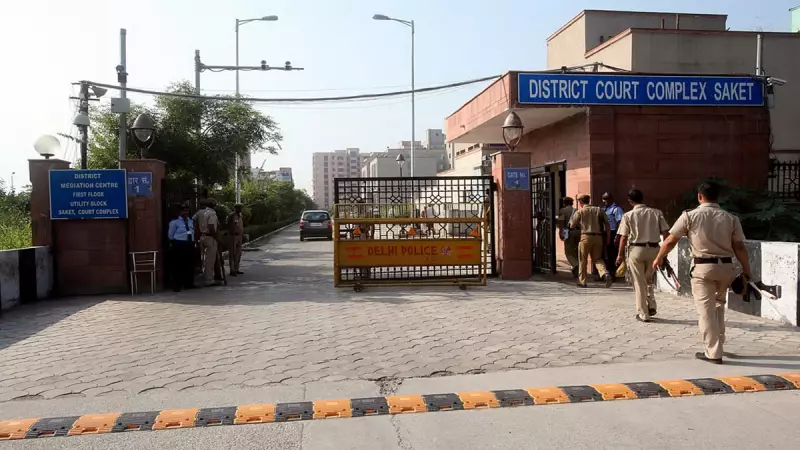
A tragic incident unfolded at the Saket District Court Complex in South Delhi on Thursday, where a 33-year-old court clerk died by suicide. The man, identified as Rahul, jumped from the top floor of the court building, sending shockwaves through the legal community.
Details of the Tragic Incident
The incident occurred on January 9, 2026. According to police reports, Rahul, who worked as a clerk in the court, leaped from the highest floor of the complex. He was immediately rushed to a nearby hospital but was pronounced dead by the doctors. The police have registered a case and initiated a thorough investigation into the circumstances leading to this extreme step.
Preliminary inquiries by the authorities point towards immense work-related stress and pressure as a potential catalyst. While the investigation is in its early stages, colleagues and initial findings suggest Rahul had been grappling with heavy workload and professional strain. The police are examining all angles, including his recent behavior and any personal issues, but work environment stress remains a primary line of inquiry.

Police Investigation and Community Reaction
The local police are meticulously piecing together the events. They are scrutinizing CCTV footage from the court complex and interviewing his colleagues, family members, and friends to build a complete picture of his state of mind. The aim is to understand whether systemic pressures within the court's administrative functioning contributed to this tragedy.
The death has cast a pall of gloom over the Saket court premises, a bustling hub of judicial activity. Fellow employees and lawyers expressed deep sorrow and shock, describing the incident as a devastating loss. It has also sparked urgent conversations about the mental health and well-being of court staff, who often work under demanding conditions with tight deadlines and high stakes.
A Wake-Up Call on Workplace Mental Health
This unfortunate event highlights the critical, yet often overlooked, issue of mental health in high-pressure work environments, including the judicial system. The immense burden on court staff, dealing with endless files, public scrutiny, and procedural complexities, can sometimes become unbearable.
Advocates and court administration officials are now calling for more robust support systems. There is a growing demand for:
- Counseling services readily available for employees.
- Workload management to prevent burnout.
- Open dialogue about stress and mental health, reducing stigma.
While the police investigation continues to seek conclusive answers, this tragedy serves as a stark reminder. It underscores the need for institutions to proactively address workplace stress and create a more supportive environment for their employees. The hope is that this loss will lead to concrete steps toward better mental health safeguards within Delhi's courts and beyond.






