

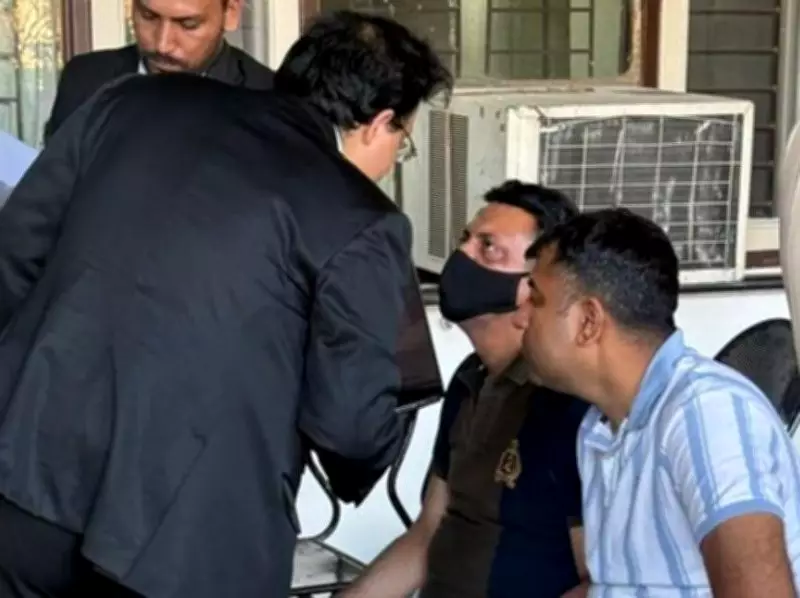
Chandigarh Court Grants Legal Access to Accused in High-Profile Bank Fraud Case
A local court in Chandigarh has issued a significant ruling, allowing businessman Vikram Wadhwa, a key accused in the IDFC First Bank fraud case, to meet with his legal counsel during his police remand period. The decision comes in response to an application filed by Wadhwa, who expressed concerns over potential misconduct by law enforcement officials.
Legal Proceedings and Allegations
Wadhwa, represented by advocate Vinay Yadav, submitted the application citing fears that the police might employ coercive tactics similar to those he allegedly experienced during a prior arrest. In his plea, he claimed that he was forced to sign various handwritten, typed, and blank papers, raising suspicions that authorities could fabricate false documents against him.
The court, acknowledging these concerns, directed the Chandigarh Police to permit Wadhwa's advocate to meet him as per Section 38 of the Bharatiya Nagarik Suraksha Sanhita (BNSS), which safeguards the legal rights of individuals in custody. This provision ensures that accused persons have access to legal representation, a fundamental aspect of due process in criminal investigations.

Background of the Case
Vikram Wadhwa was arrested by the Economic Offences Wing (EOW) of the Chandigarh Police on March 14. The case involves multiple fraud allegations linked to IDFC First Bank, with complaints filed by the Chandigarh Municipal Corporation and the Chandigarh Renewable Energy and Science and Technology Promotion Society (CREST). Following his arrest, a Duty Magistrate remanded him to five days of police custody, during which he is expected to undergo intensive interrogation.
The charges against Wadhwa are severe, including violations under Sections 318(4), 338, 336(3), 340(2), and 316(5) of the BNS, registered at the PS-EOW in Sector 17, Chandigarh. Additionally, his name has been associated with a Rs 590-crore scam, with the Haryana Police alleging that he invested the misappropriated funds into various businesses, notably real estate ventures.
Implications and Next Steps
This court order highlights the judiciary's role in balancing investigative powers with individual rights, particularly in complex financial fraud cases. By allowing lawyer meetings, the court aims to prevent potential abuses during the remand period, ensuring that Wadhwa's statements and evidence are collected lawfully.
The Chandigarh Police are now obligated to comply with the directive, facilitating scheduled interactions between Wadhwa and his legal team. This development could influence the trajectory of the investigation, as any evidence obtained under duress may be challenged in future proceedings.
As the case unfolds, authorities are likely to focus on unraveling the intricate details of the alleged fraud, which spans multiple entities and substantial financial sums. The outcome of Wadhwa's interrogation and subsequent legal battles will be closely monitored, given the high stakes involved in this prominent economic offense.






