

Madurai Court Delivers Landmark Verdict in Sathankulam Custodial Deaths Case
In a historic judgement that has captured national attention, the first additional district and sessions court in Madurai on Monday awarded the death sentence to all nine convicted police personnel involved in the 2020 Sathankulam custodial deaths case. The family members of victims P Jeyaraj and his son J Beniks, who were present in court, welcomed the decision with profound relief, stating they had finally received the justice they had long awaited.
Family's Emotional Response to Justice Served
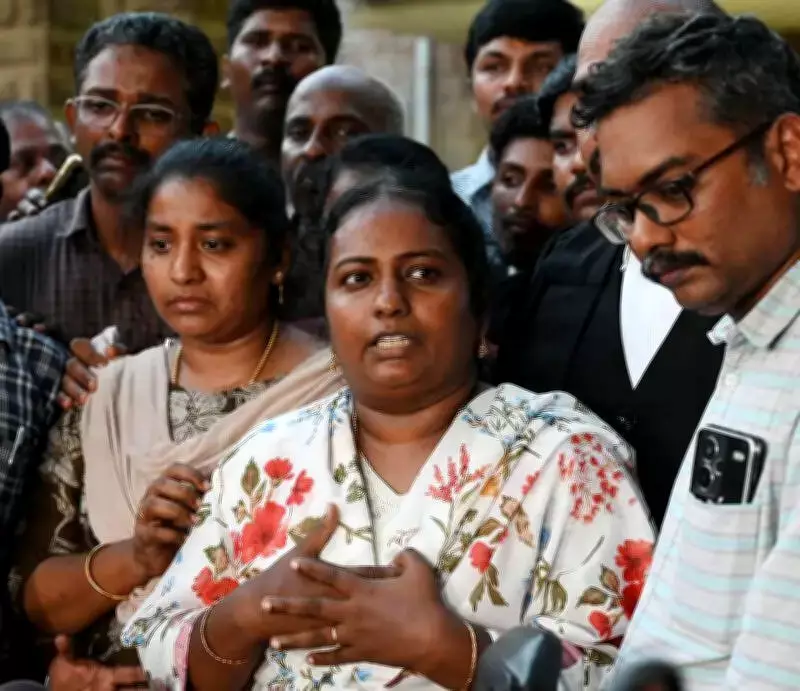
J Persis, daughter of Jeyaraj and elder sister of Beniks, spoke to reporters immediately after the verdict was announced. "We believed and hoped that the court would render justice to the family," she said. "Now that the court awarded the death sentence to the nine police personnel, we finally got justice. The justice we got today is the justice for all common people."
Persis emphasized the broader implications of the judgement, adding, "No other family should face the trauma that we underwent. We believe judgement in the case would prevent such incidents of custodial deaths in the future." Her statement reflects both personal closure and a hope for systemic change in police accountability.

Human Rights Activist Highlights Significance of the Judgement
In a detailed video statement, Henri Tiphagne, executive director of People's Watch and a prominent human rights activist, described the verdict as significant and special. He noted that this was a rare instance where the death penalty was imposed on all nine accused policemen in a custodial death case. "The judgement was very special since the family members of Jeyaraj and Beniks were present in the court and they welcomed the judgement with happiness," Tiphagne remarked.
Tiphagne praised the Madras High Court for its proactive role in the case, stating, "Madras high court, which took suo motu cognisance of the case, safeguarded the witnesses. This was very significant for the case ending in conviction." He explained that keeping all accused policemen in jail until the judgement prevented potential witness tampering, setting a crucial precedent for future cases.
Debate Over Death Penalty and Reformation
While welcoming the conviction, Tiphagne expressed a nuanced opinion regarding the severity of the sentence. "Though I welcome the judgement, I have a different opinion with regard to the award of the death penalty," he said. "Considering the reformation aspect, life sentences could have been imposed on the convicts." This perspective highlights ongoing debates within human rights circles about punitive versus rehabilitative justice.
The Sathankulam case, which involved the tragic deaths of Jeyaraj and Beniks while in police custody in 2020, has been a focal point for discussions on police brutality and judicial accountability in India. The court's decision marks a pivotal moment, potentially influencing how similar cases are handled in the future.
Key aspects of the case that contributed to this outcome include:
- The swift action by the Madras High Court in taking suo motu cognisance.
- Effective protection of witnesses throughout the legal process.
- The continuous detention of the accused to prevent interference.
As the legal proceedings conclude, the verdict stands as a testament to the judiciary's role in upholding human rights and delivering justice, even in the face of institutional challenges. The family's relief and the activist's reflections underscore the complex emotions and principles at stake in this landmark case.






