Delhi Court Declares Email Summons Invalid, Acquits Arvind Kejriwal in ED Case
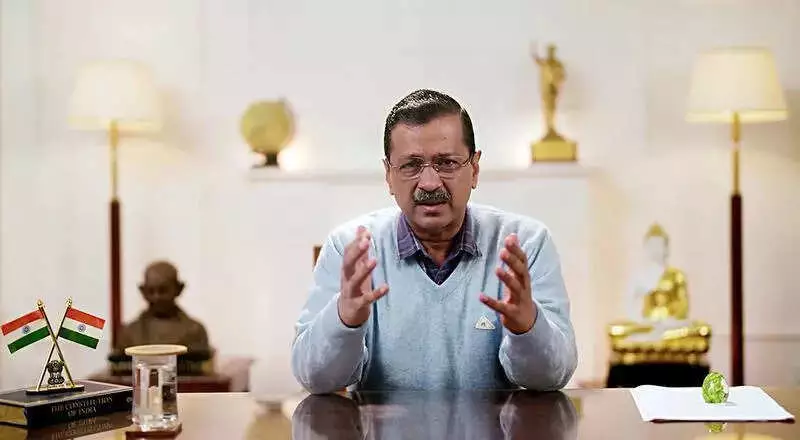
In a significant legal development, a Delhi court has acquitted former chief minister Arvind Kejriwal for skipping multiple Enforcement Directorate (ED) summonses, ruling that issuing summons by email is not valid or legal under the Code of Criminal Procedure (CrPC) or the Prevention of Money Laundering Act (PMLA). The court delivered this verdict on Thursday, marking a pivotal moment in the ongoing excise policy case.
Court Criticizes ED's Summons Procedure
Additional chief judicial magistrate Paras Dalal emphasized that the ED failed to prove that Kejriwal had intentionally disobeyed the summonses. The court noted that Kejriwal, as a serving chief minister at the time, enjoyed his fundamental right of movement, and mere non-appearance does not equate to wilful disobedience. Dalal stated, "Neither the service of summons through emails has been proved by ED… nor the process of issuing summons to any person under Section 50(2) of PMLA via email has been proved to be in accordance with the law."
Details of the Summons and ED's Allegations
According to the agency, a total of nine summonses were issued to Kejriwal, alleging that he raised frivolous objections and deliberately created grounds for not joining the investigation. However, the court highlighted that the summonses were neither served personally on the accused nor through extended or substituted modes with due diligence. Dalal remarked that the directorate "definitely missed the opportunity" to guide its officers on proper summons service, and even if admitted, the entire process was "antithetical to the rule of law."

Legal Implications and Distinctions
The magistrate drew a clear distinction between "non-appearance" and "intentional non-appearance," reiterating that absence alone does not amount to disobedience. The court held that Kejriwal was not legally bound to appear before the directorate, thus no question of disobedience arose. Dalal also pointed out that there was no effort by the ED to verify why Kejriwal did not appear, further weakening their case.
Background of the Excise Policy Case
The probe stems from a case registered by the Central Bureau of Investigation (CBI) in 2022, based on a complaint by lieutenant governor V K Saxena regarding alleged irregularities in the excise policy, which was ultimately scrapped. Last week, a CBI court heard arguments related to this case, adding another layer to the complex legal proceedings.
Related Order for Co-Accused Amanatullah Khan
In a connected but separate order, the court addressed the case of Aam Aadmi Party MLA Amanatullah Khan, who also skipped ED summons. The court similarly ruled that the summons were not served according to due procedure, noting that issuing them in haste—without granting him 24 hours to appear—was "improper," especially since he had already approached the Delhi High Court.
Legal Perspective and Future Implications
Kejriwal's counsel argued that at most, his conduct could attract a fine under PMLA, but the court's acquittal underscores the importance of adhering to legal procedures in summons issuance. This ruling may set a precedent for how enforcement agencies serve summons in the future, emphasizing the need for compliance with established laws to uphold the rule of law.