

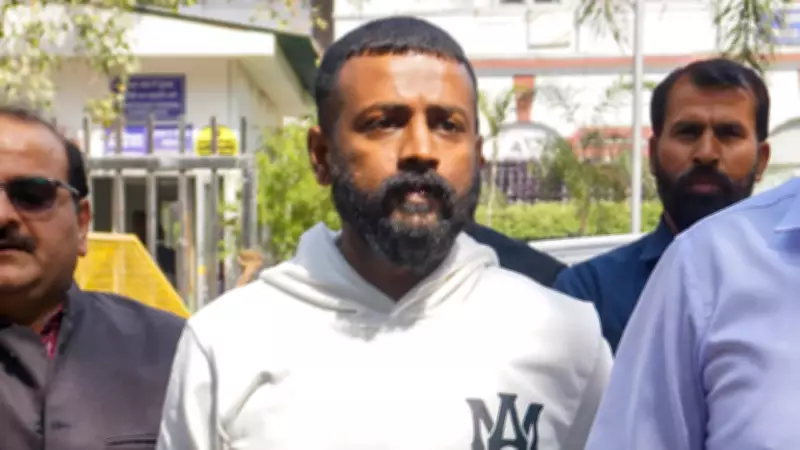
Delhi Court Grants Bail to Alleged Conman Sukesh Chandrashekhar Citing Liberty Rights
A Delhi court on Tuesday granted bail to alleged conman Sukesh Chandrashekhar, observing that continued incarceration beyond a reasonable period violates the fundamental right to personal liberty and speedy trial. The court's decision marks a significant development in the high-profile case involving multiple serious charges.
Bail Conditions and Court Directives
In its detailed order, the court directed that Chandrashekhar be released on bail upon furnishing a personal bond of Rs 5 lakh along with sureties of the like amount. The court imposed several stringent conditions to ensure proper monitoring of the accused during the bail period.
The specific conditions include:

- Restraining him from contacting or influencing witnesses in any manner
- Requiring him to provide his complete residential address and mobile number to the investigating officer
- Surrendering his passport to the authorities
- Not leaving the country without obtaining prior permission from the court
Case Background and Current Status
The case is currently at the stage of arguments on charges before the trial court. Chandrashekhar, along with his wife Leena Maria Paul and other accused individuals, faces serious charges under the Maharashtra Control of Organised Crime Act (MCOCA) as well as in the extortion and related money laundering case. According to police records, multiple First Information Reports (FIRs) have been registered against Leena Maria Paul as well.
Parallel Proceedings Involving Leena Maria Paul
In a related development, Delhi Police in March opposed Leena Maria Paul's bail plea, arguing that the delay in trial has been caused primarily by the accused persons themselves. The police submitted that Leena Maria Paul serves as a co-head of an organised crime syndicate allegedly led by her husband, Sukesh Chandrashekhar.
Justice Prateek Jalan heard the matter and posted it for rebuttal arguments by Leena's counsel on March 28, after Delhi Police concluded its submissions. Representing the police, senior advocate Sanjay Jain, along with advocate Akhand Pratap Singh, argued that repeated adjournments sought by the accused before the trial court have contributed significantly to the procedural delays.
Controversial Jail Accommodation Allegations
During the proceedings, the police also alleged that Chandrashekhar managed to secure an entire jail ward during the Covid-19 pandemic, raising questions about preferential treatment within the correctional system. This allegation adds another layer of complexity to the already controversial case.
Leena Maria Paul's Bail Arguments
Leena Maria Paul has sought bail on multiple grounds, including prolonged custody, parity with co-accused, and special provisions under the Prevention of Money Laundering Act (PMLA) applicable to women. She has been in custody for over three years and seven months, with her bail pleas pending since 2024 following directions from the Supreme Court to expedite the matter.
Representing Leena, advocates Anant Malik and John Paul Edison argued that despite the lengthy custody period, formal charges are yet to be framed against the accused. They also pointed out that several co-accused individuals, including actress Jacqueline Fernandez, Pradeep Ramdani, Avtar Singh Kochar, and Pinki Irani, have already been granted bail. Notably, in Fernandez's case, she was not even arrested during the investigation phase.
Legal Arguments and PMLA Provisions
The defense team further cited the proviso under Section 45 of the PMLA, which allows for relaxation of bail conditions specifically for women accused. However, the Enforcement Directorate strongly opposed this plea, contending that the twin conditions under Section 45 remain fully applicable and that the conduct of the accused must be carefully considered while deciding on bail matters.
The court's decision to grant bail to Sukesh Chandrashekhar while maintaining strict conditions reflects the delicate balance between protecting individual rights and ensuring proper judicial oversight in complex criminal cases involving organized crime allegations.






