New Delhi: The Hauz Rani blaze was not the first challenge the firefighters faced when rushing to the bed-and-breakfast on Wednesday morning. It was the rush-hour traffic.
As the fire tenders drove out, they were swallowed by the merciless morning traffic. The crews wrestled with gridlock and frustrated motorists at several intersections. Some refused to yield space to the fire engines, others were simply paralysed themselves.
As they neared the spot, a new challenge confronted them. The narrow lanes surrounding the B&B were choked by haphazardly parked cars. Onlookers had gathered and parked their vehicles to stare at the unfolding tragedy.

Overhead, a web of dangling electrical wires threatened to snag the trucks, making it nearly impossible to position heavy vehicles near the burning building.
For Surender Singh (47) and Kamal Dagar (36), both posted at the Bhikaji Cama Place fire station, the chaotic morning was a stark contrast to how their day had been moments before the alarm went off. One was ending an exhausting 24-hour shift. The other was just settling in.
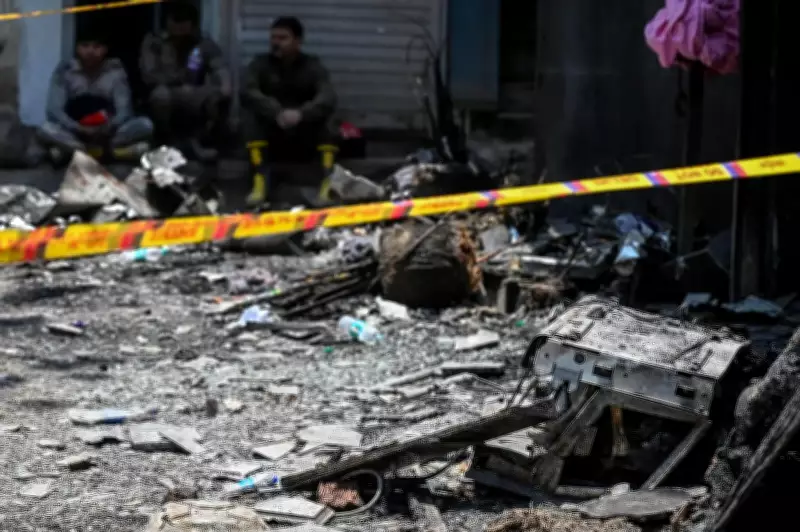
Minutes later, they were racing towards a tragedy that ultimately claimed 21 lives and required the rescue of 30 others.
Seconds to Spare, Miles to Go
Singh had just completed his round-the-clock duty and was getting ready to head home when the alarm pierced the station walls. “I immediately put on my fire gear, rushed to the fire tender, and took my position behind the wheel,” he said.
For Dagar, the emergency interrupted the quietest moment of his morning. “I had just picked up a glass of milk when the siren went off,” Dagar told TOI. “I left everything on the table and rushed to the vehicle.”
Despite the blaring sirens and flashing beacon lights, the road ahead remained stubbornly blocked.
“Whenever we encountered traffic congestion, the officer in charge leaned out and urged motorists to make way, shouting that it was an emergency,” Dagar said. “The siren and beacon lights were on, and we kept pleading with drivers to give us space.”
Singh, navigating the massive fire engine through the chaos, felt the weight of the clock. “At every fire call, there is pressure, and that day was no different. We had to reach the incident site as quickly as possible while driving safely. At times, other motorists fail to follow traffic rules. But the equation is simple. The faster we reach, the more lives we can save.”
Fighting from the Ground Up
The crew reached the spot within 20 minutes. By then, thick plumes of black smoke were already visible from several blocks away, and a massive crowd had gathered outside.
“When we arrived, we saw roaring flames and heavy smoke,” Singh said. “Our immediate objective was to control the fire and prevent it from spreading through the building’s plastic materials and decorative items. Our absolute priority was to rescue the people trapped inside.”
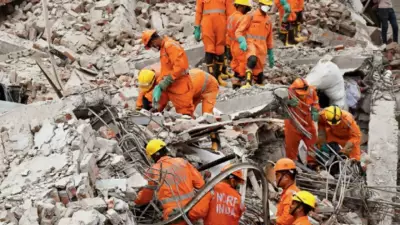
While teams of firefighters ran into the choking smoke to pull survivors out, the two drivers played a critical, high-pressure support role on the ground.
Singh manned the heavy pumping system, ensuring a steady supply of water to the hose lines inside. Dagar continuously regulated the water pressure and sprinted back and forth, ferrying vital rescue equipment from the truck to the firefighters on the front lines.
Having spent 17 years in the Delhi Fire Services, Singh said roles on the ground are fluid. “Responsibilities often change depending on the situation on the ground. You do whatever it takes to get the job done.”
For Dagar, while the scale of Wednesday’s tragedy was immense, the adrenaline spike was like just another day at work. Firefighters at their station routinely respond to 10 to 15 incidents a day — sometimes more.
Because of this relentless pace of firefighting, the real work begins long before the siren sounds. “We report for duty 20 to 25 minutes early just to inspect the fire tender,” Dagar explained. “We check water levels, ensure every piece of rescue equipment is exactly where it belongs, and verify that the machines are functioning perfectly. We start the vehicle and test everything before the shift begins. When lives are on the line, you can’t afford a single delay.”