

Two Tragic Falls Highlight Delhi's Dangerous Flyover Gaps
On January 7, around 8 PM, a young man named Ritik fell from a flyover while riding his motorcycle in Delhi. The 24-year-old resident of Rajouri Garden experienced a rare but deadly type of accident. Just three days earlier, another similar tragedy occurred.
Early on January 4, Sourabh and his friend Priyanka were returning from a New Year's party in Rohini. Their scooter met with an accident around 4 AM on a flyover. Police found Priyanka injured beside the damaged vehicle on the flyover itself. Sourabh, however, fell to the road below and died immediately.
Missing Barriers Create Fatal Risks
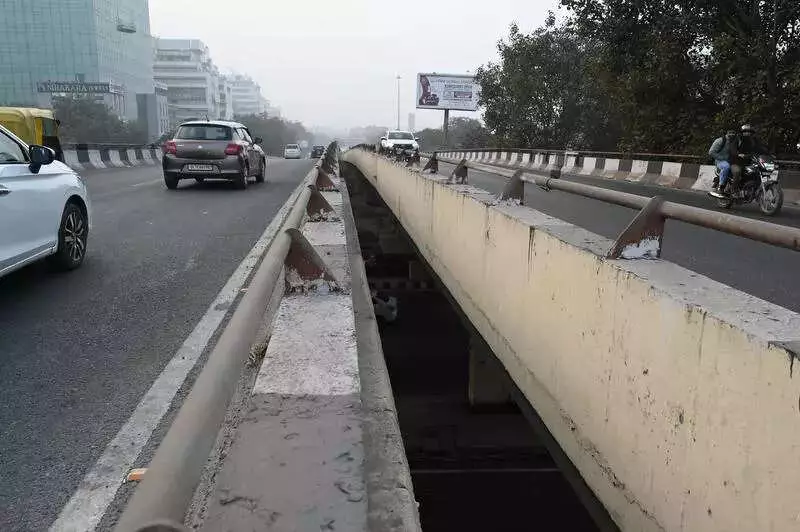
Preliminary investigations revealed a critical safety failure. Protective barriers between carriageways were completely missing in these areas. These basic structures could have prevented both fatal falls. Many Delhi drivers encounter sudden curves, vanishing railings, or unexpected road dips regularly.

A hollow drop gives no second chance, particularly late at night when empty roads tempt drivers to speed. The Wazirpur flyover near Netaji Subhash Place demonstrates this danger perfectly. A bend emerges without advance signage or reflective boards. Railings are missing in several stretches, creating gaps already linked to accidents this month.
The Physics of Flyover Dangers
Understanding vehicle dynamics makes the risk clear. On flyover bends, vehicles naturally drift toward the outer edge due to inertia. Two-wheelers, being less stable, can skid or topple if riders don't lean correctly. Cars may skid or understeer at high speeds.
"When there's an open edge or missing barrier, this outward drift becomes especially dangerous," explained an expert. "Speed control, smooth steering and correct leaning are crucial on such high-risk stretches."
Safety Standards Versus Reality
According to Indian Road Congress guidelines, flyovers must have minimum parapet heights of 1.1 meters. This should increase to about 1.2 meters on long structures and 1.25 meters where pedestrians or cyclists approach the edge. No dangerous gaps should exist.
In Delhi, barriers typically combine concrete parapets with iron railings, reaching about three feet high. However, iron railings often disappear due to theft, leaving unsafe gaps along many flyovers.
Systemic Neglect Across the City
Visits to multiple locations revealed cracked asphalt, barely attached railings, missing signage and damaged bollards. The picture shows systemic neglect where basic safety infrastructure repeatedly fails commuters. This troubling reality emerges during Road Safety Month when preventing tragedies should be a priority.
On the Barapullah Elevated Road, curves appear without warning. Long stretches lack railings, with visible gaps between carriageways. Only near railway tracks does a highlighted parapet wall appear, not along the entire stretch.
Parts of the Dwarka-Palam Expressway show better safety with retro-reflective signs and advance warnings. Even here, diversion points reveal crushed bollards and damaged barriers. Safety lapses appear everywhere from DND stretches to Mukarba Chowk.
Expert Recommendations for Safety
Commuters face pressing questions. On sharp curves, when vehicles hit uneven asphalt at speed, where do they go? Will they skid outward, stay in lane, or risk tumbling over edges? These hazards remain unchecked.
"The primary reason for flyover runoff crashes is speeding beyond 50 kmph," said CRRI scientist Vel Murugan. "Right after a curve, or on a curve, 60 kmph is too high given the limiting radius. In such instances, people can fall off flyovers."
He recommended mastic asphalt to avoid skidding. Cautionary signage and retro-reflective markings could prevent fatal crashes. Ideally, flyovers should be two-directional with medians and no gaps.
"Whenever such gaps exist, there are two reasons," Murugan added. "Either the two sides were built in isolation without considering the gap, or there was a land acquisition problem."
IRTE director Rohit Baluja emphasized traffic performance measures for speed. "Any geometry should focus on overall nearby factors and minor details," he said. "Constant audits over arterial roads can help authorities reveal such gaps and increase parapet walls."

Beyond Missing Barriers
Sometimes, speeding combined with bad road quality creates danger independently of central gaps. The Ranjit Singh flyover, repaired and beautified just three years ago for the G20 Summit, now shows cracked lanes, loose barricades and faded markings. This raises questions about the sustainability of civic upgrades.
Public Works Department officials did not respond immediately to inquiries about these safety concerns. The department oversees maintenance of many Delhi flyovers where these dangerous conditions persist.
These recent accidents underscore urgent needs for comprehensive safety audits, proper barrier maintenance, and driver awareness about flyover risks. As vehicles continue navigating Delhi's elevated roads, addressing these gaps could save lives.





