Delhi High Court Introduces Saturday Sittings to Tackle Case Backlog
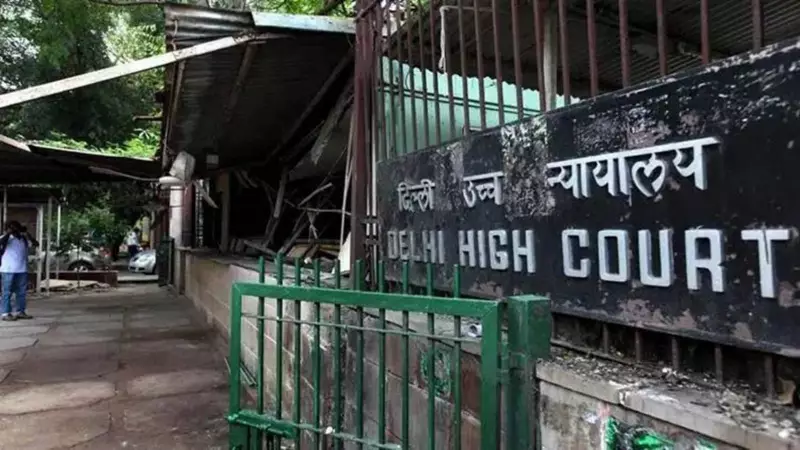
The Delhi High Court has taken a significant step to address its mounting case load. Starting immediately, the court will now hold regular sessions on the first and third Saturdays of every month. This decision transforms these days into official working days for the High Court.
Registrar General Arun Bhardwaj signed the official notification announcing this change. The move follows a resolution approved during a Full Court meeting held on December 22.
A Gradual Expansion of Working Days
This latest development represents the continuation of a trend that began last year. In May 2025, the High Court declared that the fourth Saturday of each month would become a working day for the Registry. Previously, this day had been observed as a holiday.

Then, in October 2025, the court announced that each bench would observe one Saturday every month as a working day throughout the calendar year. Since that notification, Saturday sessions have primarily focused on clearing cases that have been pending for several years.
The Driving Force: Reducing Pendency
The primary motivation behind these changes is clear. The Delhi High Court faces a substantial backlog of cases. According to the National Judicial Data Grid, approximately 1.25 lakh cases are currently pending before the court.
A closer look at these numbers reveals the scale of the challenge:
- Over 93,000 cases are more than one year old.
- The majority of the pending cases, specifically 93,138, are civil matters.
- Nearly 22,000 cases have been pending for over a decade.
- Another 23,000 cases have been waiting between five and ten years for resolution.
This new Saturday schedule will increase the total number of fixed regular working days for the Delhi High Court from 222 to 229 annually. This makes Delhi the first High Court in India to officially designate two Saturdays per month as court sitting days.
Leadership and Recent Progress
The push for efficiency comes under the leadership of Chief Justice D K Upadhyaya, who assumed office on January 21, 2025. The court has already seen notable improvements in case disposal rates.
In 2024, the court disposed of 5,574 cases. That number jumped dramatically to approximately 19,000 cases (18,938 to be precise) in 2025. The new Saturday working days aim to build on this momentum and further accelerate the clearance of pending cases.
Bar Association Raises Concerns
The decision has not been without controversy. Representatives from the Delhi High Court Bar Association (DHCBA) stated they were not consulted before Thursday's notification was issued.
This mirrors previous objections. When the October 2025 notification was announced, the DHCBA expressed "deep concern and disquiet." The Bar Association argued that the decision negatively impacts the "work-life balance" of practicing lawyers.
They pointed out that even if only one bench sits on a Saturday, lawyers must remain available on all Saturdays, disrupting their schedules. At that time, the DHCBA requested that the notification be suspended. They suggested an alternative: all benches should sit on a single, fixed Saturday each month to ensure uniformity for lawyers.
A Partial Accommodation and the Road Ahead
The latest arrangement of fixed first and third Saturdays does partially address the Bar Association's earlier request for uniform Saturday hearings. It creates a predictable schedule for all benches and lawyers.
However, the lack of prior consultation remains a point of contention for the legal community. The Delhi High Court's 2026 calendar already accounts for 61 holidays, with all Sundays and second Saturdays marked as non-working days. This provisioned for roughly 240 potential working days.
High Courts across India typically announce only a few specific Saturdays as working days to compensate for holidays. They generally remain closed for court proceedings on weekends. The Delhi High Court's move to institutionalize two Saturdays per month sets a new precedent in the country's judicial administration.