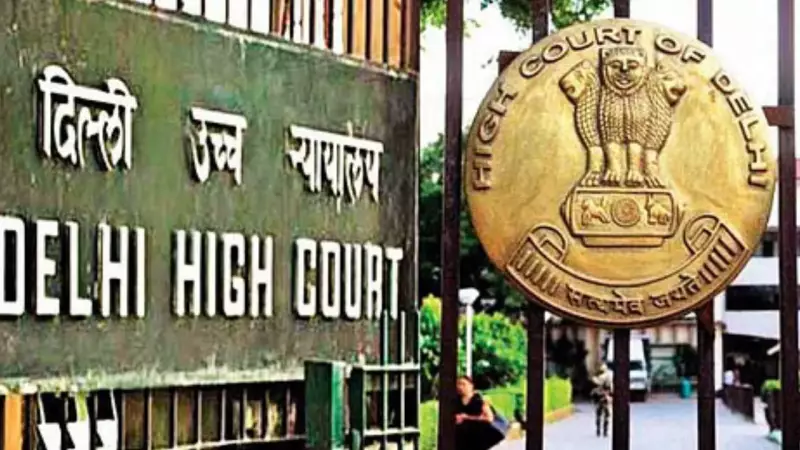
In a significant ruling, the Delhi High Court has instructed the Central government to reconsider a retired employee's request to include his live-in partner of more than four decades and their children in his Pension Payment Order. This move would grant them eligibility for family pension and healthcare benefits under the Central Government Health Scheme (CGHS).
Court Sets Aside Tribunal Order, Calls Denial "Erroneous"
A bench comprising Justices Navin Chawla and Madhu Jain recently overturned a 2018 order from the Central Administrative Tribunal (CAT). The CAT had upheld the authorities' decision to withhold 50% of the petitioner's monthly pension and gratuity benefits. The retired employee had superannuated in 2012.
The High Court strongly disagreed with labeling the man's efforts to secure benefits for his partner and children as "grave misconduct." The bench observed that the petitioner had never hidden his relationship throughout his service career. Therefore, denying him post-retirement benefits on these grounds was fundamentally incorrect.

A Relationship Spanning Decades and Legal Battles
The petitioner's case details a long personal history. According to his submission, after his wife deserted him and with no divorce agreement, he began cohabiting with another woman in 1983. Two children were born from this relationship.
His personal life led to departmental proceedings in 1990 on charges of neglecting his wife and daughter. For this, he faced a penalty of reduction in pay by four stages for four years. Later, just before his retirement, another inquiry was initiated in 2011. This concerned alleged misrepresentation while applying for diplomatic passports for his partner and children. This inquiry resulted in the penalty of withholding half of his pension and gratuity.
Court Finds No "Grave Misconduct," Stresses Transparency
The High Court meticulously examined the case and found no evidence of concealment or malicious intent. It noted that the petitioner had consistently disclosed his wife's continuous absence and his live-in relationship to the authorities during his service.
The court referred to the CCS (Pension) Rules, which allow authorities to withhold pension in cases of "grave misconduct or negligence." The bench concluded that the petitioner's actions did not constitute such misconduct. "We find no legitimate reason for the respondents to permanently withhold 50% of the petitioner's monthly pension and gratuity, or for denying family pension to the petitioner's dependants," the court stated.
"Therefore, we are of the opinion that the petitioner maintained transparency, at all times, with the respondents regarding his relationship," the judgment added.
Directives for Relief and Future Consideration
The Delhi HC set aside the CAT's 2018 order. It directed the concerned government department to release the withheld 50% pension and gratuity amounts to the petitioner. The court mandated that this payment must include interest at the rate of 6% per annum, calculated from the date the payments were originally due until the date of actual payment.
Furthermore, the bench explicitly ordered the authorities to consider the petitioner's plea to include his partner's and children's names in the Pension Payment Order. This inclusion is crucial for them to receive family pension and access CGHS medical facilities in the future.
This judgment underscores the judiciary's evolving perspective on long-term, transparent live-in relationships and their recognition within the framework of government service rules and benefits.