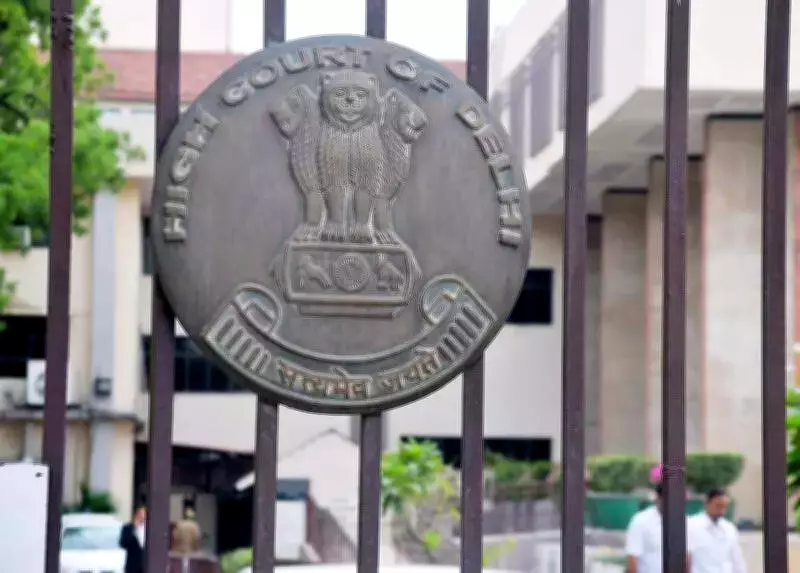
Delhi High Court Dismisses Officer's Plea in Land Acquisition Misconduct Case
The Delhi High Court has dismissed a petition filed by a government officer challenging disciplinary proceedings initiated against him for allegedly misusing his official position in a sensitive land acquisition matter. The court refused to grant any relief to the Delhi, Andaman and Nicobar Islands Civil Service (DANICS) officer, upholding the penalty imposed on him and affirming an earlier decision by the Central Administrative Tribunal (CAT).
Background of the Case
In 2016, while serving as a land acquisition collector in Delhi, the officer issued an order allowing a refund of more than Rs 3.3 crore and treated the acquisition proceedings as concluded. It was later brought to the attention of senior authorities that this order was passed after his transfer, and he allegedly preponed the date of the hearing in the case.
Following this, disciplinary proceedings were initiated against the officer. Sufficient evidence was found to frame charges against him on one account: that he had acted in haste and without following proper procedure, which constituted misconduct.
Penalties and Appeals
The disciplinary authority imposed several penalties, including:
- Reduction of pay scale for three years
- Suspension of promotion during that period
- Postponement of future increments
- Alteration of seniority
On appeal, the government authority upheld the penalty. The officer then challenged the punishment before CAT, which dismissed his plea in July 2021. However, CAT allowed him to submit a representation seeking a reduction of the penalty. When this representation was also rejected, the officer approached the high court in 2025, nearly four years after the CAT decision.
Court's Ruling on Delay and Merit
The high court first addressed the issue of delay, noting that the officer failed to provide an adequate explanation for the nearly four-year delay in approaching the court. It rejected the argument that the rejection of his representation constituted a fresh cause of action, clarifying that CAT had only given him liberty for reconsideration of the penalty and did not reopen the case.
The court ruled that the petition was barred by delay and laches. Additionally, it stated that even on the merits of the case, there was no justification to interfere. Under the Land Acquisition Act, once land vests with the government, the land acquisition collector has no authority to restore the land or reverse the acquisition by accepting a refund of compensation.
The officer failed to identify any legal provision permitting him to issue such an order. The court also dismissed his claim that he had acted in a quasi-judicial capacity based on legal opinion.
Legal Principles and Discrimination Claim
The high court emphasized that in disciplinary proceedings, courts might intervene only in cases of serious procedural illegality or violation of natural justice, neither of which was demonstrated in this case. The officer's plea of discrimination was also rejected, where he claimed his successor was granted relief in the same matter. The court found that the successor merely implemented the order rather than passing it, distinguishing the two situations.
This ruling underscores the importance of adherence to proper procedures in sensitive government matters and reinforces the judiciary's role in upholding disciplinary actions against misconduct.