

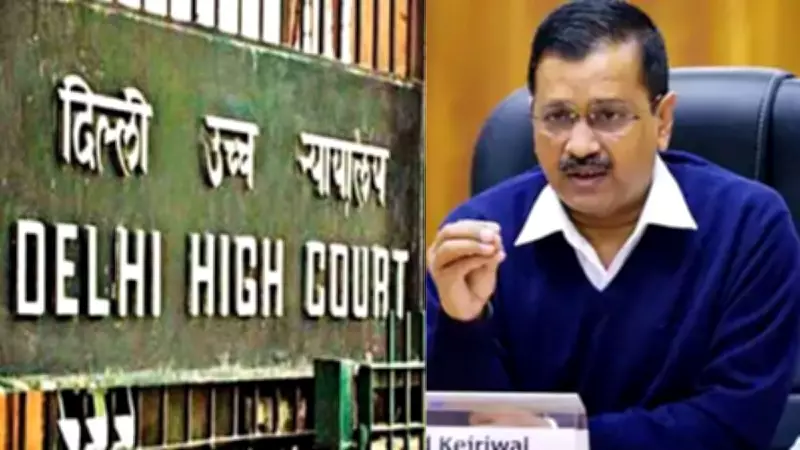
The Delhi High Court on Wednesday issued a notice to Chief Minister Arvind Kejriwal for allegedly posting a video of court proceedings on social media, a move that has sparked a debate on the breach of court decorum and legal protocols.
Background of the Case
The matter came to light when a video showing proceedings in a Delhi court was shared on Kejriwal's official social media handles. The court took suo motu cognizance of the incident, expressing serious concern over the violation of rules that prohibit recording or broadcasting of court proceedings without prior permission.
Court's Observations
Justice Rajiv Shakdher, presiding over the bench, stated that such actions undermine the dignity and sanctity of the judicial system. The court noted that the video appeared to have been recorded inside the courtroom without authorization, which is a clear violation of the High Court's guidelines.

The bench further remarked that sharing such content on public platforms could lead to misinformation and undue influence on ongoing cases. The court has sought a response from the Chief Minister's office within two weeks.
Kejriwal's Response
In his defense, Kejriwal's legal team argued that the video was intended to highlight the transparency of the judicial process and was not meant to disrespect the court. However, the court remained unconvinced, emphasizing that the means of achieving transparency must adhere to established legal norms.
Legal Implications
Legal experts have weighed in on the issue, stating that the recording and dissemination of court proceedings without permission is a punishable offense under the Indian Penal Code and the Contempt of Courts Act. The High Court's notice could lead to a detailed inquiry into the matter.
This case also raises broader questions about the use of social media by public figures and the need to balance transparency with legal restrictions. The court is expected to hear the matter further on May 7, 2026.






