

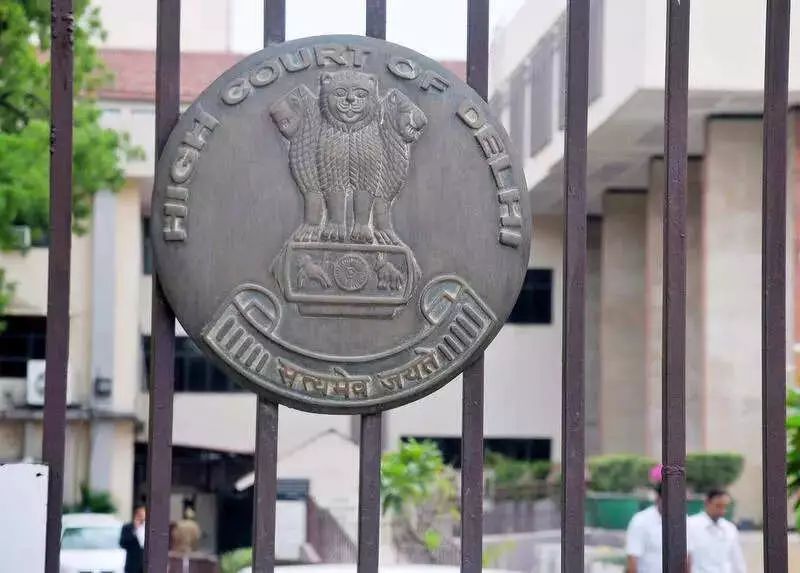
In a significant development in the long-pending case of missing JNU student Najeeb Ahmed, the Delhi High Court has upheld the trial court's decision to accept the Central Bureau of Investigation's (CBI) closure report. The court's order comes seven years after Ahmed disappeared from the university campus in 2016.
Court Dismisses Mother's Plea But Offers a Glimmer of Hope
The High Court dismissed the plea filed by Najeeb Ahmed's mother, Fatima Nafees, who had challenged a lower court's order from June 30. That order had dismissed her protest petition against the CBI's closure report filed in the case. However, Justice Sanjiv Narula provided a crucial direction that keeps the investigation alive.
The court instructed the CBI to reopen the investigation if it can successfully extract data from the mobile phones of certain students. These are the same students who allegedly had an altercation with Najeeb Ahmed shortly before he went missing.

The Crucial Direction on Mobile Phone Forensics
The court's specific direction emerged after arguments from Fatima Nafees's legal counsel. They highlighted that, as per the CBI's own closure report, the agency could not retrieve data from the phones of three individuals: Vikrant Kumar, Aishwarya Pratap Singh, and Sunil Pratap Singh. This failure was attributed to limitations in the software tools available with the CBI at the time.
The petitioner's lawyer contended that independent forensic experts have suggested that data extraction might still be possible using advanced specialized tools like Cellebrite UFED and Cellebrite Premium. This data, he argued, could provide vital clues to trace Najeeb Ahmed.
Justice Narula noted in the order, "In the event the software tools are available with CBI or can be reasonably procured, the same shall be deployed for the purpose of extracting data from the mobile devices of the witnesses. In the event such exercise yields any credible information which could assist in tracing Najeeb Ahmed, CBI shall be at liberty to reopen the investigation."
A Mother's Relentless Pursuit and the Court's Hope
The court acknowledged the prolonged ordeal of Fatima Nafees, who has been pursuing the matter for years. The order stated that the decision was made "bearing in mind that the case concerns a missing person whose mother has been pursuing the matter for several years."
The High Court also concurred with the trial court's "earnest hope" that Najeeb Ahmed is traced at the earliest. During the proceedings, the CBI's counsel informed the court that she was not in a position to confirm whether the advanced forensic software tools are currently available with the agency or if they can be procured.
The case dates back to October 2016 when Najeeb Ahmed, a JNU student, went missing following a reported altercation with other students. The Delhi Police initially registered an FIR. The investigation was transferred to the CBI on May 16, 2017, with the agency filing its own FIR in June 2017. The CBI ultimately filed a closure report in 2018, citing lack of evidence, a decision that has now been upheld but with a potential pathway for renewed scrutiny.






