

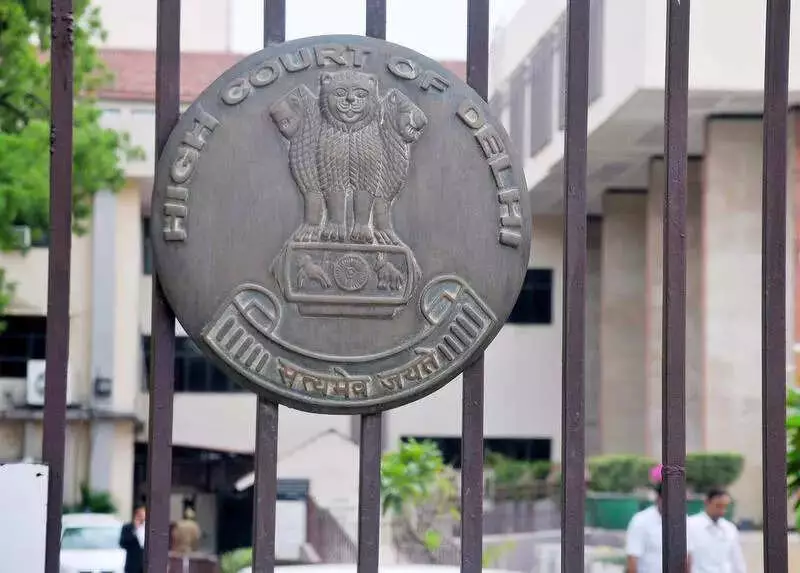
The Delhi High Court has issued a significant directive to city authorities, urging them to examine the feasibility of keeping traffic signals operational throughout the night. This move comes in response to the increasing movement of gig economy workers, delivery personnel, and other essential service providers during late hours.
PIL Highlights Night-Time Safety Concerns
A Public Interest Litigation (PIL) prompted the court's intervention. The petition specifically sought a judicial direction to the concerned traffic authorities to ensure traffic signals function all night. The plea argued that the non-functioning of signals during late-night hours poses a significant safety risk to the growing number of people working nocturnal shifts.
The PIL had two core demands. Firstly, it requested a technical audit of the non-functional traffic signals across Delhi. Secondly, it called for the formulation of a Standard Operating Procedure (SoP) to address this recurring issue. The petitioner also urged the court to mandate a uniform record-keeping system for maintaining traffic signal operations, ensuring better accountability.

Government's Response and Court's Order
During the proceedings, the government counsel informed the bench that a dedicated committee has already been constituted to handle such matters. This committee is headed by the Deputy Commissioner of Police (Technical) of the Delhi Police, with overall supervision under the Special Commissioner of Police (Traffic).
The High Court, in its recent order, decided not to delve into the merits of the case at this stage. Instead, it permitted the petitioner to present a detailed representation before the aforementioned committee. "Accordingly, without entering into the merit of the claim of the petitioner, we permit the petitioner to represent the said committee by way of making an exhaustive representation," the court stated.
The bench instructed the Centre's counsel to provide the committee's contact details to the petitioner. It further laid down a clear timeline for action, directing the committee to make decisions on the representation within two months and communicate the outcome to the petitioner.
Two-Month Deadline for Committee Action
The court's order explicitly states: "Once any such representation is made, the committee... shall take up the issues and take appropriate decisions and actions... The decisions... shall be taken up within a period of 2 months." This directive puts the onus on the high-level traffic committee to seriously evaluate the necessity of 24/7 traffic signals, especially for the safety of night-shift workers.
This judicial nudge highlights the evolving urban infrastructure needs of metropolitan cities like Delhi, where the traditional 9-to-5 city life is being replaced by a 24-hour economy driven by app-based services. The final decision from the committee, expected within the stipulated two months, could lead to a major policy shift in Delhi's traffic management system.






