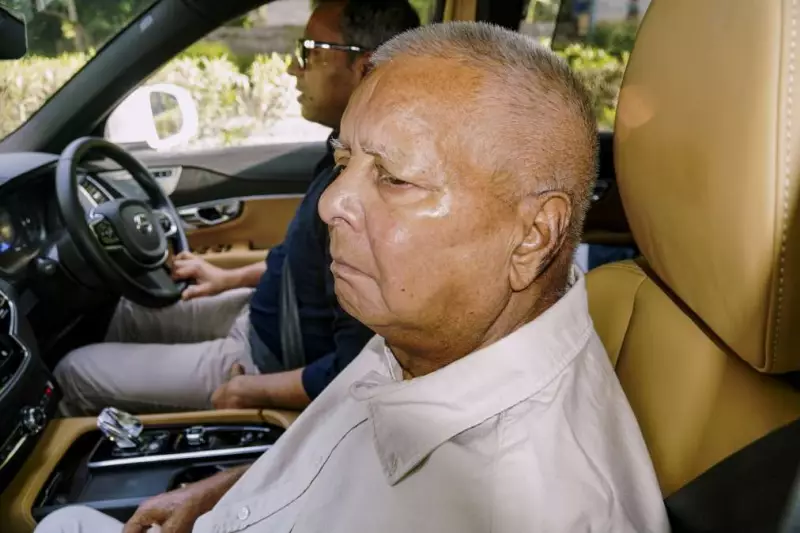
The Delhi High Court has directed the Central Bureau of Investigation (CBI) to file its response in a significant corruption case involving former Railway Minister Lalu Prasad Yadav. The court's order came on a plea filed by Yadav challenging a trial court's decision to frame charges against him in the alleged IRCTC hotel scam.
Court Proceedings and Key Dates
A bench comprising Justice Swarana Kanta Sharma issued notice to the federal investigation agency, seeking its reply to the petition. The court has scheduled the next hearing in this high-profile matter for February 27, 2026. This development marks a crucial step in the legal battle surrounding the case, which has been ongoing for several years.
The core of the dispute lies in an order passed by a special CBI judge on November 25, 2025. On that date, the trial court formally framed charges against Lalu Prasad Yadav and other accused individuals in connection with the scandal. The charges allege criminal conspiracy and corruption in the awarding of contracts for the development and maintenance of hotels attached to Indian Railway Catering and Tourism Corporation (IRCTC) during Yadav's tenure as the Railway Minister.

Background of the IRCTC Scam Case
The CBI's case, which dates back to its initial filing, centers on accusations that Lalu Prasad Yadav and his family members received illicit benefits in the form of prime land in Bihar. This property, measuring approximately 1.05 lakh square feet, was allegedly acquired at a heavily discounted rate. The prosecution claims this was a quid pro quo arrangement for ensuring that a private company secured favorable contracts to operate two prestigious IRCTC hotels.
The hotels in question are the Bikaner House in New Delhi and a property in Ranchi, Jharkhand. The CBI alleges that the tender process for these hotels was manipulated to benefit the private firm, Sujata Hotels, which was linked to Yadav's associates. The investigative agency contends that the entire scheme caused a substantial financial loss to the government exchequer while illegally enriching the accused.
Legal Arguments and Future Implications
In his petition before the High Court, Lalu Prasad Yadav has contested the trial court's order to frame charges. His legal team has argued that the evidence presented by the CBI is insufficient to proceed to trial. They maintain that there is no prima facie case made out against the veteran politician. The High Court's decision to seek the CBI's counter-affidavit indicates it will scrutinize the trial court's reasoning before making a determination.
The outcome of this plea is being closely watched, as it could either pave the way for a full trial or lead to the quashing of the charges at a preliminary stage. The case is a prominent example of the legal challenges faced by high-profile political figures accused of corruption. It also tests the robustness of the investigative process undertaken by the CBI in complex white-collar crimes.
The next hearing on February 27 will be critical. The CBI's reply will outline the agency's defense of its investigation and the validity of the charges framed. The Delhi High Court's subsequent order will significantly influence the trajectory of one of the most notable corruption cases in recent Indian political history.