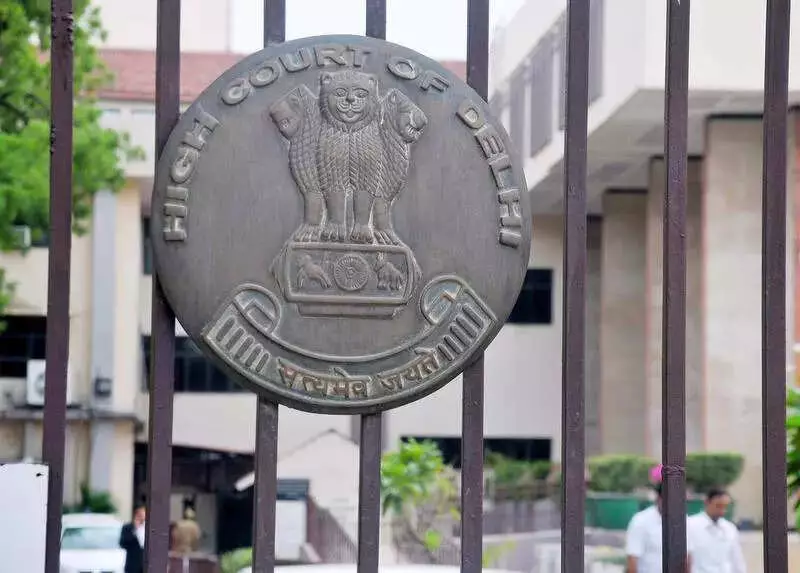
Delhi High Court Overturns Bail in Turkman Gate Violence Case
The Delhi High Court has set aside the bail granted to a street vendor accused of participating in a violent mob that allegedly pelted stones during a demolition drive near the Faiz-e-Elahi mosque at Turkman Gate earlier this month. In a significant ruling, Justice Prateek Jalan remanded the case back to the trial court for reconsideration, emphasizing that while courts are typically cautious about interfering with individual liberty, this case presented exceptional circumstances.
'Cryptic and Unreasoned' Bail Order
Justice Jalan described the bail granted to the accused, Ubedullah, as a cryptic and unreasoned order. The trial court had granted bail to Ubedullah on January 20, but the High Court noted that the order failed to address the prosecution's arguments adequately. It also lacked even a prima facie analysis of the factors that govern bail adjudication, which is a critical requirement in such legal proceedings.
The High Court, in its order dated January 21, stated, The impugned order is set aside for want of adequate reasons and remanded to the sessions court. This decision underscores the judiciary's commitment to ensuring that bail orders are well-reasoned and based on a thorough examination of the facts and legal principles involved.
Prosecution's Arguments and Defense
The police had challenged the bail, presenting evidence such as CCTV footage and a co-accused's disclosure. According to the prosecution, Ubedullah was part of a violent crowd that obstructed police personnel, pelted stones, and damaged public property during the anti-encroachment drive. The incident occurred on the intervening night of January 6 and 7 near the mosque in the Ramlila Maidan area.
In response, the counsel for the accused termed the case a fishing expedition, suggesting that the prosecution was casting a wide net without substantial evidence. However, the High Court left it to the trial court to take a fresh call on the matter, indicating that the lower court should re-evaluate the plea based on all available evidence and legal standards.
Background of the Incident
The violence erupted during an anti-encroachment drive near the Faiz-e-Elahi mosque. Police reported that rumors on social media, claiming the mosque opposite Turkman Gate was being demolished, prompted a gathering of around 150-200 people. The crowd allegedly hurled stones and glass bottles at police and Municipal Corporation of Delhi (MCD) personnel, resulting in injuries to six policemen, including the station house officer.
This incident highlights the challenges of law enforcement in sensitive urban areas and the impact of misinformation spread through social media platforms. The High Court's intervention in the bail matter reflects the seriousness with which such cases of public violence are being treated by the judiciary.
Next Steps in the Legal Process
The trial court is scheduled to reconsider Ubedullah's bail plea on January 23. This remand provides an opportunity for a more detailed and reasoned assessment of the bail application, taking into account the prosecution's evidence and the defense's arguments. The outcome of this reconsideration will be closely watched, as it could set a precedent for how similar cases are handled in the future.
In summary, the Delhi High Court's decision to set aside the bail order in the Turkman Gate violence case underscores the importance of judicial diligence in bail matters. By remanding the case for fresh consideration, the court has ensured that justice is served through a proper legal process, balancing individual rights with public safety concerns.