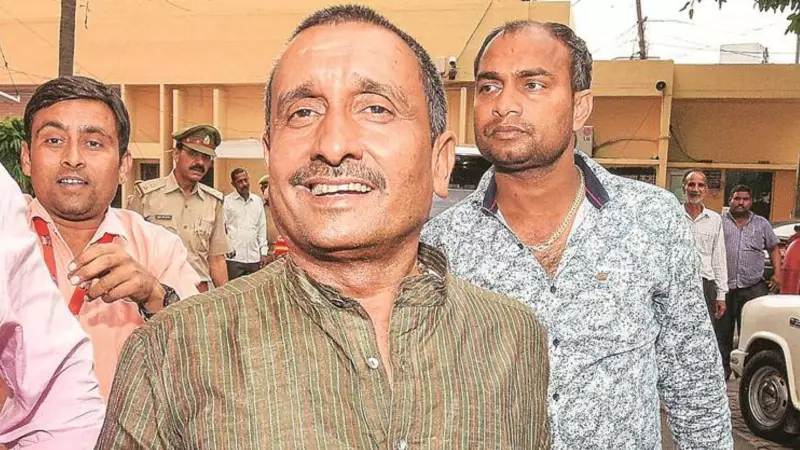
In a significant development, the Delhi High Court has suspended the life sentence of expelled Bharatiya Janata Party (BJP) leader Kuldeep Singh Sengar, convicted in the high-profile 2017 Unnao rape case. The court's order, dated December 23, 2025, has granted Sengar bail pending the final adjudication of his criminal appeal, a decision that has ignited intense legal and public scrutiny.
The Core Legal Controversy: Is an MLA a 'Public Servant'?
The pivotal point of the High Court's reasoning lies in a narrow statutory interpretation. The court arrived at a prima facie conclusion that Sengar may not qualify as a 'public servant' under Section 5(c) of the Protection of Children from Sexual Offences Act, 2012 (POCSO Act). This section categorizes sexual assault committed by a public servant as an 'aggravated offence', attracting a punishment of imprisonment for the remainder of the convict's natural life. The trial court had applied this very provision to impose a life sentence on Sengar.
However, the Division Bench held that an elected legislator might not fit the definition of a 'public servant' as per the Indian Penal Code (IPC), 1860. The court based this on Section 2(2) of the POCSO Act, which states that words not defined within the Act shall carry meanings assigned under the IPC, CrPC, Juvenile Justice Act, or the IT Act. Notably, the Prevention of Corruption Act, 1988—which has a broader definition encompassing anyone holding an office to perform a public duty—is not in this list.

Under the Prevention of Corruption Act, Sengar would unequivocally be considered a public servant. The court's adherence to the narrower IPC definition creates a potential loophole, risking the core objective of Section 5(c) of the POCSO Act, which was designed to hold individuals in positions of power to a higher standard of accountability.
Bail Grant and the Court's Reasoning
Once the applicability of the aggravated offence provision was cast into doubt, the High Court found the foundation for the enhanced life sentence to be arguable. This formed the basis for suspending the sentence and granting regular bail. The court also considered the length of time Sengar had already spent in custody, noting that continued incarceration could cause undue hardship if his conviction or sentence were later modified.
The bench formally clarified that suspending a sentence does not equate to an assessment of guilt and that the conviction will be thoroughly examined during the final appeal hearing. It imposed bail conditions, including restricting Sengar's movement and prohibiting any contact with the survivor and witnesses.
Nevertheless, the order ventured into substantive legal territory by making observations on issues like age determination and alleged inconsistencies in testimony—matters typically reserved for final adjudication. The court also rejected the survivor's plea regarding Sengar's ongoing political influence being a threat, stating that her CRPF protection was a sufficient safeguard.
Broader Implications for Power and Impunity
The Unnao case has long been emblematic of the struggle for justice when the accused wields significant political clout. The investigation was transferred to the Central Bureau of Investigation (CBI), and the trial was conducted under close judicial monitoring. Therefore, the suspension of the life sentence based on a technical interpretation is being closely watched.
The implication is stark: elected officials may potentially escape the stringent 'aggravated offence' tag under POCSO due to a definitional gap. This interpretation can only be rectified through prolonged appellate litigation or a legislative amendment, processes that are inherently time-consuming.
This decision underscores how the exercise of judicial discretion in suspending sentences, especially in cases involving grave crimes and powerful accused, can shape public confidence in the criminal justice system. The final outcome of Sengar's appeal will now be awaited to see how this complex interplay of law, power, and accountability is ultimately resolved.