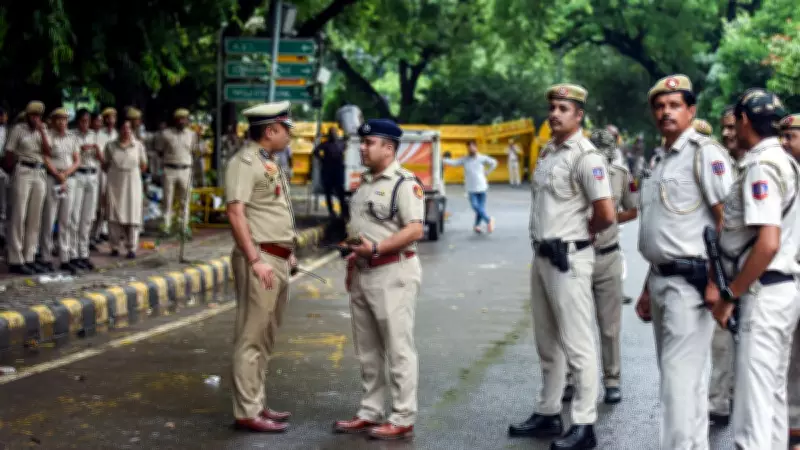
Delhi Police has categorically denied deploying facial recognition technology at Jantar Mantar during a protest by the Confederation of Janajati and Pahadi (CJP) on July 26, 2026. The clarification came after a viral claim on social media alleged that the police used advanced surveillance to monitor demonstrators. In a statement, the police termed the claim “completely false” and urged citizens to refrain from sharing unverified information.
Viral Claim and Police Response
The viral post, shared widely on platforms like X and Facebook, included an image of what appeared to be facial recognition cameras mounted on poles near the protest site. It suggested that the Delhi Police had secretly deployed the system to identify and track protesters. However, the police fact-checked the claim and found no evidence of such technology being used. “No facial recognition system was deployed at Jantar Mantar or any nearby location during the CJP protest,” a senior police officer stated. “The cameras seen in the image are standard CCTV cameras used for routine security monitoring.”
Context of the Protest
The CJP, an umbrella organization of tribal and hill communities, had organized the protest to demand better implementation of forest rights and land reforms. Thousands of participants from across several states gathered at Jantar Mantar, a designated protest site in central Delhi. The protest was largely peaceful, with minor crowd management issues reported. Police had deployed additional personnel to ensure order but maintained that they relied on conventional methods, not facial recognition.

Privacy advocates have raised concerns about the use of biometric surveillance in public spaces, but the Delhi Police’s denial suggests that such technology was not employed in this instance. The incident highlights the growing risk of misinformation during high-profile protests.
Fact-Checking Efforts
Social media platforms have been urged to tag the viral post as misleading. The police urged the public to rely only on official sources for information about law enforcement operations. “We encourage everyone to verify any claim before sharing it online,” the spokesperson added. “Spreading false information can lead to unnecessary panic and undermine public trust.”
The claim was also debunked by independent fact-checkers, who noted that the image of cameras was taken from a different location and dated back to an earlier event. The Delhi Police’s swift response helped curb the spread of the rumor.
Implications for Privacy and Security
While facial recognition technology remains a contentious issue in India, with debates over its accuracy and potential for misuse, the Delhi Police has not adopted it for routine protest monitoring. The government has considered guidelines for its use, but no formal deployment has been announced. This case underscores the need for clear communication between authorities and the public to avoid misunderstandings.
As protests continue to be a part of democratic expression, the balance between security and civil liberties remains delicate. The Delhi Police’s denial serves as a reminder that not all surveillance claims are accurate, and official statements should be sought before jumping to conclusions.