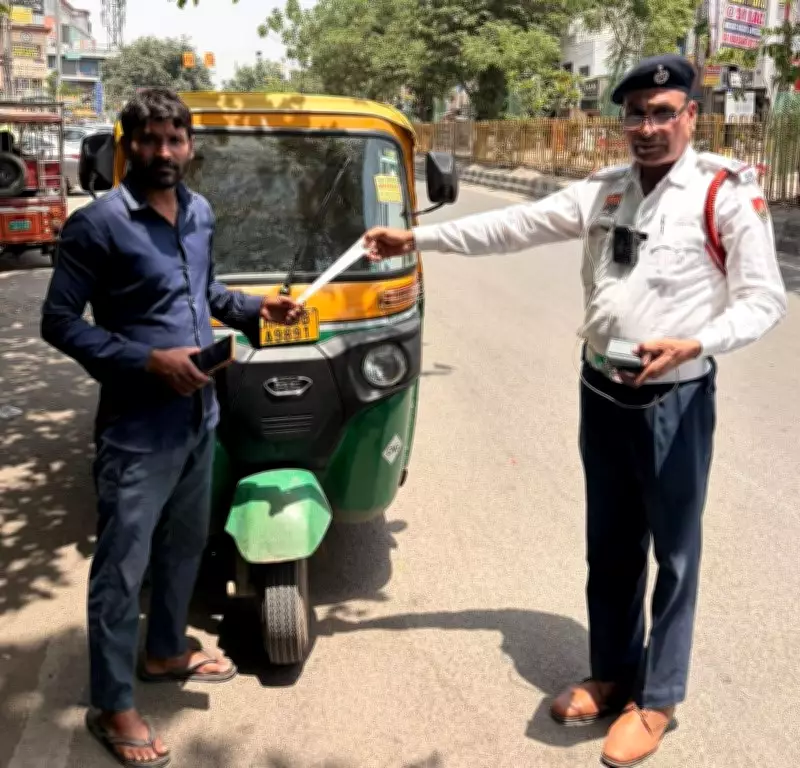
The Delhi Traffic Police has imposed fines amounting to Rs 14 lakh on auto-rickshaw and taxi drivers for violating uniform regulations. This enforcement drive, conducted over the past few weeks, targeted drivers who failed to wear the prescribed attire while operating their vehicles.
Details of the Enforcement Drive
According to officials, a total of 2,800 challans were issued to drivers for not adhering to the uniform code. Each challan carried a fine of Rs 500, resulting in a cumulative penalty of Rs 14 lakh. The drive was part of a broader initiative to ensure that drivers comply with the Motor Vehicles Act and transport department guidelines.
Purpose of Uniform Regulations
The mandatory uniform rule for auto and taxi drivers was introduced to enhance passenger safety and convenience. Uniforms help passengers easily identify authorized drivers and vehicles, reducing the risk of fraud or unauthorized operations. The rule also aims to professionalize the public transport sector.

Traffic police officials stated that the enforcement will continue in the coming months. They urged all drivers to comply with the regulations to avoid penalties. Drivers who are found without uniforms will be fined on the spot, and repeat offenders may face stricter action.
Reactions from Drivers' Unions
Some drivers' unions have expressed concerns about the fine amount, arguing that many drivers cannot afford the penalty. They have requested the government to consider a more lenient approach for first-time offenders. However, traffic police maintain that the rules are clear and must be followed to ensure discipline and safety on the roads.
The Delhi government has also been promoting the use of uniforms among public transport drivers as part of its efforts to improve the city's transport infrastructure. Passengers have generally welcomed the move, stating that it makes them feel more secure while traveling.
In addition to uniform checks, the traffic police have been conducting other enforcement drives, including checking for over-speeding, drunk driving, and use of mobile phones while driving. These measures are part of a comprehensive strategy to reduce road accidents and improve traffic management in the national capital.