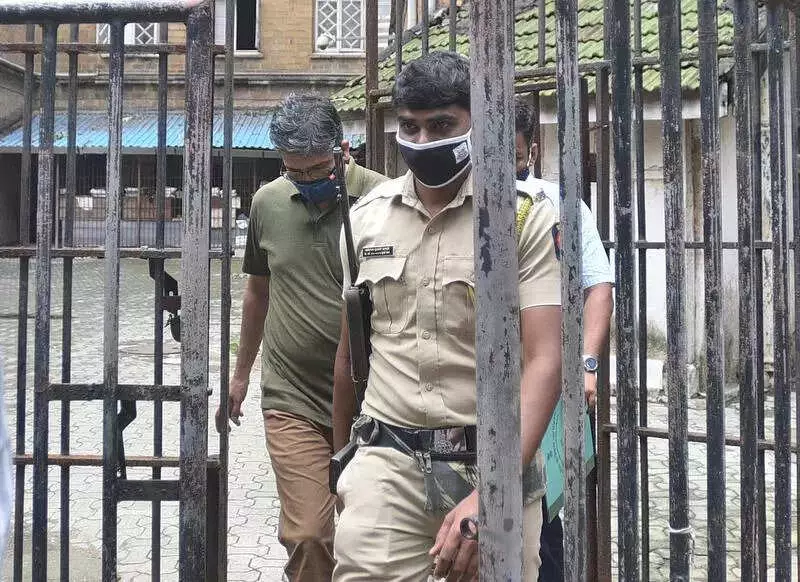
In a significant development, the Bombay High Court on Thursday granted bail to Delhi University professor Hany Babu, bringing a wave of relief to his family after five arduous years of incarceration in the Elgar Parishad-Maoist links case. For his wife, Professor Jenny Rowena, the overwhelming emotion was one of profound relief, marking the end of a period she described as the most difficult for their family.
A Family Reunited After Years of Struggle
Professor Hany Babu, arrested by Pune police in July 2020, will finally return to his home in Noida. The five-year period was marked by tense and turbulent separation, during which Rowena and their daughter undertook gruelling train journeys from Noida to Mumbai every few months to visit him at Taloja Central Jail. Their daughter, now a 22-year-old journalism graduate, was merely 17, a schoolgoing child, when her father was taken into custody.
"All kinds of torture were meted out to us for no reason," stated Rowena, who teaches English at Miranda House. She emphasized the deep personal void, saying, "My daughter and I have missed a father and husband deeply over these years." The arrest not only caused emotional devastation but also severe financial strain, with the loss of an earning member and mounting legal expenses. The long train journeys, lasting 15 hours one way, were a necessity as the family could not afford airfare.
The Legal Ordeal and Allegations
The case against Hany Babu traces back to a police raid at their Noida residence in September 2019. Officers questioned him extensively about his personal book collection, seizing three to four volumes. Babu had recounted the incident, stating he challenged the police's logic, asking if owning books on terrorism made one a terrorist, or a book on Maoism made one a Maoist. The seized materials included booklets published by a defence committee for GN Saibaba and a title named 'Jati to Varna'.
Police linked him to the Elgar Parishad case and inquired about his acquaintance with co-accused Rona Wilson and advocate Surendra Gadling. Babu had maintained that mere acquaintance did not imply involvement in the case. His bail plea, argued by counsel Yug Mohit Chaudhary, successfully cited the prolonged delay in the trial as strong grounds for release. The court's order, yet to be uploaded, is expected to carry usual bail conditions.
Personal Toll and Academic Loss
Rowena reflected that while the family suffered, the greatest loss was borne by Babu himself and his students. "He was trying to introduce a new pedagogy in the university and his arrest was a massive loss to education, his students, as well as the country," she said. Confined for years, Babu was cut off from the everyday routines of university life and semester updates that once anchored him.
His health also deteriorated in jail; he contracted Covid-19 and later suffered a severe eye infection. Throughout this period, Rowena acknowledged the unwavering support from students, who became a "massive pillar of support" by organizing protests, signing statements, and writing letters to him in prison. As the family prepares for reunion, the focus shifts to healing from a chapter that has left an indelible mark on their lives and academic community.