

EAGLE Report Flags Critical Gaps in Combating Narcotics Trade in India
An internal report by the Enforcement and Anti-Gang Law Enforcement (EAGLE) agency has identified a series of significant gaps that are severely undermining efforts to curb the narcotics trade across India. The comprehensive analysis points to how sophisticated traffickers are adapting their methods faster than enforcement systems can respond, creating a persistent challenge for authorities.
Exploitation of Courier and Logistics Networks
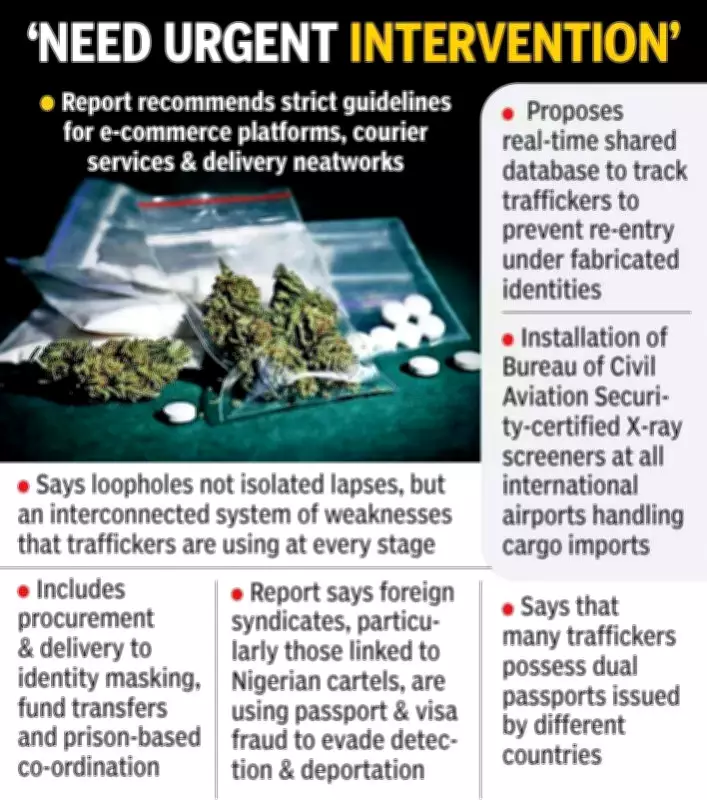
The report details how drug networks are systematically exploiting both domestic and international courier services to move contraband while avoiding detection. Domestic courier gaps have become a major vulnerability, with peddlers using services like India Post and private operators to send parcels without legitimate sender or receiver addresses. These shipments often use pseudonyms and provide only mobile numbers for contact.
Once a parcel is booked, the tracking or consignment number is shared with the recipient, who can then collect it from the courier office using that number alone. This system bypasses traditional identity verification processes that would normally help authorities trace illegal shipments.

Internationally, the report highlights that large quantities of cocaine are being smuggled from European countries including the Netherlands, Belgium, and France through premium freight and courier services. These channels are helping sustain global drug supply chains because content verification remains weak and inconsistent across different jurisdictions.
Digital Marketplaces and Urban Delivery Systems
Traffickers have increasingly shifted to digital marketplaces and online platforms to hide their identities and move contraband more efficiently. The report specifically notes that ganja chocolates are being sold on e-commerce and online marketplace platforms through both business-to-business and business-to-customer channels, making detection more difficult for enforcement agencies.
For movement within cities, traffickers are exploiting ride-hailing services to deliver drugs and vaping products. Delivery personnel and parent companies rarely verify package contents, remaining focused instead on speed and commission structures that prioritize rapid delivery over security checks.
Identity Fraud and Visa Abuse
The report reveals sophisticated methods of identity manipulation being employed by international drug syndicates. Foreign criminal networks, particularly those linked to Nigerian cartels, are using passport and visa fraud to evade detection and deportation procedures.
- Many traffickers possess dual passports issued by different countries, allowing them to enter India under different names and visa categories
- Some traffickers arriving on medical or business visas destroy their original passports after the visa period ends, then carry fake passports with valid visas to conceal their identity
- Student visa abuse is widespread, with several foreign nationals enrolled as students failing to attend classes while maintaining attendance of less than 20% while focusing exclusively on drug operations
Financial Loopholes and Money Laundering
The financial trail of drug operations is being systematically obscured through both formal FinTech services and informal channels. Cartels are allegedly using international fund transfer services to receive funds from abroad by submitting fake identity proofs that are not adequately verified against the original source of funds.
The report describes a sophisticated laundering route in which drug money is moved through hawala networks to hubs such as Mumbai and Tirupur. The cash is then handed over to Nigerian businessmen who purchase clothing and send it to Nigeria. The sale proceeds are later deposited into cartel-linked accounts in Nigeria as legitimate business income, effectively cleaning the illicit funds.

Transportation Vulnerabilities and Prison Operations
Domestic air travel has emerged as another significant concern highlighted in the report. Syndicates are using Nigerian women to transport drugs on flights from Delhi to cities such as Hyderabad and Bengaluru, taking advantage of what the report describes as a lack of rigorous checking mechanisms for domestic travellers at airports. This same weakness is helping drug mules move contraband between major Indian cities with relative ease.
Perhaps most alarmingly, the documents reveal that arrested traffickers continue to operate from inside prisons. The report specifically cites Central Jail Colvale and Bangalore Central Jail as places from where drug activity continued even after arrests. In raids conducted with the assistance of the Goa Police, authorities seized 19 mobile phones that were being used to coordinate ongoing drug operations from within prison facilities.
The EAGLE report concludes that without significant systemic reforms addressing these multiple vulnerabilities, enforcement agencies will continue to struggle against increasingly sophisticated narcotics networks that exploit legal and logistical gaps with remarkable efficiency.





