Enforcement Directorate Exposes Massive Liquor Scam in Andhra Pradesh
The Enforcement Directorate (ED) has made startling allegations against a liquor syndicate operating in Andhra Pradesh, claiming it generated illegal revenues of nearly ₹100 crore every month through systematic manipulation of the state's liquor trade mechanisms. According to investigators, this sophisticated criminal enterprise employed complex financial transactions and a network of shell firms to conceal the criminal origin of their massive proceeds.
Cash Collection and Money Laundering Network
Investigators revealed that physical cash kickbacks were collected and stored at multiple locations in Hyderabad before being moved, distributed, or disposed of by designated cash handlers working for the syndicate. The ED discovered that the syndicate utilized a platform of bank accounts along with a web of shell and front entities to launder funds and project them as legitimate income.
Entities such as Olwick, Kripati, Nysna Multiventures, Arroyo, Ezyload, and D-Cart were allegedly used to layer funds through complex transactions without any genuine business purpose, effectively concealing the illicit source and nature of the proceeds. This sophisticated laundering operation allowed the syndicate to operate with apparent legitimacy while funneling criminal proceeds through the financial system.

Transportation Contract Manipulation
Another major source of illicit revenue identified by the ED was the manipulation of liquor transportation contracts awarded by the Andhra Pradesh State Beverages Corporation Limited (APSBCL). Investigators found that a centralized transportation tender was awarded to Sigma Supply Chain Solutions Pvt Ltd at rates significantly higher than the earlier depot-wise transportation costs.
Although the contract was awarded in the company's name, the ED alleged that operational control was exercised by members of the liquor syndicate, primarily Tukekula Eswar Kiran Kumar Reddy and Saif Ahmad, among others. A substantial portion of the contract receipts was allegedly diverted to entities such as TEKKR, Arroyo, and Ezyload, which investigators say were used as conduits to launder the proceeds of crime.
Systematic Disabling of Automated Controls
The ED probe uncovered a deliberate dismantling of regulatory controls within the state's liquor trade. Prior to 2019, the liquor trade in Andhra Pradesh was regulated through a transparent automated software system that digitally tracked procurement, supply, and sales, leaving a verifiable audit trail.
However, after the 2019 assembly elections, when the state government brought retail liquor outlets under government control through APSBCL-operated outlets, the automated system was deliberately disabled and replaced with a manual system. This change vested unfettered discretionary powers with APSBCL officials in the issuance of orders for supply (OFS), creating opportunities for corruption and manipulation.
Market Manipulation and Coercive Practices
The manual OFS regime was allegedly misused to discriminate against established liquor brands, which were deliberately marginalized or removed from the market. Simultaneously, preferential and irregular allocations were extended to select 'favored' brands upon receipt of kickbacks.
As part of this scheme, the syndicate promoted the introduction of similar-sounding brands with artificially inflated basic prices. This pricing manipulation enabled distilleries manufacturing such brands to generate surplus margins, which were then utilized to meet the illegal monetary demands of the cartel.
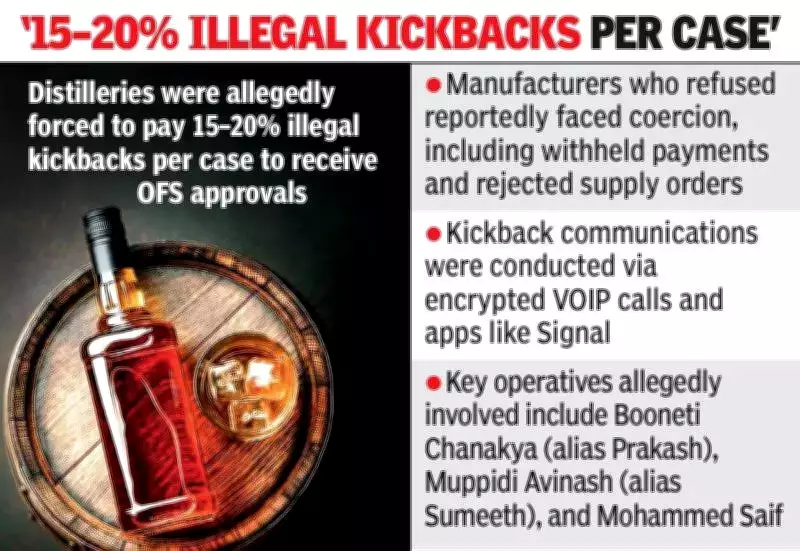
The ED also claimed that distilleries were forced to pay illegal kickbacks ranging from 15% to 20% of the basic price per case as a precondition for receiving OFS approvals. Manufacturers who refused were allegedly subjected to coercive measures, including withholding of legitimate payments and rejection of supply orders.

Encrypted Communication Methods
According to investigators, communication related to the demand and collection of kickbacks was carried out through encrypted VOIP calls and applications such as Signal to conceal the identities and roles of key operatives. Those identified in this communication network include Booneti Chanakya (alias Prakash), Muppidi Avinash (alias Sumeeth), and Mohammed Saif.
This sophisticated operation represents one of the most significant financial crimes uncovered in recent years in Andhra Pradesh, revealing how systemic corruption can infiltrate government-controlled industries and create massive illicit revenue streams through coordinated criminal enterprise.