

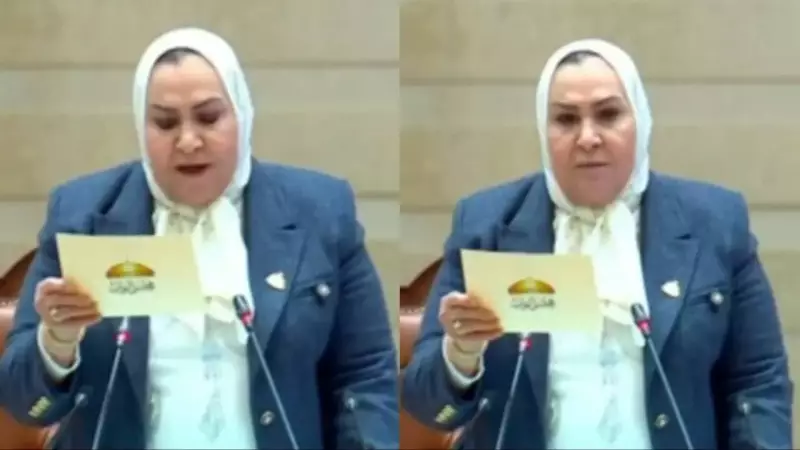
Egyptian Parliament Witnesses Historic First as Woman Presides Over Opening Session
Egypt's political landscape witnessed a groundbreaking moment on January 12, 2026. Dr Abla El Hawary, at 79 years old, presided over the opening session of Egypt's House of Representatives. This marked the first time in modern history that a woman has led the country's parliamentary proceedings.
A Procedural Role with Powerful Symbolism
According to constitutional procedure, the senior-most member of parliament acts as temporary chair for the inaugural session. As the oldest member of the newly constituted parliament, El Hawary naturally assumed this role. She oversaw the swearing-in of all 596 members and supervised the election of the chamber's Speaker before handing over formal leadership.
While procedural in nature, this moment carried immense symbolic weight for gender equality in Egypt. El Hawary's presence at the high dais, flanked by the two youngest members of Parliament - both women aged 25 - created a vivid intergenerational tableau. It powerfully illustrated the growing role of women in Egyptian governance across generations.

Decades of Dediation Culminate in Historic Moment
This historic achievement represents more than just a procedural footnote. It reflects nearly five decades of dedicated public service from a figure deeply rooted in Egypt's legal and legislative arenas.
Born in April 1947 in Sohag Governorate, Upper Egypt, El Hawary grew up in a politically aware household. Her father, Sheikh Mohamed Omar El Hawary, served as a respected legal expert and former parliament member in the 1960s. This early exposure to political life shaped her future path.
Breaking with traditional expectations for women in her region, El Hawary pursued rigorous academic training in law and public service. She built a strong foundation in legal frameworks and governance that would serve her throughout her extensive career.
A Steady Climb Through Legislative Ranks
El Hawary's public service career shows steady progression through Egypt's legislative and executive branches:
- She began as a legal researcher, gaining insights into statutory interpretation and constitutional matters
- She held seats in both chambers of Egypt's legislature, including the now-abolished Shura Council and the House of Representatives
- She served on pivotal committees including the Legislative Committee and Values Committee
- She held ministerial portfolios involving health and housing affairs
This combination of technical knowledge and practical experience earned her broad institutional respect. Her roles required balancing legal frameworks, policy goals, and public needs - skills that proved invaluable when she assumed the historic presiding role.
Broader Implications for Women in Egyptian Politics
El Hawary's landmark moment comes at a time of gradual progress for women's political participation in Egypt. The country's constitution reserves 25% of parliamentary seats for women, and in the current assembly, women actually exceed this threshold at roughly 26.5% of members.
El Hawary herself has characterized this period as a "golden age" for women in public life. She follows in the footsteps of earlier female parliamentary trailblazers like Fouad Ateya, the first woman elected to the Egyptian National Assembly in the 1950s.
Observers and gender equity advocates stress that while El Hawary's chairing was procedural, it carries broader import. It highlights the value of experience and institutional knowledge in governance while demonstrating representational progress.
Looking Forward: What This Means for Egypt's Future
This historic moment is likely to inspire discussions about women's leadership as Egypt navigates economic challenges, social reforms, and regional shifts. El Hawary's longevity and breadth of service offer a template for combining seniority with representational progress.
The opening session of Egypt's third legislative term took place in the presence of Judge Mahmoud Fawzy, Minister of Parliamentary, Legal and Political Communication Affairs. Following El Hawary's presiding role, Hisham Badawi, a seasoned political figure, was elected Speaker and assumed full leadership of the House.

Dr Abla El Hawary's rise to this historic moment speaks volumes about her career, resilience, and the shifting role of women in Egyptian civic life. From her origins in Sohag to the national stage, through decades in legislative and ministerial roles, she embodies both continuity and change.
Her presence atop the parliamentary dais represents more than just a first. It serves as a testament to a lifetime of service and a reminder that even in institutions with long histories, new milestones for inclusion and representation continue to be written.





